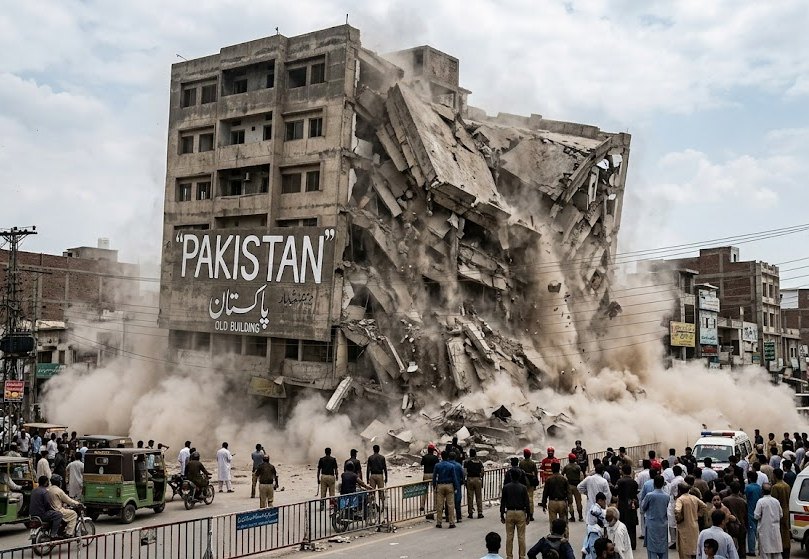
Pakistan finds itself once again staring into the abyss of institutional paralysis and domestic fracture. The recent declaration of an emergency in the province of Khyber Pakhtunkhwa marks a significant escalation in the protracted friction between the central military establishment and the political movement led by jailed former prime minister Imran Khan. For a nation long accustomed to managed democracy and covert military tutelage, this latest development signals something far more precarious. It exposes the structural fragility of a federal republic where regional governance and the writ of the military command are locked in direct, unyielding combat.
To understand the weight of the current crisis, one must examine the unique political geography of Khyber Pakhtunkhwa. For years, the province has served as the political heartland and impenetrable stronghold of Khan's Pakistan Tehreek-e-Insaf party. Even after Khan was removed from power and subsequently imprisoned, his party retained massive popular backing in the region, repeatedly winning provincial mandates and frustrating the ambitions of the federal coalition in Islamabad. This dynamic created an unsustainable constitutional paradox. An elected regional government stood in continuous defiance of the federal dispensation and the overarching security apparatus, turning the province into an institutional rebel enclave within the broader state architecture.
The imposition of emergency rule follows a familiar historical script in Pakistan, where civilian administrative failures are routinely invoked to justify direct or indirect intervention by the security establishment. Critics argue that the move is less about maintaining public order and more about neutralizing the last remaining bastion of institutional resistance against the military hegemony. By dismantling or hobbling the provincial government, the central authorities aim to sever the vital umbilical cord connecting Imran Khan to his grassroots support base. Yet, this strategy carries monumental risks. Pushing a politically conscious and heavily armed border region into a corner could provoke a fierce backlash, deepening local alienation and fueling insurgent sympathies in a zone already grappling with severe security challenges.
Furthermore, the economic dimensions of this political standoff cannot be overstated. Pakistan remains shackled to stringent international bailout conditions, currency depreciation, and chronic fiscal deficits. Investor confidence depends heavily on political stability and predictable governance. A major domestic confrontation in a frontline province bordering Afghanistan threatens to unravel whatever fragile economic recovery Islamabad has managed to negotiate. When administrative energy is consumed entirely by turf wars between the military-backed center and regional political actors, pressing developmental and security imperatives are inevitably cast aside.
The broader implications for Pakistan's democratic evolution are grim. The friction in Khyber Pakhtunkhwa demonstrates that the traditional playbook of managing political outcomes through judicial maneuvering, electoral engineering, and administrative coercion has reached its diminishing returns. Instead of subduing dissent, these heavy-handed measures risk driving political opposition underground and transforming mainstream regional grievances into militant defiance. As the central authorities tighten their grip on the provinces, the line separating constitutional governance from outright authoritarian control continues to blur.
Ultimately, the unfolding crisis in Khyber Pakhtunkhwa is a symptom of a deeper malaise afflicting the Pakistani state. It highlights the inability of civilian and military elites to forge a stable consensus on power-sharing and constitutional boundaries. Unless the ruling establishment recognizes that coercive statecraft cannot substitute for political legitimacy, the nation will remain trapped in a relentless cycle of instability. The emergency in the provinces may provide a temporary veneer of control for the center, but it lays the groundwork for even deeper fractures in the future.