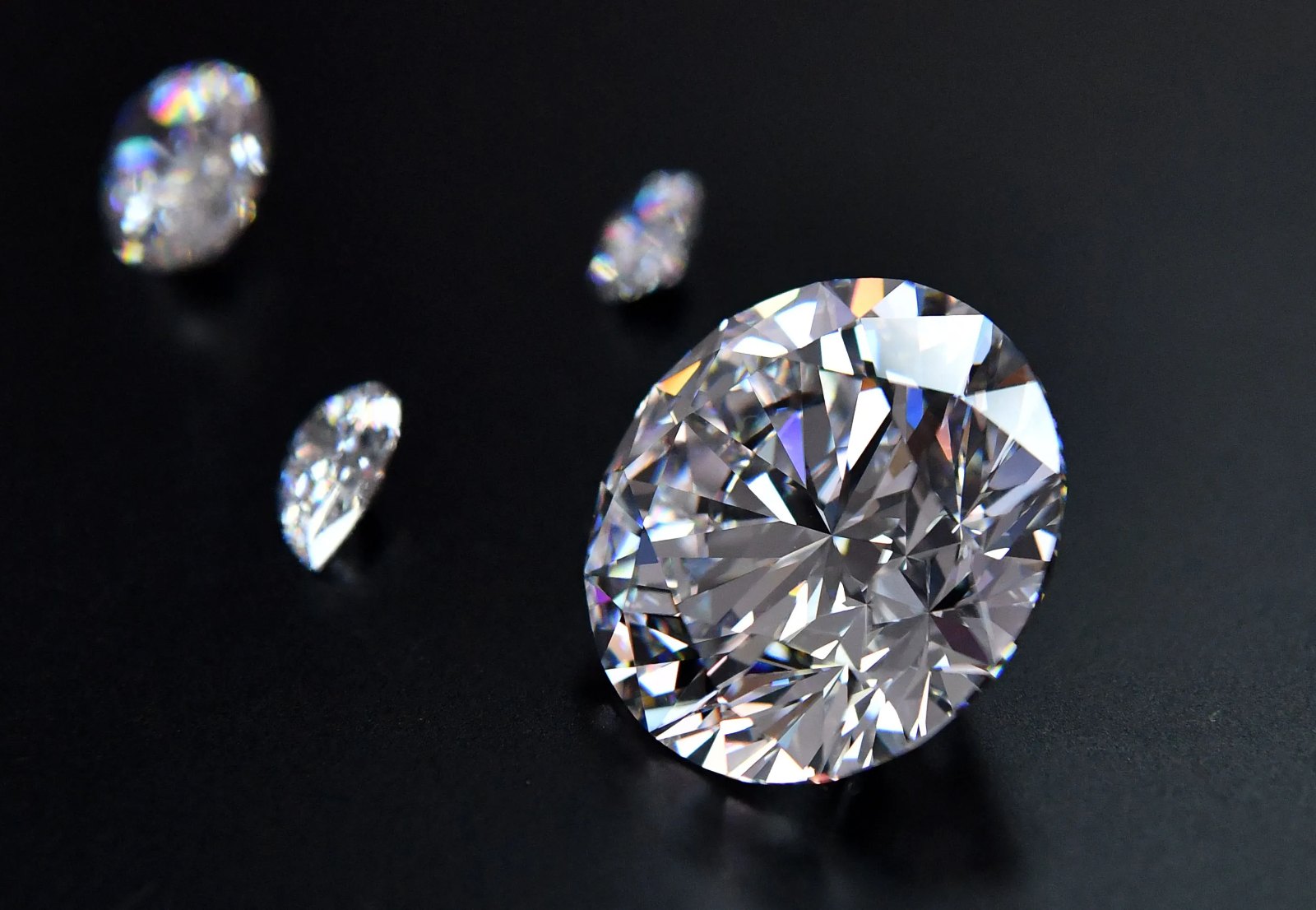
FOR well over a century, the diamond trade relied on an elegant illusion: that an ordinary arrangement of carbon atoms, compressed over eons beneath the earth’s crust, possessed an intrinsic value far above almost any other mineral. That perception was maintained not merely by geology, but by carefully engineered scarcity and sophisticated marketing. Today, however, that illusion is unraveling. Diamond prices have plunged to their lowest levels in two decades, driven down by a potent mix of technological disruption, macroeconomic headwinds, and a profound generational pivot in how luxury is consumed.
Unlike gold, which functions as a standardized global currency benchmark measured cleanly by weight, diamonds have always resisted uniform pricing. A diamond’s valuation hinges on the interactive matrix of the four Cs: carat, cut, color, and clarity. While rare, high-carat stones with near-perfect clarity continue to hold relative value due to genuine physical scarcity, the vast middle tier of the market is experiencing a severe downturn. Prices for commercial-grade natural diamonds have dropped by 30 to 40 percent since their 2021 peaks, with recent months showing further structural weakness.
The single greatest catalyst behind this precipitous drop is the rapid rise of lab-grown diamonds. Chemically, physically, and optically identical to mined stones, lab-grown alternatives possess the exact same lattice structure of pure carbon. To the naked eye and even under standard jeweler loupes, distinguishing a mined gem from a synthetic one is virtually impossible without specialized spectroscopic equipment. Yet the economic profiles of the two could not be more distinct.
Where natural diamond extraction requires capital-intensive mining operations in regions like Botswana, Siberia, and Northern Canada, lab-grown diamonds are manufactured in industrial reactors using chemical vapor deposition or high-pressure, high-temperature techniques. The constraint of geological time has been replaced by the efficiency of industrial scaling. Consequently, lab-grown gems retail at a discount of 70 to 80 percent, and sometimes upwards of 85 percent, compared to their natural counterparts.
This supply explosion has triggered a downward price spiral within the synthetic sector itself. Lab-grown diamond prices have fallen by approximately 70 percent since 2022, dropping another 29 percent in recent months alone. Paradoxically, rather than insulating natural diamonds, this collapse in synthetic prices has dragged down the entry-level and mid-tier natural market. When a one-carat synthetic stone can be purchased for a fraction of the cost of a natural one, consumer willingness to pay a premium for deep-earth origin shrinks dramatically.
The geopolitical center of gravity for this trade shift has moved decisively eastward. China now dominates global lab-grown diamond production, accounting for roughly 60 percent of world output, with its export volumes expanding by 65 percent year-on-year. Simultaneously, India, long the undisputed global hub for cutting and polishing rough gems, is undergoing a historic structural transformation. In Gujarat’s diamond processing capital of Surat, where four out of five of the world’s rough stones are finished, synthetic processing is rapidly outpacing traditional mining pipelines. Trade data indicates that India’s exports of lab-grown diamonds reached 18.3 million carats, surpassing natural diamond exports of 16 million carats for the first time in history.
This supply shock coincides with a notable shift in consumer behavior, particularly among younger buyers. Historically, diamonds were positioned strictly as rare, milestone purchases reserved for engagements, major anniversaries, or high-stakes luxury investments. Today, demography is rewriting those rules. Generation Z and younger millennials account for more than half of current diamond jewelry transactions, and their priorities differ fundamentally from those of earlier cohorts.
Younger consumers view diamond jewelry less as an immutable family asset and more as an accessible, everyday fashion accessory. For this demographic, ethical considerations surrounding traditional mining, alongside immediate price affordability, often outweigh historical notions of natural rarity. Why spend months of savings on a modest natural stone when an identical, larger synthetic gem can be acquired at a small fraction of the price for daily wear?
This operational split is creating tangible friction across generational lines, particularly in major Asian markets. While younger brides increasingly express a preference for larger, design-focused diamond pieces regardless of origin, older generations continue to favor traditional gold. Older buyers view gold as a tangible financial hedge possessing intrinsic, standardized liquid value. Pure gold can be resold or recycled anywhere in the world with minimal spread, whereas diamonds carry steep markups, high retail spreads, and uncertain resale realization.
Furthermore, retail diamond jewelry prices have not fallen as rapidly as raw gemstone prices. A finished ring or necklace incorporates significant gold content, intricate design labor, and retail overheads, buffering the final price tag from raw carbon fluctuations. Yet the underlying asset value of the stone itself remains under continuous pressure.
The ultimate vulnerability of the traditional diamond industry lies in the death of artificial scarcity. Gold maintains its long-term purchasing power because global annual supply increases by only a tiny fraction; gold production is strictly constrained by geological availability, forcing the market to rely heavily on recycled reserves. Natural diamonds once mimicked this dynamic through supply controls and cartel management. But when a product can be manufactured inside a laboratory in unlimited quantities by building more facilities, the foundation of prestige pricing disappears.
For diamond-dependent economies in developing nations, particularly in Southern Africa, this structural shift poses significant fiscal challenges. Mining revenues that once funded national budgets and public infrastructure are confronting a structural decline that cyclical recoveries are unlikely to reverse. Meanwhile, traditional mining giants are left scrambling to reposition natural stones as emotional heirlooms rather than mere luxury commodities.
The diamond market is undergoing a fundamental recalibration. As synthetic production scales further and young consumers continue to decouple visual luxury from geological origin, the era of unquestioned premiums for mined carbon is drawing to a close. The gem that once symbolized permanence is now learning just how quickly market forces can alter its value.