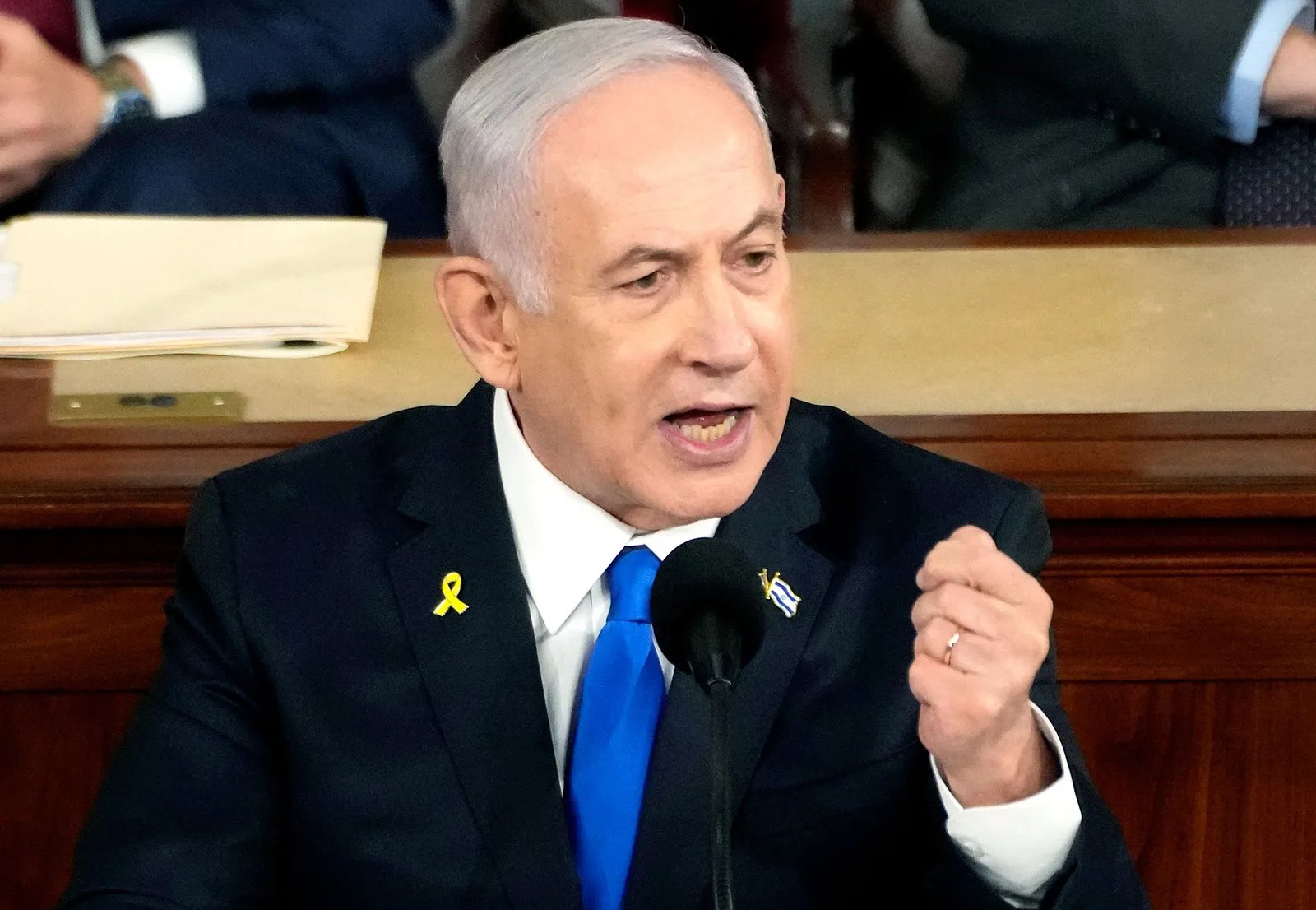
When a leader makes an unannounced late-night journey aboard a private jet, the motive is rarely small. Reports circulating across international news outlets suggest that Benjamin Netanyahu, Israel’s long-serving prime minister, recently boarded a charter aircraft around midnight, touched down in the United Arab Emirates three hours later, and departed shortly before dawn. The purpose of this quiet four-hour layover in Abu Dhabi was not a grand diplomatic summit or the signing of a fresh economic pact. Instead, it was an urgent plea for political damage control ahead of Israel’s upcoming national election on October 27th.
The immediate catalyst for Mr Netanyahu’s secret mission involves explosive leaks regarding the intelligence failures surrounding the October 7th, 2023 attacks by Hamas. Accounts published by major international newspapers indicate that on September 26th, 2023, less than two weeks before Hamas breached Israel’s perimeter defenses, the Emirati president personally warned Mr Netanyahu that a massive militant assault was imminent. Other regional intelligence services, including Egyptian security channels, reportedly issued similar warnings three separate times in the run-up to the tragedy.
These revelations hit at the very core of Mr Netanyahu’s political identity. For decades, his brand has rested on a single premise: that he is the ultimate guardian of Israel’s national security, a staunch defender who stands watch while others sleep. To be accused of receiving direct, high-level intelligence from an Arab partner and failing to pass it down to military commanders or elevate defense readiness is a devastating blow. With the general election approaching, opposition candidates have seized on the leaks to accuse him of a monumental security breach. Critics argue that had these warnings been acted upon, the tragic loss of life, the war in Gaza, and the broader regional escalation, ranging from Houthi strikes in the Red Sea to direct exchanges with regional powers, might have taken a very different course.
Mr Netanyahu’s public response has been aggressive and uncompromising. He vehemently denies the reports, asserting that no such advance warnings were ever received from Abu Dhabi or elsewhere. Borrowing a move from the populist playbook, he has blamed foreign interference and alleged conspiracies involving pro-Palestinian businessmen based in the UAE. He has threatened legal action against media organizations publishing the accounts, painting the leaks as a deliberate attempt by outside actors to sway Israeli voters.
Yet the prime minister's defense runs into a significant obstacle: the carefully measured silence of Abu Dhabi itself. Had the Emirati leadership issued a clear denial on his behalf, the political storm in Jerusalem might have abated. Instead, the UAE Foreign Ministry offered a carefully calibrated statement, noting that while it does not comment on media speculation regarding private communications between heads of state, legitimate intelligence inputs are always shared through appropriate agency channels. To seasoned observers, this neutral refusal to back Mr Netanyahu's denial speaks volumes, effectively leaving the news reports unrefuted.
This quiet stance highlights the delicate posture the UAE maintains toward Israel. Following the American-brokered Abraham Accords in 2020, Abu Dhabi embraced open diplomatic and economic ties with Israel, stepping out from behind traditional Arab consensus. The security partnership grew deep; Israeli defense firms supplied advanced systems, including elements related to the Iron Dome, to protect Emirati infrastructure amid regional friction. The two countries also anchored regional economic initiatives alongside India and the United States.
However, public sentiment across the Arab world remains acutely sensitive to the conflict in Gaza and the plight of Palestinians. While the UAE chose not to join other Muslim-majority nations in boycotting Mr Netanyahu’s address at the United Nations, it feels no compulsion to bail him out of a self-inflicted domestic political crisis. In fact, Abu Dhabi actively seeks to maintain a balanced foreign policy. It manages relations with Iran, engages in dialogue with regional powers, and navigates complex diplomatic dynamics with Saudi Arabia. For Emirati strategists, maintaining a functional relationship with Israel does not mean intervening to save an Israeli politician from his own election battles.
The situation is further complicated by Mr Netanyahu's inconsistent rhetoric regarding clandestine diplomacy. Back in March, when it was politically advantageous to highlight anti-Iran coordination following regional strikes, Mr Netanyahu openly touted a secret trip to the Emirates. Yet today, when reports of a midnight flight carry allegations of pleading for political cover, his office insists no such trip occurred. This contrast has drawn skepticism from both voters and opposition parties inside Israel.
In a country where national security is the central axis of political life, the charge of neglecting intelligence warnings is the most dangerous claim a politician can face. As October 27th approaches, Israeli voters must decide whether Mr Netanyahu remains the indispensable guardian of their state or a leader whose political instincts overrode elementary national defense. Whatever the ultimate verdict at the ballot box, the episode exposes the fault lines of the Abraham Accords: a pragmatism built on shared strategic interests, but one that stops short of shielding partners from accountability at home.