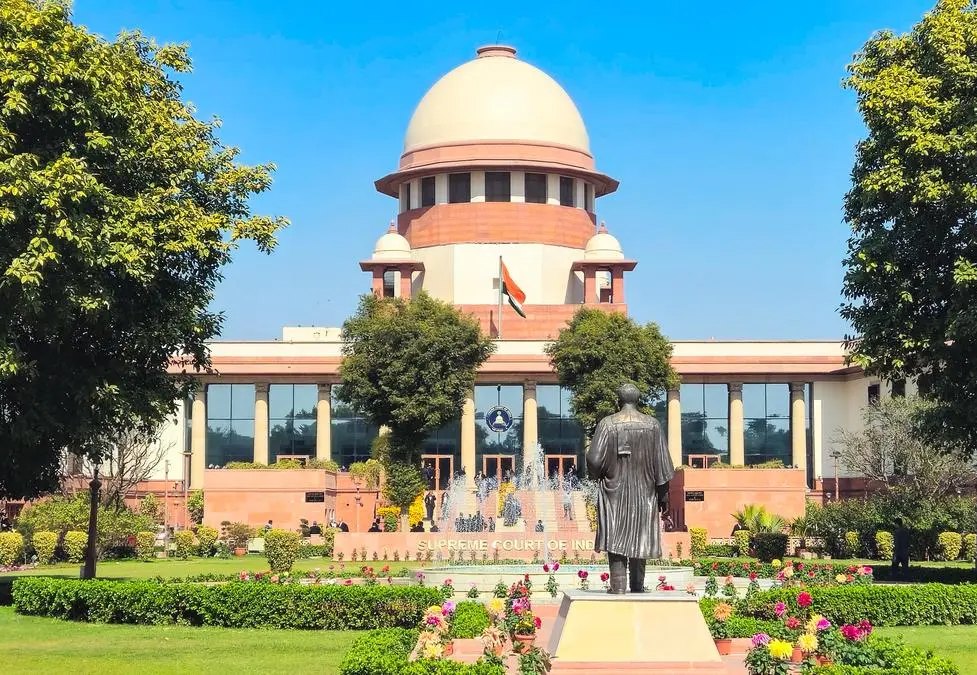
State-directed patriotism carries an inevitable irony: the more a government insists on policing devotion, the more fragile that devotion appears. In New Delhi, the debate over coerced national reverence has surfaced once again before the Supreme Court. At issue is a recent legislative amendment expanding penal sanctions under the Prevention of Insults to National Honour Act to enforce the mandatory singing of all six stanzas of Vande Mataram, India’s historic national song.
During preliminary hearings, the court issued a timely reminder to the executive branch. Individuals who decline to sing the song on genuine grounds of conscience or religious conviction must not face criminal prosecution. By invoking its landmark 1986 precedent in Bijoe Emmanuel v. State of Kerala, the bench reaffirmed a crucial constitutional principle. Respect for national symbols cannot be equated with compulsory performance, and silence, when maintained respectfully, is a valid expression of conscience protected by fundamental rights.
The genesis of the dispute lies in the government's decision to treat non-compliance with its expanded patriotic protocols as a penal offense, carrying potential imprisonment. The move drew immediate constitutional challenges, most notably from Carnatic musician T.M. Krishna, who argued that mandating all six stanzas via un-gazetted executive memoranda creates legal ambiguity and infringes upon personal liberty. In response, government law officers maintained that national unity requires uniform participation and that secularism should not be used as a shield against civic obligation.
Yet, as the bench correctly noted, the democratic state possesses the authority to designate national symbols and prescribe ceremonial protocols, but its power stops short of criminalizing quiet non-participation. Justice in a constitutional democracy requires distinguishing between active disrespect and conscientious objection.
The Jurisprudential Bedrock
The legal foundation of this stance rests on the Bijoe Emmanuel precedent of 1986. In that case, three young Jehovah’s Witnesses were expelled from a school in Kerala for refusing to sing the national anthem, Jana Gana Mana. The children stood attentively and respectfully during the assembly but refrained from singing, as their religious tenets forbade participation in rituals devoted to any entity other than God.
The Supreme Court held that expelling the children violated their fundamental right to freedom of conscience and religious practice under Article 25 of the Constitution. The justices observed that our tradition teaches tolerance, our philosophy preaches tolerance, and our Constitution practices tolerance. Standing up respectfully during a anthem or song demonstrates sufficient civic deference; compelling vocal participation under threat of punishment crosses the line into coercive indoctrination.
The constitutional distinction between national anthems and national songs further complicates the state's position. While Jana Gana Mana is the official National Anthem recognized under Article 51A, Vande Mataram holds a distinct historical position as the National Song. Composed by Bankim Chandra Chattopadhyay in his 1881 novel Anandamath, the text blends political imagery with religious devotion to the motherland personified as a deity.
Recognizing this duality, the Constituent Assembly in 1950 accorded equal honor to the first two stanzas of Vande Mataram while acknowledging that its remaining stanzas contain specific religious motifs that might conflict with the faith of certain citizens. To suddenly penalize the omission of all six stanzas ignores this carefully struck historical compromise.
Coercion Versus Conscience
To evaluate the doctrine of conscientious objection, it is useful to look beyond domestic borders. Democratic legal systems across the world have long accommodated individuals whose moral or religious convictions prevent them from participating in state-mandated ceremonies.
The United States Supreme Court confronted a similar issue in the landmark 1943 case West Virginia State Board of Education v. Barnette. Overturning a mandatory flag salute requirement in public schools during the second world war, Justice Robert Jackson wrote that if there is any fixed star in our constitutional constellation, it is that no official, high or petty, can prescribe what shall be orthodox in politics, nationalism, religion, or other matters of opinion.
Similarly, legal frameworks in Canada and Western Europe recognize conscientious objection in contexts ranging from mandatory military service to state oaths. These systems accept that a state's strength lies in its ability to tolerate peaceful dissent rather than in its capacity to enforce uniformity.
The argument for compulsory national song singing rests on the premise that collective rituals foster national cohesion. However, historical evidence suggests the opposite: enforced symbolism breeds resentment, converts minor acts of non-conformity into public trials, and tests the loyalty of minority communities needlessly.
True patriotism stems from a shared commitment to constitutional values, civil rights, and social justice, rather than mechanical compliance with ceremonial directives. When a state relies on penal statutes to exact expressions of love for the country, it reveals an underlying doubt in the intrinsic appeal of its democratic project.
The Supreme Court’s recent intervention serves as a necessary check on executive overreach. By defending the rights of conscientious objectors, the judiciary reinforces the idea that India's constitutional identity is built on pluralism and tolerance, not forced conformity. A republic that allows its citizens to stand in respectful silence demonstrates far greater confidence and stability than one that threatens them with prison for keeping their lips closed.