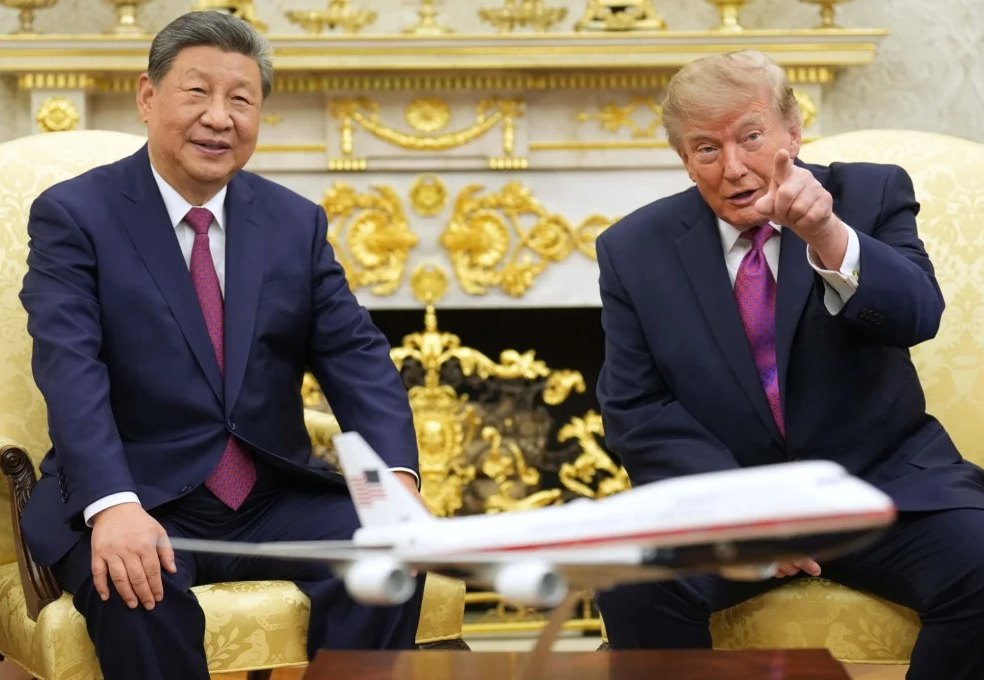
A high-profile summit between Donald Trump and Xi Jinping recently concluded with elaborate hospitality, yet yielded virtually no core policy breakthroughs. Beneath the ceremonial warmth, the primary objective was neither peace nor reconciliation, but the cautious management of a dangerous geopolitical deadlock. Drawing upon historical parallels and structural rivalries, the modern superpower dynamic demonstrates how two global titans attempt to stabilize their confrontation, defer critical fractures, and avoid falling into the Thucydides Trap.
The Logic of Deferral
When Donald Trump and Xi Jinping met recently, the diplomatic setup carried all the hallmarks of a historic encounter. The American host extended personal welcomes and elaborate fanfare of a standard reserved for top-tier foreign dignitaries over the past decade. Yet behind the scenes, geopolitical analysts and foreign policy think tanks, such as the Council on Foreign Relations, had already calibrated expectations toward realism. The summit was never designed to deliver sensational treaties or fundamentally reset bilateral ties. Instead, its underlying function was something far more pragmatic: managing a stalemate.
Diplomacy often aims to resolve fundamental disputes. Between Washington and Beijing, however, the immediate goal is preventing existing friction from deteriorating into uncontrolled escalation. The memory of previous economic shocks, including steep unilateral tariffs reaching 240 percent, continues to loom large over global markets. Businesses and governments worldwide fear a return to unchecked trade volatility. Consequently, both capitals approached the summit with a shared interest in institutionalizing a strategic pause, keeping channels open, and ensuring that strategic rivalry does not slide into outright conflict.
Escaping the Historical Pattern
Central to this strategic posture is a term invoked repeatedly by Chinese leadership: the Thucydides Trap. Coined by Harvard academic Graham Allison in his analysis of historical power shifts, the concept stems from the ancient Greek historian’s observation that the rise of Athens and the panic it instilled in Sparta made war inevitable. Analyzing structural rivalries throughout history, Allison noted that when an ascending power challenges an established power, armed conflict frequently ensues. In this structural dynamic, an established nation fearing a loss of dominance collides with a rising contender demanding parity, creating systemic tension and mutual suspicion. While war is not predetermined, this dynamic generates an extraordinarily high probability of confrontation unless actively counteracted.
By referencing this historical framework on American soil, Chinese leadership signaled a subtle dual message. On one hand, it highlights a desire to work alongside Washington to avoid catastrophic miscalculation. On the other, it serves as a subtle reminder of changing global dynamics. The underlying narrative frames China as an ascending entity and the United States as a nation grappling with shifting international leverage. In this context, preventing conflict requires both sides to establish clear boundaries, maintain functional military-to-military communications, and manage structural disputes with extreme care.
Core Flashpoints and Incremental Concessions
Despite diplomatic statements emphasizing stability, the summit revealed persistent impasses across three primary arenas: geopolitics, agriculture, and advanced technology.
Security and Geopolitics
Taiwan remains the most sensitive friction point in bilateral relations. Beijing continues to insist on extreme caution from Washington regarding the island's status. The American administration, mindful of the vast distance and enormous military costs associated with a direct cross-strait conflict, signaled a measured approach, steering clear of provocative rhetoric during the talks. To minimize the risk of accidental escalation in the Pacific, both sides maintained a cautious posture and prioritized open military-to-military communication channels to prevent miscalculation.
Trade and Agricultural Markets
Commercial disputes yielded incremental concessions rather than systemic solutions. The existing trade truce was effectively extended, pausing new tariffs without eliminating underlying barriers. Washington pressed Beijing to buy significant amounts of American agricultural products, targeting roughly $17 billion in purchases. China, having diverted its supply chains toward alternative markets such as Brazil following earlier tariff hikes, agreed only to a modest purchase of approximately $25 million in American soybeans. While this provides a minor gesture toward American farmers, who rely heavily on China’s massive pork industry and feed requirements, it leaves core structural trade grievances unaddressed.
Technology and Strategic Resources
The contest over advanced technology highlighted fundamental disagreement. Discussions touched upon governance frameworks for artificial intelligence, with Beijing focusing on AI safety and Washington referencing broader technological capabilities. However, real-world policy remained locked. Washington refused to ease restrictions on exporting high-performance semiconductor chips, such as those manufactured by Nvidia, to Chinese firms. In response, Beijing maintained its tight export controls on critical rare earth minerals—materials vital for global aerospace, consumer electronics, and electric vehicle production.
The Future of Managed Rivalry
The outcome of the summit underscores the realities of modern superpower competition. Neither Washington nor Beijing expects a sudden return to economic integration or deep political alignment. The primary metric of success in contemporary diplomacy is no longer the resolution of deep-seated ideological or commercial rivalries, but rather the containment of immediate risk.
By agreeing to defer major conflicts and maintain open channels of communication, both nations have chosen to navigate around the immediate dangers of the Thucydides Trap. The underlying tensions remain fully intact, yet the institutionalization of a managed stalemate offers a practical framework. For the global economy, this precarious balance provides temporary predictability, ensuring that while competition between the world's two largest powers remains intense, it stays managed within precise diplomatic boundaries.