In international politics, perceived threats often loom far larger than immediate dangers. When Donald Trump takes aim at BRICS, his anxiety says less about the grouping’s present cohesion than about the long-term structural changes taking place across the developing world. The alliance of major non-Western economies is neither a unified military bloc nor a coherent anti-American axis. Yet to a champion of unrestrained American supremacy, even a mild challenge to existing norms looks like an intolerable provocation.
To understand why Washington remains uneasy, one must first dismantle the myth that BRICS is a monolith. Born in the aftermath of the 2008 global financial crisis, the grouping initially brought together Brazil, Russia, India, and China, with South Africa joining a year later. It arose because the existing machinery of global governance, even after expanding the rich-country G7 into the broader G20, failed to offer emerging markets a proportionate say in running the global economy.
Far from being an ironclad alliance, BRICS is an informal grouping. It includes nations with vast geopolitical differences and fundamentally distinct worldviews. India maintains a strategic partnership with the United States and participates actively in the Quad alongside America, Japan, and Australia to counter Chinese expansionism in the Indo-Pacific. Key members and recent additions, such as Saudi Arabia, the United Arab Emirates, and Egypt, maintain deep financial, military, and diplomatic ties with Washington.
Nevertheless, the footprint of BRICS is expanding at a pace that commands attention. Following its 2024 expansion to include nations like Ethiopia, Egypt, Iran, and the United Arab Emirates, alongside a growing tier of official partner countries, the grouping now accounts for nearly half of the world's population, roughly 40 percent of global gross domestic product, and a quarter of global trade. By sheer demographic and economic scale, it eclipses the traditional footprint of the G7.
The primary source of American anxiety is not a sudden military buildup, but rather ten distinct operational shiftings within international commerce and institutions.
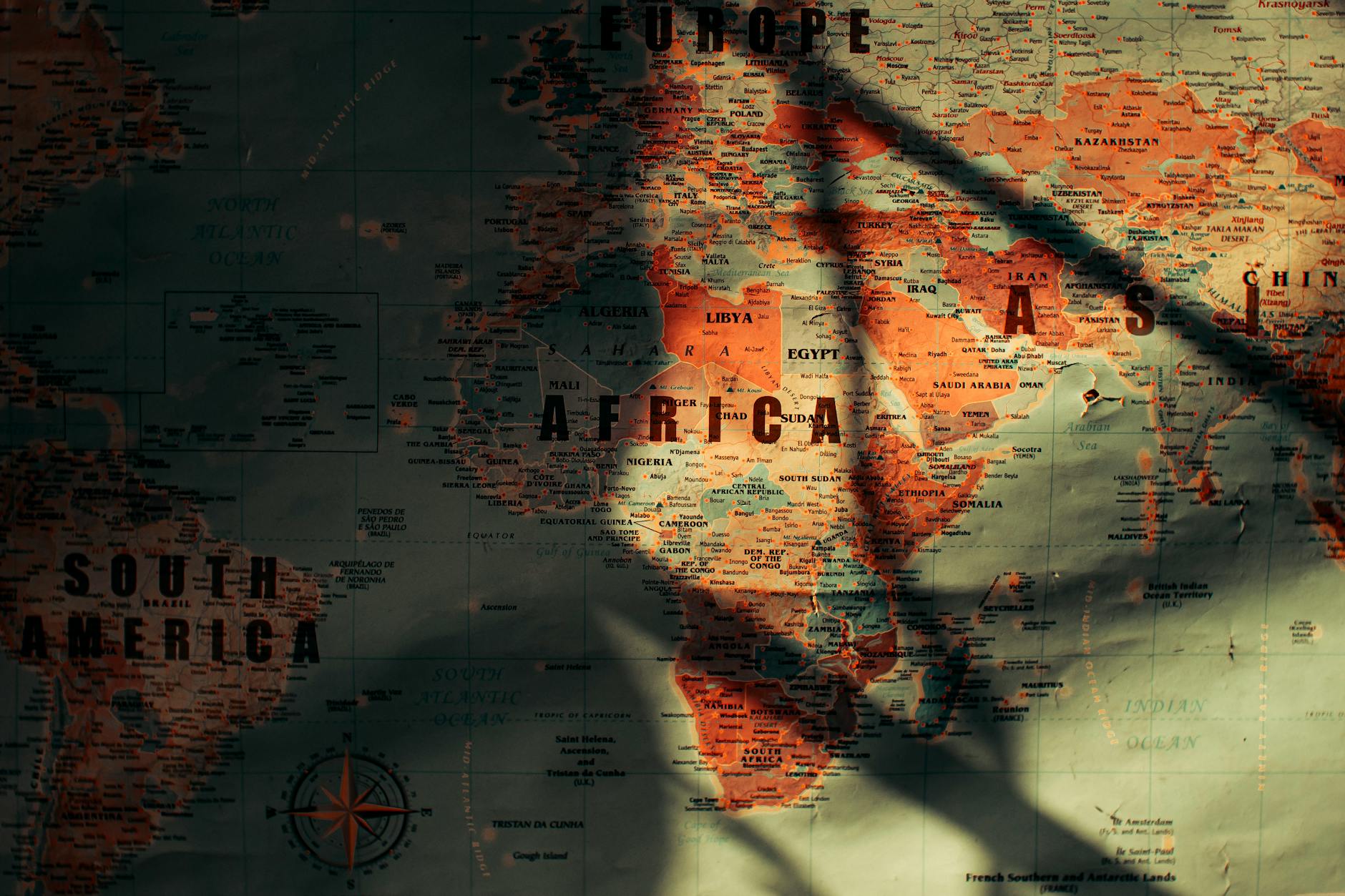
First, BRICS presents a formidable political counterbalance to the G7. It gives voice to emerging markets that feel routinely ignored when Western capitals set the global economic agenda. Second, its deliberate expansion across Asia, Africa, Latin America, and the Middle East shows that an increasing number of middle powers prefer to hedge their geopolitical bets rather than align strictly with Washington.
Third and fourth, the consensus emerging from BRICS summits has grown increasingly vocal on foreign policy matters. The bloc has expressed explicit condemnation of military escalations, such as devastating assault on Gaza. These positions clash directly with current American policy, exposing a widening rift between Western priorities and those of the Global South.
Fifth, BRICS leaders consistently criticise unilateral trade measures, particularly the broad tariffs favored by Trump. While avoiding direct personal broadsides, the message is clear: arbitrarily weaponising market access undermines predictable international trade.
Sixth and seventh, the group targets the structural governance of global bodies. BRICS demands long-overdue reforms to voting rights within the International Monetary Fund and the World Bank, where Western nations retain outsized veto power. Similarly, it insists on broadening the United Nations Security Council to grant permanent representation to nations like India, Brazil, and South Africa.
Eighth, BRICS is building concrete alternative financial institutions to reduce dependence on Western lenders. The New Development Bank, founded in 2015 with 100 billion dollars in capital, funds critical infrastructure projects across developing nations without the onerous political conditions traditionally attached to IMF or World Bank loans. Alongside it, the Contingent Reserve Arrangement offers a safety net against currency shocks.
Ninth, and perhaps most sensitive for Washington, is the ongoing effort to bypass the dollar. A single unified BRICS currency remains a distant fantasy; the member states lack the deep geographical, political, and institutional integration that made the euro possible. Moreover, the dollar still accounts for nearly 60 percent of global foreign exchange reserves. However, the true threat lies in de-dollarisation at the margins. Spurred by Western sanctions that severed Russia from the SWIFT payment network, BRICS nations are increasingly settling trade in local currencies, such as Chinese yuan or Indian rupees, and developing independent cross-border payment platforms. The objective is not to overthrow the greenback overnight, but to insulate their economies from American financial sanctions.
Tenth, BRICS serves as the loudest advocate for a multipolar world order. It champions a international system where global power is dispersed among several key players, rather than dictated by a single superpower.
These ten factors do not add up to an existential threat to American hegemony. Instead, they constitute a persistent questioning of American dominance. In international affairs, however, a hegemon often treats any questioning of its authority as an intolerable affront. Much like a neighborhood bully who interprets an onlooker simply flexing their arms as an act of defiance, Washington reacts with anger when emerging economies demonstrate any measure of independent strength.
Trump’s aggressive posture towards BRICS reflects a fundamental misunderstanding of why the group exists. Nations do not join BRICS out of hostility toward America, but out of self-interest and a desire for autonomy. By threatening punitive tariffs against countries that seek financial alternatives, Washington risks accelerating the very trend it seeks to prevent. The growth of BRICS is not a conspiracy to down America; it is a clear sign that the rest of the world is preparing for an era in which America no longer calls all the shots.