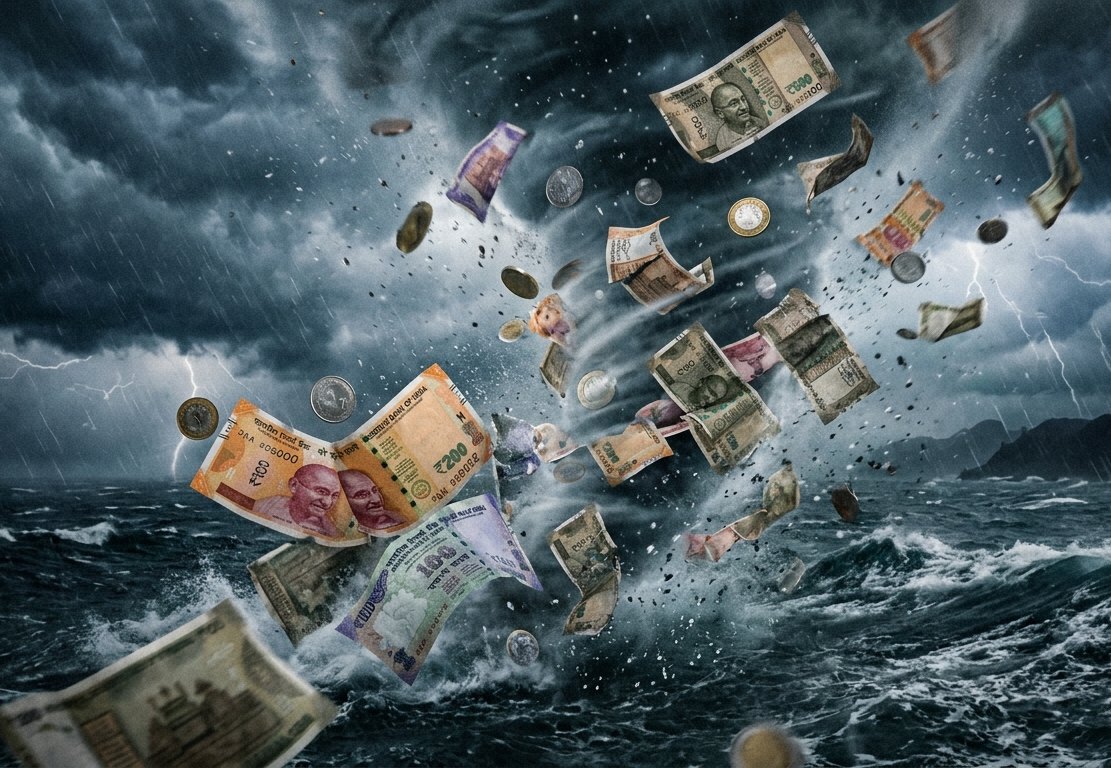
Financial markets have a cruel habit of confusing a temporary pause in a storm for permanent fair weather. Over recent trading cycles, policymakers in New Delhi and currency traders in Mumbai found moments of relief as the Indian rupee clawed back some of its lost ground against the dollar. Headlines celebrated the bounce back, framing it as a decisive victory over persistent downward pressures. Yet beneath the veneer of this modest recovery lies a precarious reality. Structural vulnerabilities continue to loom over the domestic economy, suggesting that the fundamental pressures facing the currency have merely paused rather than disappeared.
To understand the fragility of the current situation, one must look beyond the daily fluctuation of exchange rates and examine the macroeconomic architecture supporting the currency. The recent appreciation was largely driven by tactical interventions, short-term liquidity adjustments, and fleeting shifts in global sentiment. These mechanisms provide temporary stabilization, much like a tourniquet on a deep wound, but they fail to address the underlying disease. The core drivers of currency depreciation remain active and potent, waiting for the next global shock or domestic data release to test the resilience of the central bank's defenses.
A primary driver of chronic currency vulnerability is the structure of India's external trade account. Despite concerted efforts to diversify export baskets and boost manufacturing competitiveness, the nation remains structurally dependent on imported energy. When global crude oil prices experience upward volatility, the import bill balloons instantly, triggering an immediate and heavy demand for US dollars. This structural imbalance ensures that any spike in international commodity prices translates directly into downward pressure on the rupee. Tactical interventions by monetary authorities can smooth out extreme volatility, but they cannot alter the mathematical reality of an unyielding import bill.
Compounding the trade deficit is the behavior of foreign portfolio investors. Financial markets have witnessed waves of capital outflows as global liquidity conditions tighten and alternative investment destinations offer more attractive risk-adjusted returns. When foreign institutional investors pull capital out of domestic equities and debt instruments, they convert their rupee holdings back into dollars. This dual mechanism accelerates depreciation: selling pressure drives down asset prices while simultaneously creating massive localized demand for foreign currency. The resulting capital flight acts as a persistent structural drain on foreign exchange reserves.
Furthermore, the central bank's defensive playbook carries hidden costs. Managing exchange rate volatility requires deploying substantial reserves and utilizing complex forward book commitments. While these measures project strength and prevent disorderly depreciation in the short term, they diminish the future ammunition available to policymakers. As the net effective import cover narrows when adjusted for forward liabilities, the margin for error shrinks significantly. Markets are acutely aware of these trade-offs, and sophisticated participants know that artificial price stabilization cannot substitute for deep-seated economic productivity and export growth.
Inflationary dynamics further complicate the picture. Imported inflation, fueled by a weaker currency and elevated energy costs, seeps into domestic supply chains, eroding purchasing power and forcing higher borrowing costs onto retail and corporate borrowers. When higher interest rates fail to curb inflation because the root cause stems from external supply shocks rather than domestic overheating, the economy suffers a double blow. Businesses face squeezed margins, consumers face higher debt servicing burdens, and the overall growth momentum cools down.
Ultimately, the recent bounce back of the rupee should be viewed with sober realism rather than misplaced optimism. Temporary corrections do not equal structural health. If policymakers wish to insulate the domestic currency from relentless external shocks, the focus must shift decisively toward boosting long-term export competitiveness, attracting sticky foreign direct investment rather than volatile portfolio capital, and accelerating the transition toward energy independence. Until these fundamental adjustments take root, every recovery remains vulnerable to the next gust of global economic turbulence.