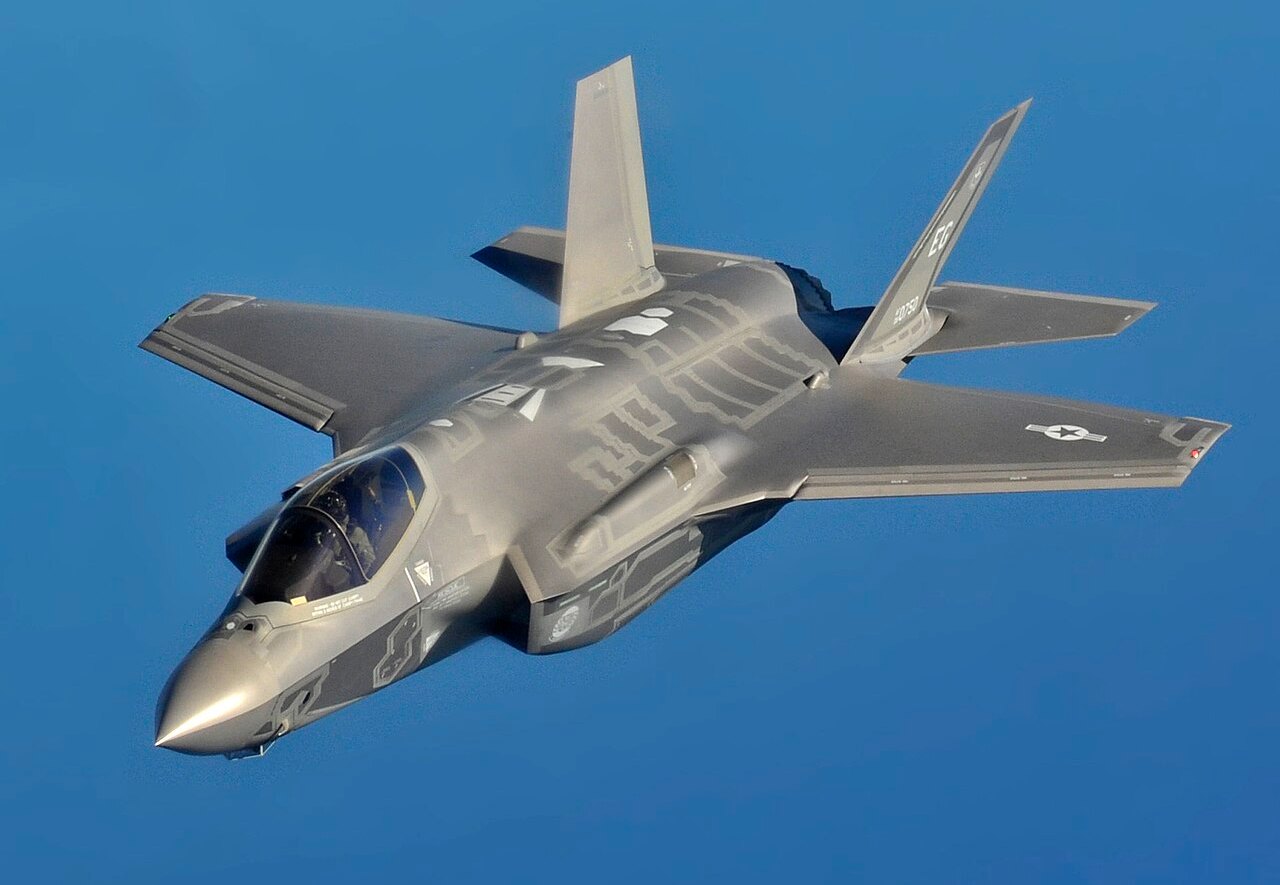
Military diplomacy often relies on tight-lipped communiques and polite applause. Yet during the final press briefing of the Tarang Shakti aerial exercise in Jodhpur, the top commander of the Indian Air Force chose a remarkably blunt brand of humor. Sitting alongside the visiting chief of the United States Pacific Air Forces, Air Chief Marshal A.P. Singh delivered a punchline that exposed the deepest friction in modern defense partnerships. Commenting on persistent media speculation about a potential American pitch to sell the state-of-the-art F-35 stealth fighter to New Delhi, the air chief quipped that American handlers refuse to let Indian personnel anywhere near the aircraft, rendering talk of a commercial transaction absurd.
The remark drew chuckles, but it captured a profound structural reality. For years, defense analysts have floated the idea of Washington offering its crown jewel to wean New Delhi off its historic reliance on Russian military hardware. Proponents argue that supplying the fifth-generation jet would anchor India firmly within the Western security architecture in the Indo-Pacific. Yet the reality on the tarmac during multinational exercises tells a very different story. When American F-35 Lightning II jets flew into India for the drills, they were sequestered in heavily guarded, isolated enclosures. Maintained exclusively by United States personnel, the aircraft remained strictly out of bounds for Indian pilots and technicians.
This deep-seated reluctance stems from Washington’s obsessive protection of its crown jewels. The F-35 is far more than a supersonic combat platform. It is a flying supercomputer whose true power lies in its sensor fusion, proprietary software, and electronic warfare suites. American lawmakers and military planners view the technological footprint of the jet through a lens of extreme paranoia. Strict regulatory frameworks, such as the foundational security agreements Washington typically demands from its partners, are designed to prevent sensitive source code and stealth coatings from leaking to adversaries. For a nation like India, which maintains a strategic doctrine of multi-alignment and a massive inventory of Russian weaponry, crossing these American regulatory hurdles remains nearly impossible.
Compounding the problem is the lack of any formal, high-level procurement offer. Air Chief Marshal Singh clarified that despite the media chatter and diplomatic overtures, no official proposal for the F-35 has actually crossed the desk of the Indian government. The discourse has largely existed in the realm of speculation, fueled by periodic overtures from Washington but lacking the concrete details that define serious defense procurement. Even if an offer were tabled, the terms would likely be unpalatable to a military leadership that fiercely guards its operational autonomy. India has long insisted on deep technology transfers and domestic manufacturing rights, concessions that Washington has historically reserved only for its closest treaty allies.
Meanwhile, New Delhi faces a ticking clock regarding its air combat capabilities. As neighboring rivals field increasingly sophisticated stealth fleets, the Indian Air Force finds itself caught between the aging remnants of its legacy fleet and the slow burn of its indigenous Advanced Medium Combat Aircraft project. While domestic designers work tirelessly on the next-generation platform, homegrown fighters will take years to reach squadron service. This leaves a dangerous capability gap in the intermediate future.
To bridge this operational deficit, India must weigh external options carefully. Rumors have also swirled regarding alternative fifth-generation platforms, such as a potential evaluation of Russia's Su-57. Yet Indian military planners remain methodically cautious. The air chief noted that while Moscow's proposal is known, no decision has been made to even evaluate the aircraft, and any assessment will depend strictly on official government directives and whether the platform truly meets rigorous operational benchmarks.
The juxtaposition of the F-35 in a cordoned-off hangar and the candid frustration of the Indian air chief highlights the limits of defense partnerships. Technology sharing is ultimately an exercise in trust. Until Washington is willing to lower its guard and trust New Delhi with the inner workings of its most advanced machine, or until India achieves total self-reliance in cutting-edge aerospace engineering, the conversation surrounding the F-35 will remain little more than theater. For now, the world's most lethal fighter jet serves as a reminder of the barriers that divide nations, even those professing to be strategic partners in a contested sky.