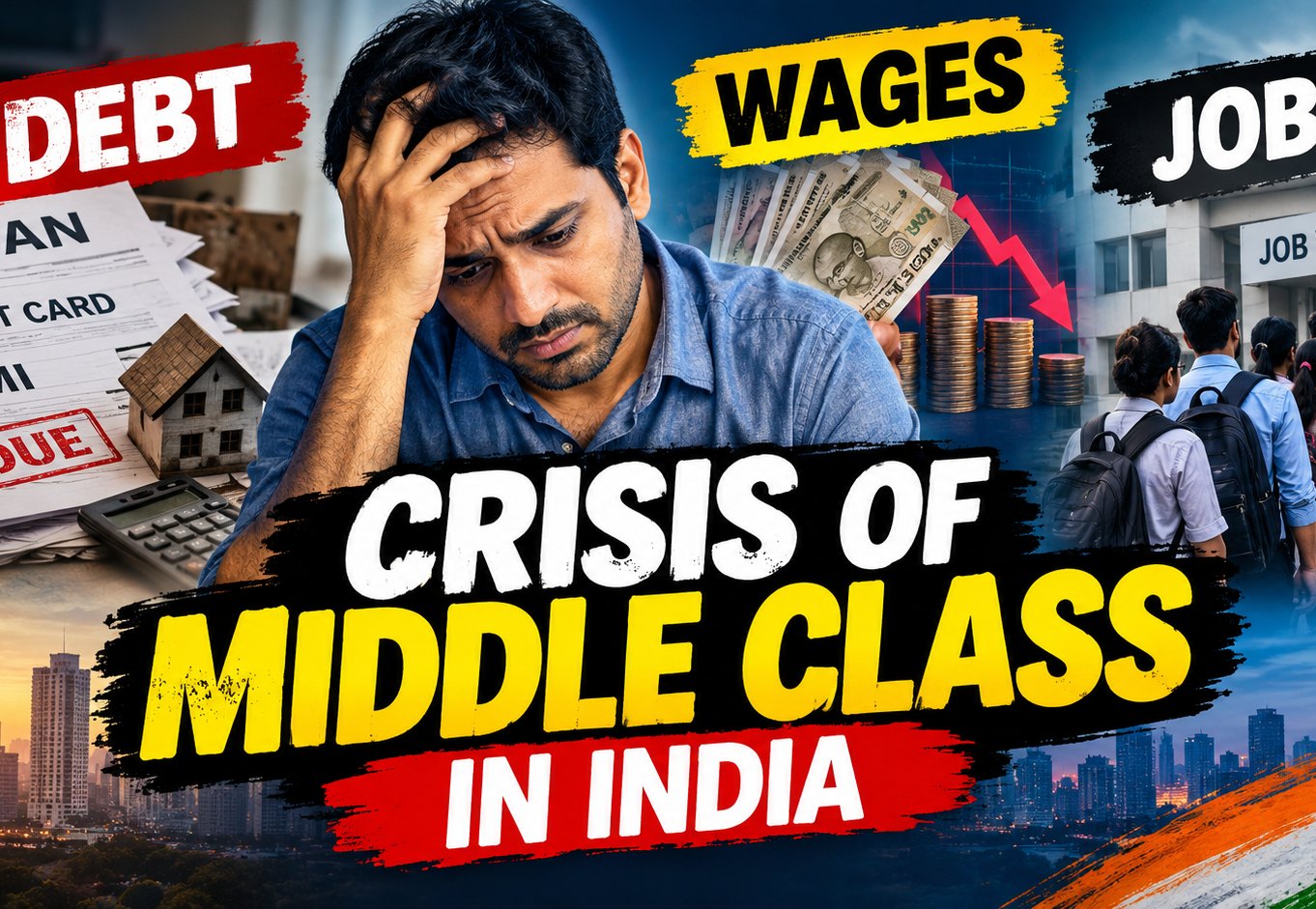
Economic anxiety has a way of creeping up on a society before it makes headlines. For decades, the middle class has served as the anchor of modern economic aspiration, a group defined by steady employment, rising disposable incomes, and the promise of upward mobility. Yet beneath the surface of official growth figures, a quieter and far more precarious reality is taking root. The foundation of this vital demographic is facing a compounding pressure that threatens to unravel decades of social progress. The modern middle class is being squeezed from three distinct directions at once: vanishing job security, stagnant or declining real wages, and an escalating reliance on precarious personal debt.
To understand the severity of this crunch, one must first look at the shifting nature of employment. The traditional corporate ladder, once viewed as a reliable conveyor belt from entry-level positions to secure retirement, is fracturing. White-collar employment, particularly in sectors that long promised middle-class status like technology, finance, and professional services, is undergoing a profound contraction. Automation, artificial intelligence, and corporate restructuring have altered the demand for human labor. Companies are flattening hierarchies and cutting back on permanent, salaried roles in favor of contract work, gig arrangements, and lean staffing models.
This restructuring has stripped away the cushion that protected white-collar workers during economic downturns. Laydowns are no longer confined to manufacturing floors or manual labor sectors. Highly educated professionals find themselves cast into a volatile labor market where tenure is fleeting and re-employment often comes at a steep discount in pay. When a breadwinner loses a secure corporate job, the shockwaves instantly destabilize the household economy. Families must navigate a reality where the next paycheck is never guaranteed, and the skills they spent years acquiring risk premature obsolescence.
Compounding this employment instability is the second prong of the crisis: stagnant or falling real wages. Even for those fortunate enough to retain their positions, compensation has failed to keep pace with the cost of living. Inflation has eroded the purchasing power of the middle-class rupee, turning everyday necessities into budget-straining expenses. Education, healthcare, housing consume an increasingly disproportionate share of household budgets.
Corporate balance sheets may look healthy on paper, but that vitality rarely trickles down to the rank-and-file employee in the form of meaningful raises. Instead, wage growth has decoupled from productivity gains. Workers are expected to do more with less, absorbing the responsibilities of departed colleagues without commensurate financial reward. This stagnation creates a psychological toll as much as a financial one. When hard work and professional advancement no longer guarantee an improved standard of living, the social contract binding the individual to the economic system begins to fray.
Faced with the widening gap between stagnant earnings and rising expenses, households have turned to the third and most dangerous pressure valve: debt. Easy access to personal loans, credit cards, and digital lending applications has made borrowing frictionless. For a time, credit acts as a convenient shock absorber, allowing families to maintain their accustomed lifestyles, pay school fees, or cover unexpected medical emergencies without immediate liquidation of assets.
However, debt is a master of disguise. What begins as a temporary bridge to the next month quickly hardens into a permanent trap. As interest rates fluctuate and repayment obligations mount, debt service consumes a massive portion of monthly income. Households find themselves borrowing simply to service existing loans, entering a vicious cycle of financial dependency. When credit expansion outpaces income growth by a wide margin, the financial architecture of the household becomes structurally unsound. A single medical crisis or job interruption can transform manageable liabilities into insolvency.
The macro-economic implications of this middle-class squeeze extend far beyond individual household ledgers. The middle class is the primary engine of consumer demand. When these families cut back on discretionary spending, defer major purchases, and restrict their lifestyles to bare essentials, the broader economy feels the chill. Consumption-driven growth stalls when the consumers themselves are overburdened by debt and underpaid by employers.
Governments and policymakers ignore these structural warnings at their peril. Economic policies that focus exclusively on headline gross domestic product growth while neglecting the quality of employment and income distribution are building on shifting sands. If the middle class is reduced to a state of perpetual financial vulnerability, the long-term stability of the entire economic system is left hanging in the balance. Restoring health to this critical demographic requires more than temporary fiscal relief; it demands a fundamental rethinking of labor markets, wage policies, and the regulatory oversight of consumer credit. Until those structural reforms take hold, the middle class will remain suspended over an economic abyss.