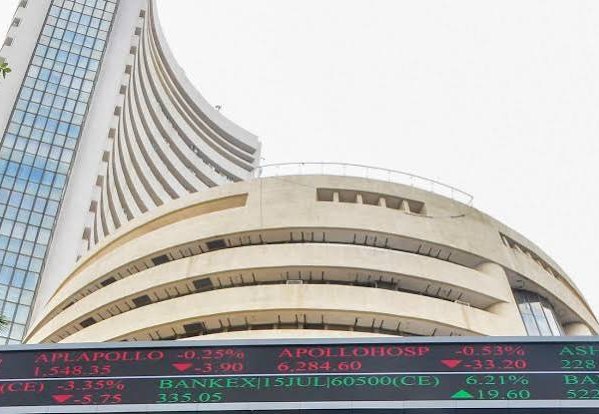
A persistent anomaly has taken hold in India’s financial landscape. While official government figures celebrate a gross domestic product growth rate of 7.8%, solidifying the country's status as the world’s fastest-growing major economy, domestic equity markets are experiencing a severe downturn. Over the space of just two trading sessions in late September, Indian equities surrendered approximately $83 billion in market capitalization, translating to an erosion of roughly 8 trillion rupees. Since the start of 2026, the market has fallen by 15%, creating a sharp contrast between macroeconomic headlines and stock exchange realities.
This decline is not part of a synchronized global retrenchment. Across developed and emerging economies, market trajectories have diverged significantly. Japanese equities have gained 26% year-to-date, South Korea’s indices have surged by 60%, and Western benchmarks such as the Dow Jones Industrial Average and the UK’s FTSE have posted steady gains of 6.4% and 7.5% respectively. Even where markets have stumbled, the losses appear minor when set against Mumbai's slide: Chinese stocks have declined by 4.8% and Hong Kong by 7%, leaving India’s equity contraction at roughly double or triple the rate of its regional peers.
The Dynamics of Capital Flight
To understand this decoupling, one must look at foreign institutional participation. Although domestic retail investors have entered the market in record numbers, foreign institutional investors retain a disproportionate influence over index direction and price discovery. Foreign capital has retreated rapidly from Indian assets throughout 2026, with net outflows reaching $2.177 billion (approximately 20,000 crore rupees).
This departure is partly driven by asset arbitrage. Following an extended bull run, Indian equities reached stretched valuations that detached from corporate earnings fundamentals. Speculative momentum pushed domestic price-to-earnings multiples well above global benchmarks. Institutional investors responded by liquidating overvalued Indian positions to deploy capital into cheaper or higher-yielding international assets. Just as a property investor sells an inflated plot in one district to purchase undervalued land in an expanding corridor, foreign funds have reallocated resources away from Mumbai.
Simultaneously, shifting global macroeconomics has drawn capital back toward Western fixed-income markets. Heightened geopolitical instability, particularly conflicts in the Middle East, has reinforced demand for safe-haven assets and boosted the US dollar. More critically, yields on US Treasury securities have risen to levels not seen in over two decades, with benchmark yields reaching around 5.2%. Faced with guaranteed returns from sovereign debt issued by the world's primary reserve currency, global portfolio managers have found little reason to hold overextended, higher-risk equities in emerging markets.
Structural Vulnerabilities Beneath Headline Growth
The exodus of foreign capital also highlights growing skepticism regarding India's underlying economic fundamentals. Beyond the headline 7.8% GDP figure, key vulnerabilities continue to weigh on the real economy.
Headline inflation has approached 5%, exceeding the Reserve Bank of India’s 2% mid-point target, driven largely by sustained pressures in food prices. Foreign trade faces persistent headwinds from global tariff uncertainty and protectionist policies. Energy costs present an acute threat: as an economy that imports 89% to 90% of its crude oil requirements, India is vulnerable to elevated energy prices. With Brent crude trading around $105 per barrel, and periodically touching $110, elevated import bills are squeezing corporate margins and draining household disposable income.
Furthermore, economists continue to debate the methodologies used to calculate national output, raising questions about whether official figures fully capture real conditions on the ground. Domestic consumption exhibits a K-shaped pattern: luxury and high-end goods sectors continue to expand, while middle-class savings have dwindled, weakening mass-market demand. Because government capital expenditure has carried a disproportionate share of total economic activity, private corporate investment remains uneven.
The global divergence in performance highlights these diverging pressures. While South Korea (+60%) and Japan (+26%) have surged ahead on tech momentum, and Western markets like the UK (+7.5%) and US Dow Jones (+6.4%) maintain steady gains, India's 15% drop contrasts sharply even with Chinese (-4.8%) equity declines. Compounded by $2.177 billion in foreign institutional capital outflows (~₹20,000 crore), a 5.2% US Treasury benchmark yield, and Brent crude hovering around $105 per barrel, the domestic market faces severe macro headwinds.
The Artificial Intelligence Deficit
A third, structural factor explains why Indian markets have lagged behind global peers like Japan, South Korea, and the United States: the composition of its benchmark technology indices.
The global rally in major stock indices has been fueled largely by commercial investments in artificial intelligence, hardware infrastructure, and next-generation software models. Markets rich in semiconductor fabricators, hardware exporters, and frontier AI developers have attracted significant capital inflows. When global tech valuations shift, capital consolidates within markets heavily weighted toward advanced technology infrastructure.
India's technology sector presents a different profile. Dominated by traditional IT services and business process outsourcing, domestic technology firms have historically depended on low-cost software maintenance and back-end services. As enterprise clients adopt automated AI tools to handle coding, testing, and system administration, legacy outsourcing models face structural margin pressure. Unlike East Asian and Western markets where AI advances act as immediate balance-sheet tailwinds, Indian IT firms face a double challenge: lower domestic corporate investment in frontier research and shrinking revenues in traditional service lines.
Until corporate earnings catch up with market pricing, energy prices ease, and domestic technology firms transition toward higher-value capabilities, headline growth alone will not be enough to turn around India's stock market performance.