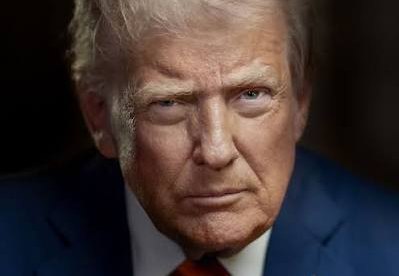
As autumn deepens across the United States, the political machinery is grinding toward a high-stakes confrontation. The impending congressional elections are shaping up to be far more than a routine legislative renewal. With all four hundred and thirty-five seats in the House of Representatives and thirty-five seats in the Senate hanging in the balance, alongside critical gubernatorial races, the contours of American governance are about to be violently redrawn. Current polling points toward a severe reprimand for the ruling party, suggesting Donald Trump and his Republican congressional allies are hurtling toward a significant defeat.
While the presidency itself is not on the ballot, the halfway mark of a presidential term traditionally functions as a referendum on the incumbent administration. The mathematics of modern American politics dictates that any loss of congressional majorities will drastically curtail the executive branch's legislative ambitions. For the remainder of his term, a weakened president would face an unyielding wall of resistance on Capitol Hill. Yet the irony of these midterms lies in the disconnect between the ballot paper and the public mood. Voters will not see the president's name printed beside their local candidates, yet the electorate views the contest almost entirely through the prism of national leadership.
Recent data from the Pew Research Center underscores this personalized dynamic. Nearly two-thirds of voters view their congressional ballot as a direct verdict on the administration. More ominously for the White House, those who draw a direct line between their vote and the president lean heavily toward opposition. Forty-four percent of surveyed voters view their upcoming choice as a vote against the administration, while a mere nineteen percent view it as an endorsement. This creates a gravitational pull that threatens even safe Republican strongholds, dragging candidates down in what pollsters describe as a distinctly negative political gale.
The erosion of public confidence is starkly visible across multiple polling indices. A joint survey conducted by the Washington Post and ABC News places the president's approval rating at thirty-three percent. This represents a steep decline of four percentage points since July and an eight-point drop compared to the same period last year. Meanwhile, independent metrics from the Pew Research Center place approval even lower at thirty percent, contrasted with a staggering sixty-eight percent disapproval rating. Such severe polarization highlights a base that is deeply alienated and a body of independent voters that has grown thoroughly disillusioned.
Economic anxiety remains the primary catalyst behind this political freefall. When the administration ascended to power, it did so on robust pledges to mend household finances and revitalize the national engine. Yet everyday Americans are experiencing a starkly different reality, defined by persistent inflation, elevated energy costs, and an escalating cost of living. The Pew data reveals that eighty-four percent of voters consider economic conditions the paramount factor guiding their vote. Macroeconomic indicators reflect these grassroots pressures. National debt continues to balloon, hovering well above historical norms relative to gross domestic product, while foreign appetite for government bonds wanes amid lingering anxieties over sovereign stability.
Compounding these domestic grievances is widespread public dissatisfaction with foreign entanglements. Despite campaign commitments to wind down protracted overseas conflicts, geopolitical flashpoints continue to strain global energy markets and keep fuel prices stubbornly high. For voters who initially overlooked the administration’s polarizing rhetoric in exchange for promised stability, the failure to deliver tangible relief on either the economic or international front has broken the fragile coalition that once secured victory.
Beyond policy grievances, political momentum tells its own story through the lens of grassroots mobilization. Electoral outcomes are frequently determined not just by the arguments presented, but by the sheer enthusiasm of party loyalists who drive turnout at the precinct level. Current metrics indicate a profound asymmetry in political energy. Democratic operatives and voters exhibit high levels of engagement, viewing the midterms as a historic opportunity to reclaim legislative power. In contrast, Republican ranks display a distinct lethargy, with core supporters showing diminished enthusiasm for heading to the polls. This enthusiasm gap casts a long shadow over independent voters, who historically hesitate to throw their weight behind a party whose base lacks internal drive.
For an administration accustomed to dominating the political landscape, the convergence of sliding approval ratings, economic headwinds, and depressed party enthusiasm signals a perilous trajectory. Barring an unforeseen shift in the national mood, the upcoming congressional elections threaten to strip away the legislative shields that have protected the executive agenda, leaving a once-dominant political force isolated and vulnerable in the heart of Washington.