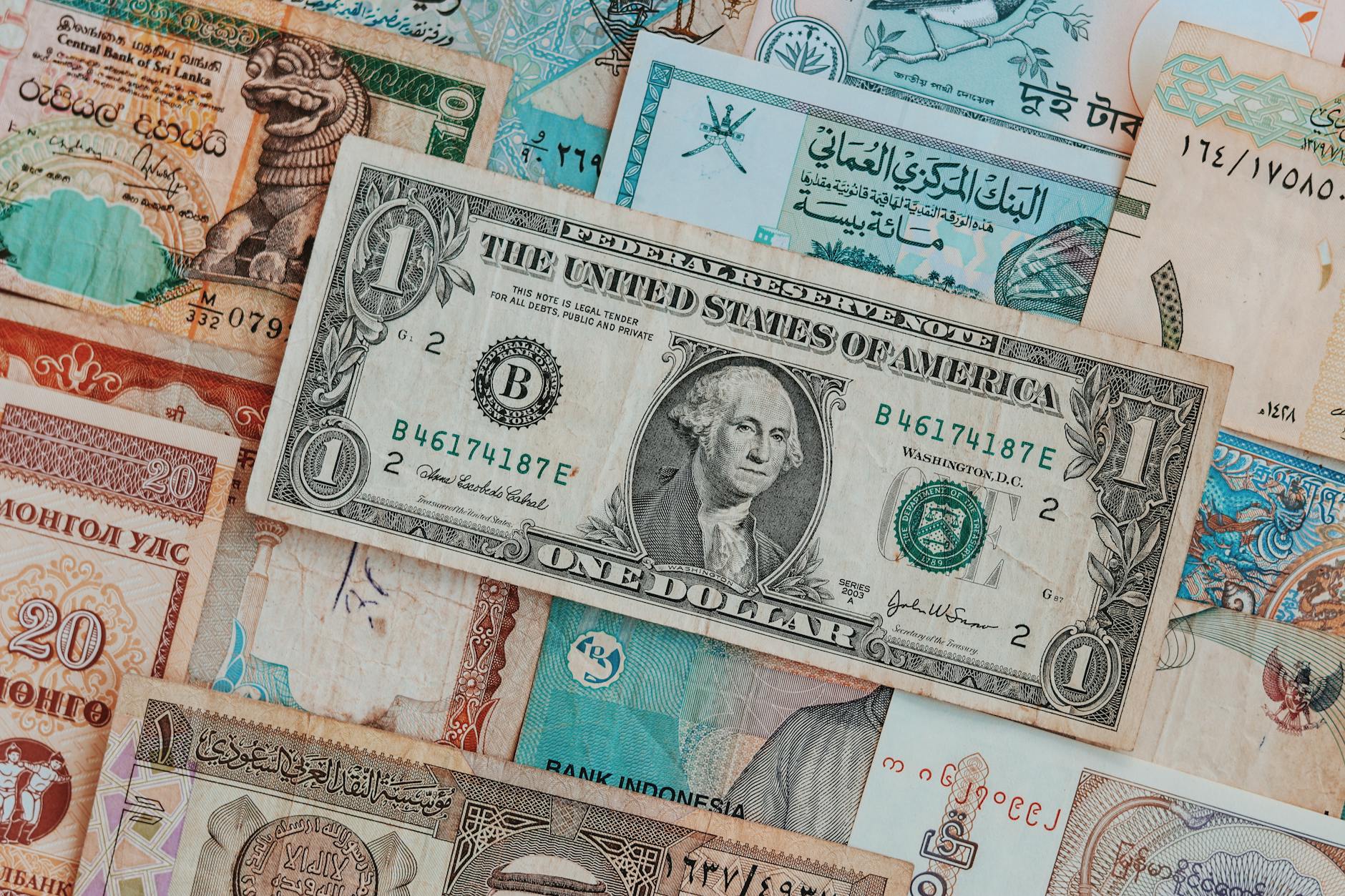
For financial commentators seeking a dramatic narrative, few stories are as alluring as the impending demise of the American dollar. Social media feeds and digital outlets routinely buzz with speculation that the BRICS grouping (comprising Brazil, Russia, India, China, South Africa, and its expanded roster of emerging economies) is on the verge of issuing a common currency to shatter Washington’s monetary hegemony.
Yet, stripped of sensationalism, the reality is far more mundane. While the economic weight of the BRICS bloc is undeniable, the creation of a unified tender to dethrone the dollar remains a geopolitical and economic fantasy. What is actually unfolding is not the birth of a global monetary rival, but a fragmented, pragmatic attempt by developing nations to insulate themselves from the weaponisation of American finance.
The Origins of Discontent
To understand why the notion of a BRICS currency keeps resurfacing, one must look at how the greenback is used as an instrument of statecraft. The global financial architecture relies overwhelmingly on the dollar for international trade, foreign exchange reserves, and cross-border settlement. Central to this network is SWIFT (the Society for Worldwide Interbank Financial Telecommunication), a messaging network connecting over 11,000 financial institutions worldwide.
Although SWIFT is nominally based in Belgium, American dominance over global clearing systems gives Washington immense leverage. When Russia invaded Ukraine, building on earlier interventions in Crimea, the United States and its Western allies effectively severed major Russian banks from SWIFT. Russian assets were frozen, and its ability to conduct foreign trade in dollars was abruptly choked off.
This move sent a chilling message throughout the developing world. The lesson for capitals in Beijing, New Delhi, or Brasilia was clear: dollar dependency carries systemic risk. If a nation falls out of political favor with Washington, its connection to the global economy can be severed overnight. Similar measures used against Iran and Cuba reinforced the perception that the dollar had transformed from a neutral medium of exchange into a geopolitical weapon.
Why a Single BRICS Currency Will Not Happen
Russia, as the hardest-hit victim of Western sanctions, has been the primary advocate for a single BRICS currency. China, eager to project global influence, has selectively supported the rhetoric. However, the structural hurdles to creating a unified currency are insurmountable.
First, consider the contrast with the Eurozone. When Europe introduced the euro, it did so across a geographically contiguous region with shared democratic institutions, overlapping histories, and deeply integrated economic policies. Even then, managing monetary union without fiscal integration proved agonizingly difficult, leading to crises in Southern Europe and the eventual exit of the United Kingdom via Brexit.
BRICS, by comparison, is an intercontinental assemblage with no geographic continuity, no shared political culture, and vast economic disparities. The bloc spans South America, Africa, Eurasia, and Asia. Aligning the macroeconomic policies of an export-heavy authoritarian superpower like China with an agrarian democracy like India, or a commodity-reliant economy like Brazil, is an economic impossibility.
Second, internal rivalries prevent the deep trust required for monetary union. India and China share a volatile, disputed border and remain fierce geopolitical rivals. India’s Commerce Minister, Piyush Goyal, made New Delhi’s position explicit by confirming that India is not in favor of a BRICS common currency. India has no desire to enter a currency union where China, by virtue of its sheer economic size, would inevitably dictate monetary policy.
Third, the relationship between BRICS members and Washington varies wildly. While Moscow is locked in a proxy war with the West and Beijing engages in intense strategic competition, other members maintain crucial ties with America. Nations like the United Arab Emirates are deeply integrated into the dollar ecosystem. India maintains a strategic partnership with Washington, participating in groupings like the Quad to counter Chinese influence. A collective front against the dollar simply does not exist.
The rhetoric has also drawn sharp warnings from American political leaders. Donald Trump warned that any effort by BRICS nations to bypass or undermine the greenback would be met with 100 percent tariffs and retaliatory trade barriers. For nations heavily reliant on trade with the Western world, the cost of challenging the dollar far outweighs the theoretical benefits.
What Is Actually Happening: De-Risking, Not De-Dollarisation
If a common currency is off the table, why does Washington remain uneasy? Because while a unified BRICS tender is a non-starter, a broader shift toward financial fragmentation is underway. BRICS nations are not trying to kill the dollar; they are trying to build bypass routes around it.
Rather than creating a single currency, member states are promoting bilateral trade in their local currencies and developing national alternative payment rails:
The objective is not to overthrow the dollar globally, but to achieve a degree of financial de-risking. Nations want the option to trade in local currencies when convenient, insulating themselves from potential sanctions or American monetary policy shifts.
The Superiority of the Greenback
Despite these shifts, the dollar’s reign remains secure for the foreseeable future. The greenback’s dominance rests not merely on military strength or trade volume, but on the depth, liquidity, and transparency of American financial markets, backed by the rule of law and an open capital account.
Neither China’s yuan nor any proposed BRICS alternative can match these features. Beijing keeps strict capital controls to maintain domestic economic stability, rendering the yuan unsuited to replace the dollar as the world's premier reserve asset. Global central banks will not hold vast amounts of a currency that cannot be freely converted or moved across borders.
The debate over a BRICS currency fundamentally misdiagnoses the situation. The global financial system is not heading toward a single new sovereign currency, but toward a multi-polar architecture of payment systems. The greenback will remain the dominant global currency, but it will no longer be the only game in town.