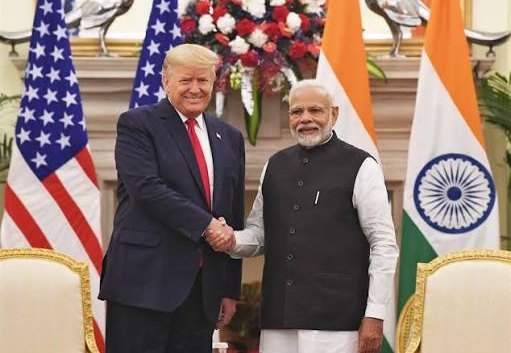
International trade negotiations rarely follow a straight line, but the sudden pivot in Washington and New Delhi over a bilateral commerce agreement has caught observers off guard. Only ten days after Indian Finance Minister Nirmala Sitharaman conceded that significant barriers remained and that give-and-take proved exceedingly difficult, a dramatic shift materialized. Commerce Minister Piyush Goyal announced that the first phase of the trade pact had reached completion, leaving only legal drafting and operationalization. This abrupt turnaround raises a central question regarding which party blinked, which pressures prevailed, and what compromises underpin this nascent accord.
At the heart of the bilateral friction lies the persistent American grievance regarding trade imbalances. The United States argues that India enjoys an unacceptably large trade surplus. During the 2025 to 2026 financial year, bilateral trade between the two nations reached 140 billion dollars, with India recording a surplus of 33.8 billion dollars through higher exports and lower imports. Citing this disparity, President Donald Trump has targeted Indian goods with heavy tariffs. Yet this rationale ignores broader economic realities. China maintains a trade surplus with the United States that dwarfs India’s figures by multiple orders of magnitude, a disparity Washington hesitates to challenge directly. Furthermore, no nation maintains a trade surplus with every global partner. India runs a trade deficit with both China and Russia, reflecting normal patterns of global commerce that cannot be reduced to bilateral arithmetic.
A second major stumbling block involves American access to Indian agriculture and dairy markets. Washington has long pressed for entry for its cheese, butter, milk, soybeans, cotton, and maize. While the initial phase of the trade deal appears to grant some concessions, the implications for Indian farmers are profound. Domestic producers already struggle with viability and debt, and the introduction of heavily subsidized, highly scalable American commodities, some of which involve genetic modification, poses a severe competitive threat. Previous policy shifts offer a cautionary precedent. Following assurances from Prime Minister Narendra Modi that his administration would stand as a protective wall for farmers, the government temporarily lifted the eleven percent duty on foreign cotton imports. The move benefited American and Australian producers while dealing a heavy blow to domestic cotton growers. As Washington pushes for similar market openings for maize and soybeans, the exact terms of the first-phase agreement will determine how much ground New Delhi has conceded.
Energy diplomacy exposes another layer of contradiction. The United States recently enacted legislation spearheaded by Senator Lindsey Graham that threatens one hundred percent tariffs on nations purchasing Russian crude oil. Yet the United States itself has imported diesel refined from Russian crude, highlighting a glaring double standard. Whether Washington will maintain these punitive measures against Indian energy imports while overlooking its own procurement remains an unresolved question in the diplomatic framework.
Technological cooperation presents a similarly uneven record. Historically, the United States has restricted advanced technologies from reaching India, citing dual-use military applications. Although the Initiative on Critical and Emerging Technology was launched in 2023 to foster collaboration in artificial intelligence, semiconductors, and defense innovation, much of the framework remains confined to paper without aggressive follow-through. Even within the civil nuclear sector, where a landmark agreement was signed in 2008, commercial progress has been stifled by disputes over supplier liability in the event of an accident.
In the defense sphere, India has diversified its procurement away from traditional reliance on Russia, purchasing 22 billion dollars worth of American equipment since 2002. However, Washington consistently resists demands for co-production and technology transfer, a standard feature of defense partnerships that Russia historically accommodated. Instead of treating India as a co-development partner, American policy often frames it strictly as a customer, exemplified by restricted access to advanced platforms like the F-35.
Geopolitical factors further complicate the economic alignment, particularly Islamabad's role in Washington's foreign policy calculations. While deepening defense ties with New Delhi, the United States continues to supply military hardware to Pakistan. Moreover, American pressure extends beyond bilateral trade, forcing India to curtail economic engagement with Iran and navigate secondary sanctions regarding defense acquisitions such as Russia's S-400 system. As this trade deal moves from drafting to implementation, the fundamental test will be whether New Delhi has managed to safeguard its strategic autonomy while accommodating Washington's demands.