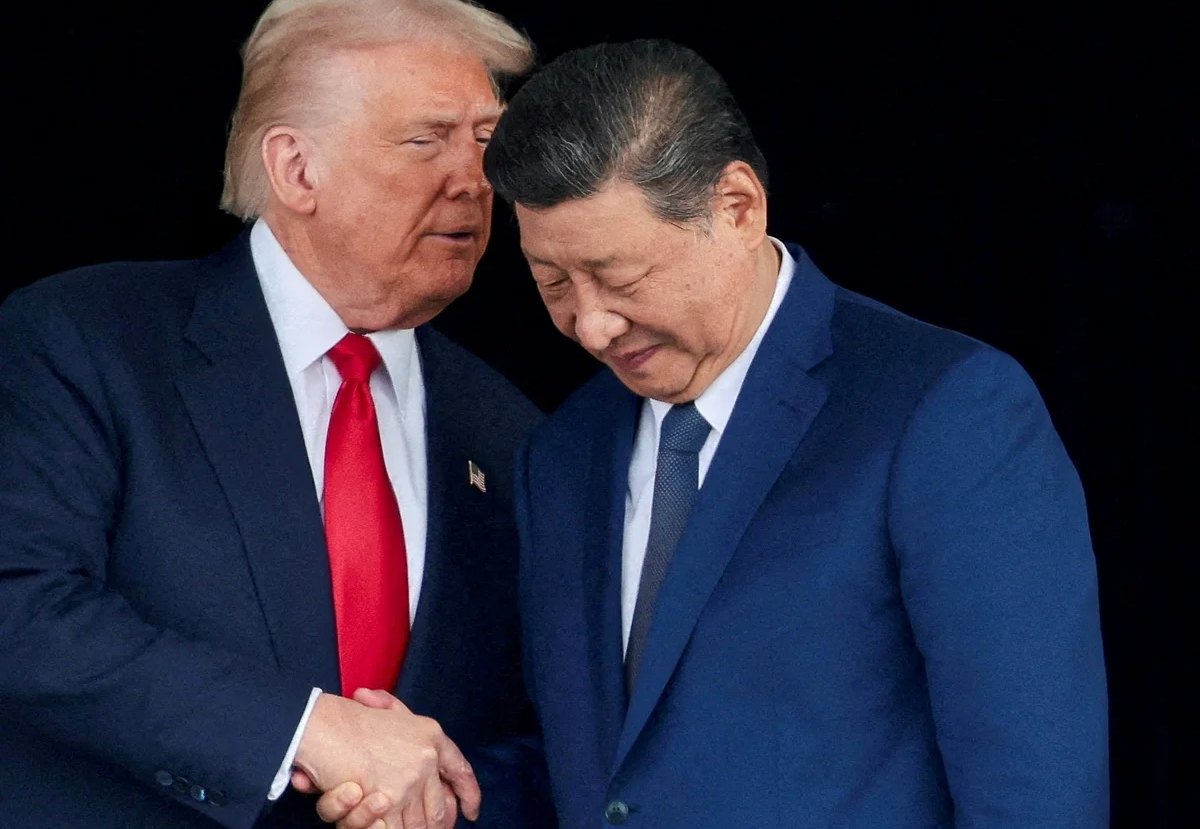
When Chinese President Xi Jinping stepped off his aircraft onto American soil, he was met at the tarmac not by a mid-level diplomat, but by Donald Trump himself. The grand gesture set a strikingly collaborative tone for a high-stakes summit between the leaders of the world's two largest powers. Xi’s public call for the two nations to work as partners rather than enemies highlighted a mutual recognition: despite years of escalating rhetoric, neither side can afford an outright rupture.
The summit marks a critical juncture in bilateral relations that are currently defined by four overlapping friction points: trade, Taiwan, artificial intelligence, and global geopolitics. While the meeting signifies a welcome resumption of personal diplomacy, the fundamental economic and strategic forces shaping the Sino-American rivalry suggest that any meaningful thaw will be hard-won.
The Limits of Economic Decoupling
The complex economic interdependence between Washington and Beijing traces its roots back five decades to the cold war era. The foreign policy strategy championed by Henry Kissinger sought to isolate the Soviet Union by drawing a rift between Moscow and Beijing. By opening doors to China, the United States laid the groundwork for the country to transform into a global manufacturing powerhouse. Today, the American consumer relies heavily on Chinese supply chains, while China relies on the American consumer market to absorb its vast industrial output.
This deep integration has created a persistent trade imbalance. The overall trade deficit of the United States stands at roughly $1.2 trillion, with China accounting for $202 billion of that total. When Trump initially ramped up aggressive tariff strategies, elevating duties on Chinese goods to as high as 240%, the goal was to exploit Beijing's slowing domestic economy and force sweeping concessions.
However, the strategy faced severe structural resistance. China proved far more resilient to unilateral pressure than expected. Rather than crumbling under tariffs, Chinese exporters diversified into alternative regions, leveraging the fact that Washington was simultaneously engaging in trade disputes with long-standing allies in Europe.
By 2025, total Chinese exports reached $3.7 trillion, reflecting a 6.1% increase despite ongoing trade friction. Shipments to members of the Association of Southeast Asian Nations rose by 14% to reach $660 billion, while exports to European markets expanded by 9%.
At the same time, Beijing activated leverage of its own by restricting access to critical rare earth elements. Processing 80% to 90% of global supply, China controls essential raw materials used in everything from consumer electronics and electric vehicle batteries to advanced military guidance systems. Facing domestic economic pushback and supply bottlenecks, Washington recently softened its approach, trimming select tariffs by 30% and extending a temporary truce in trade hostilities.
Neither nation can easily walk away. China’s export-driven economic engine requires stable access to American buying power, while the United States cannot decouple without causing severe disruptions across its domestic manufacturing and retail sectors.
Pragmatism Over Flashpoints
Beyond trade, the summit addressed long-standing geopolitical flashpoints, most notably the status of Taiwan. Prior to the meeting, Beijing reiterated its core position, advising Washington to act with extreme caution regarding the island. While official American policy continues to acknowledge the One China framework, Washington maintains extensive non-official economic and defense ties with Taipei, including regular arms sales.
Despite the elevated rhetoric, the risk of an immediate military escalation remains contained by shifting pragmatic calculations in Washington. The current administration has signaled a growing reluctance to commit military resources to distant overseas conflicts, adopting a more transactional view of international commitments. For Beijing, this stance signals that Washington may prefer diplomatic management over active confrontation in the Taiwan Strait.
The Competition for Artificial Intelligence
The technological arena presents a far more volatile competitive landscape, particularly in the realm of artificial intelligence. America maintains a distinct lead in private venture capital, hosting investments roughly 23 times higher than China's according to the Stanford AI Index. American firms dominate proprietary high-end frontier models and hold a strong advantage in enterprise and healthcare applications.
Conversely, China has carved out a commanding position in open-source AI architecture, industrial deployment, and public sector research output. Chinese development teams are focusing on lightweight, cost-effective models designed for rapid adoption. The impact of this strategy was felt sharply across global financial markets when a Beijing-backed startup released its Kimi K3 model. The launch sparked a sell-off in American tech stocks, causing the Nasdaq to fall 1.7% alongside drops in the S&P 500 and Dow Jones.
While Washington relies primarily on private venture capital and proprietary frontier systems with high development costs, Beijing leverages heavy state backing to foster accessible open-source frameworks. This divergence creates distinct operational profiles: the United States excels in high-end enterprise applications, whereas China dominates high-volume industrial integration and rapid, low-cost model deployment.
The rapid advance of AI has heightened shared concerns regarding autonomous systems, biological risks, and potential algorithmic instability. Much like the nuclear arms control agreements negotiated between Washington and Moscow during the 20th century, both powers share a structural interest in establishing foundational guardrails for artificial intelligence. However, intense commercial rivalry and national security concerns continue to slow the creation of binding global standards.
Geopolitical Realities and the Way Forward
Global energy dynamics and regional conflicts add further complexity to bilateral negotiations. China remains heavily dependent on foreign energy, sourcing 70% of its total energy imports from overseas. Crucially, Beijing purchases roughly 90% of Iran's oil exports and absorbs over half of Russia's energy shipments. Proposed American legislative measures targeting third-party buyers of Russian and Iranian crude threaten to place Chinese firms directly in the crosshairs of secondary sanctions.
Despite these sharp points of friction, foreign policy in Washington is increasingly shifting away from total economic decoupling toward risk management. The pragmatic reality is that neither nation can fully isolate the other without suffering immense self-inflicted damage.
The meeting between Trump and Xi is unlikely to yield a permanent resolution to deep-seated ideological and strategic rivalries. Yet, the summit itself serves an essential purpose. In an era where miscalculation between nuclear-armed superpowers carries extraordinary risk, maintaining open channels of communication is a practical necessity. Moving from confrontation toward managed competition remains the most realistic pathway forward for both Washington and Beijing.