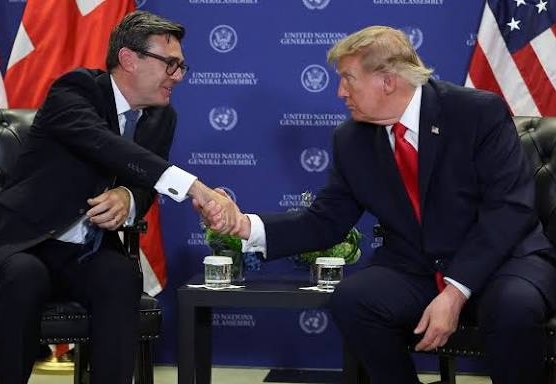
Prime Minister Andy Burnham severedadministration in London has abruptly suspended its landmark Chagos Archipelago accord with Mauritius. The decision follows intense friction from Washington, where President Donald Trump condemned the arrangement as a terrible deal and demanded a comprehensive review.
The disputed agreement, initially initialed in 2024 and formally structured into a treaty in early 2025, was designed to resolve a long-standing post-colonial dispute. Under its provisions, Britain agreed to transfer sovereignty over the Chagos Archipelago—a cluster of 58 islands spanning roughly 60 square kilometers in the central Indian Ocean—back to Mauritius. In return, London secured a 99-year lease to maintain total operational control over Diego Garcia, the largest island in the chain and home to a vital joint Anglo-American military installation.
To formalize this compromise, Britain committed to paying Mauritius an annual rent of £101 million ($133 million). While the treaty aimed to reconcile legal rights with strategic necessities, Washington viewed the financial terms as a costly and unnecessary concession.
The root of the disagreement centers on how military footprint and territorial rights should be balanced. Britain acquired control over Mauritius and its dependencies in 1814. In 1965, three years before granting Mauritius independence, Whitehall severed the Chagos Islands to create the British Indian Ocean Territory. Shortly thereafter, local inhabitants were forcibly evicted to accommodate the construction of a major air and naval hub on Diego Garcia.
Over the subsequent decades, Diego Garcia proved indispensible to Western power projection, serving as a staging ground for military operations across Asia and the Middle East, including during the Gulf War. However, this strategic utility was accompanied by persistent diplomatic pressure. Mauritius maintained that the 1965 detachment was illegal under international law. In 2019, the International Court of Justice issued an advisory opinion concluding that the decolonization of Mauritius remained incomplete so long as the Chagos Islands were withheld, a finding subsequently endorsed by the United Nations General Assembly.
Faced with growing international pressure and legal isolation, London chose to negotiate. The resulting treaty was framed as a pragmatic resolution: Mauritius received official recognition of sovereignty alongside substantial financial support, while Anglo-American defense capabilities on Diego Garcia remained structurally undisturbed.
Yet what London viewed as a necessary compromise was interpreted by the White House as a failure of leverage. The Trump administration pointed to its own recent diplomatic template in Greenland as a model for military access. In that instance, Washington negotiated long-term base access within an autonomous region without assuming direct lease fees or altered operational conditions. From Washington’s perspective, paying £101 million annually for a base the United States and Britain already occupied represented an unwarranted expenditure.
The strategic stakes extend well beyond rent payments. Positioned roughly 4,000 kilometers from Iran, Diego Garcia remains a central node in Western power projection throughout the Indo-Pacific and the Gulf. Regional powers, including India, have historically favored the complete de-militarization of the Indian Ocean to preserve maritime stability in their immediate neighborhood. Conversely, recent threats by Iranian leadership to widen regional conflicts into Indian Ocean shipping lanes have underlined the ongoing utility of Diego Garcia for Western defense planners.
London’s decision to pause the treaty, freeze financial disbursements to Port Louis, and re-examine the terms reflects the reality of power dynamics within the transatlantic alliance. By aligning its posture with American demands following high-level bilateral meetings, the British government has chosen to prioritize security alignment over the international consensus built around the UN and the International Court of Justice.
For Mauritius, the suspension marks a sharp setback after years of legal and diplomatic efforts. Port Louis now faces an uncertain timeline while London and Washington reassess their terms. Whether the final outcome yields a revised agreement with reduced financial obligations or a indefinite pause on sovereignty transfer, one lesson is clear: legal rulings and multilateral declarations remain subject to the strategic priorities of primary global powers.