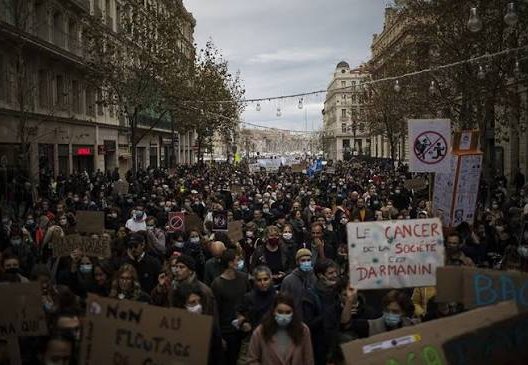
Across Europe, the social fabric is fraying under the intense weight of economic disillusionment. In France, over half a million demonstrators have taken to the streets, transforming major thoroughfares into scenes of intense confrontation. Luxury storefronts and high-end retail outlets have been targeted, reflecting a profound societal fracture where the struggles of ordinary citizens clash sharply with displays of extreme wealth. While France has captured global headlines for the violent turn its protests have taken, the underlying discontent is far from isolated. From Italy and Spain to Portugal and beyond, Western democracies are experiencing a synchronized wave of public anger.
To understand why large portions of the developed world are growing restless, one must examine the convergence of three critical pressures: soaring educational grievances, a relentless cost-of-living crisis, and deep-seated economic inequality.
At the heart of the European unrest is a crisis within the educational sphere. In France, secondary school students initiated the pushback, complaining of crumbling infrastructure, severe teacher shortages, and unmanageable classroom temperatures without adequate cooling systems. More fundamentally, students argue that while the offspring of the affluent enjoy access to elite opportunities, working-class youth face systemic disadvantages that block their path to upward mobility. This student-led friction quickly drew the support of trade unions and revived activist symbols from past movements, such as the yellow vests that first emerged in opposition to fiscal austerity measures.
Similar pressures are echoing across neighboring nations. In Belgium, university registration fees have climbed following austerity-driven cuts to education budgets, driving students to stage widespread demonstrations. In Albania and other European nations, academic grievances fuse seamlessly with wider economic anxieties.
Beyond the classroom, the most pervasive catalyst for unrest is the soaring cost of living. Ordinary households across Europe and North America find themselves squeezed by persistent inflation, making basic goods, housing, and transportation increasingly unaffordable. In Portugal, astronomical housing costs have made urban living nearly impossible for working families. In the United States, affordability has emerged as a central electoral battleground, shaping political debates from New York to Los Angeles. Whether through rent-control advocacy or renewed pushes for wealth taxes targeting billionaires, the political mainstream is being forced to confront an electorate that feels financially cornered.
This economic squeeze is exacerbated by high energy and fuel costs. According to recent economic and foreign policy assessments, diesel and fuel prices have surged dramatically compared to previous years, directly punishing commuters, logistics providers, and working-class families. When citizens watch their purchasing power evaporate while income inequality widens at the top, the social contract begins to break down.
While the grievances are remarkably consistent across borders, the manner in which they manifest varies significantly depending on local political landscapes. In France, where political protest is deeply ingrained in the national culture, public frustration has too often erupted into violence and anarchy. Opportunistic elements have hijacked legitimate demonstrations to loot businesses, damage public property, and clash with law enforcement.
Conversely, in other contexts, this widespread public anxiety is channeled through formal democratic and electoral mechanisms. Several European nations face crucial elections, where centrist parties find themselves squeezed between surging populist movements on both the far left and the far right. In the United States, economic anxiety is similarly reshaping the political terrain, influencing legislative races and voter sentiment in unexpected regions as candidates grapple with the demand for greater economic equity.
Ultimately, the fires burning in France and the broader unrest spanning multiple continents cannot be dismissed as isolated incidents or mere law enforcement challenges. They represent a structural warning sign. When the foundational promises of the modern knowledge economy, stable employment, accessible education, and a reasonable standard of living, become unattainable for the average citizen, political stability inevitably suffers. Governments from Paris to Washington ignore these warnings at their peril, for the underlying demand for affordability and fairness will continue to shape global politics for years to come.