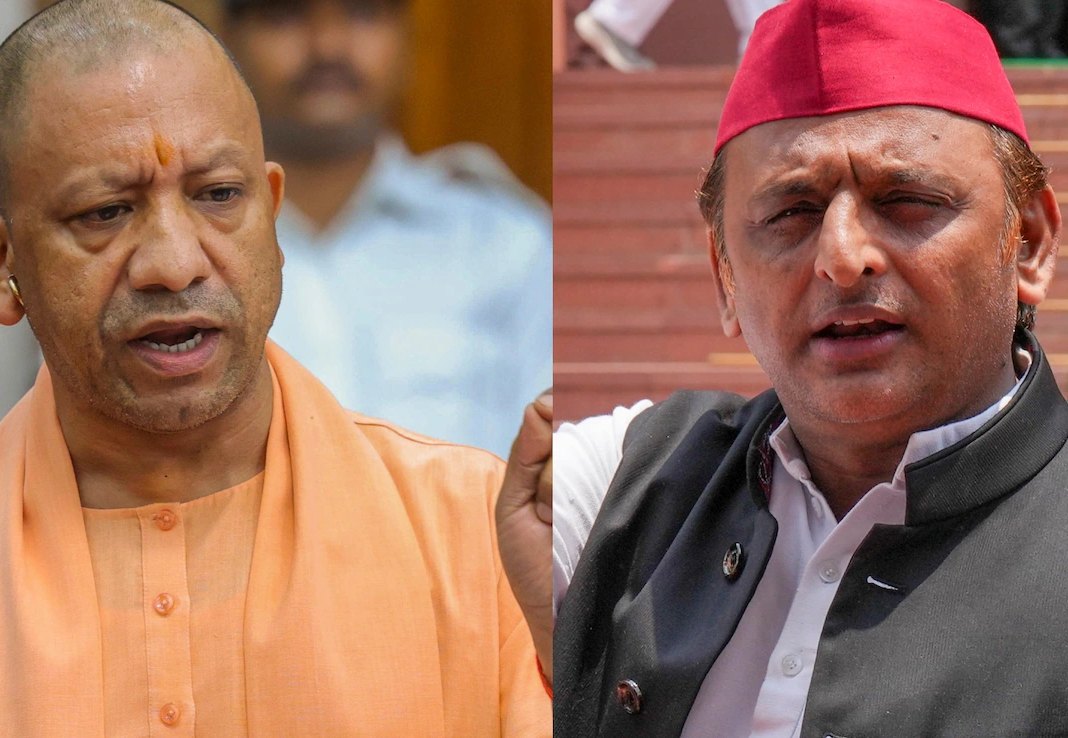
As Uttar Pradesh prepares for its assembly elections at the beginning of 2027, the political landscape is dominated by a prospective heavyweight contest in the holy city of Ayodhya. The confrontation involves Chief Minister Yogi Adityanath and Samajwadi Party leader Akhilesh Yadav. This high-profile clash stems from a political narrative initiated by Yadav, who challenged the ruling party by announcing his candidate for the Ayodhya assembly segment early. Yadav argued that the Bharatiya Janata Party has struggled to find a suitable candidate for the seat and suggested that Yogi Adityanath himself should contest from Ayodhya to settle the political score.
The rationale behind this challenge is rooted in the symbolism of Ayodhya. The constituency sits at the heart of Hindutva politics and the Ram Janmabhoomi temple. For the opposition, defeating the ruling party's Hindutva icon in Ayodhya would deliver a powerful political message. Yadav draws confidence from the results of the 2024 general elections, where the Samajwadi Party candidate Avadhesh Prasad won the Faizabad parliamentary constituency, which encompasses the Ayodhya assembly segment. Furthermore, the Samajwadi Party secured more seats than the BJP across Uttar Pradesh in that election, emboldening the opposition to build an aggressive narrative centered on Ayodhya.
In response, Adityanath dismissed the opposition remarks and countered with his own challenge, suggesting a direct contest in Ayodhya. This exchange has ignited intense speculation over a potential head-to-head battle between the two leaders. While predicting an election outcome years in advance remains speculative, analyzing the underlying social arithmetic, historical trends, and local sentiments provides insight into how such a contest might unfold.
Elections in Uttar Pradesh are heavily defined by caste calculations and social engineering. The Ayodhya assembly segment comprises approximately 360,000 voters. Breaking down the electorate reveals a diverse demographic mosaic. Brahmins form the largest single community with around 45,000 voters, followed closely by Muslims at 44,000, Dalits at 43,000, and Vaishyas at 42,000. Yadavs account for 36,000 voters, Chauhans 33,000, Nishads 24,000, Thakurs at 22,000, Kurmis at 17,000, and Kayasthas alongside Mouryas at roughly 10,000 each, complemented by various smaller groups.
Examining traditional voting blocs highlights the strengths and vulnerabilities of both leaders. Akhilesh Yadav relies heavily on the Muslim and Yadav combination. While voters within a single community rarely vote monolithically, Muslim voters generally consolidate against the BJP, providing Yadav with a solid baseline alongside the Yadav community. To expand beyond this core, Yadav has actively promoted the PDA framework, which focuses on backward classes, Dalits, and minorities. Penetrating the non-Yadav Other Backward Classes and Dalit segments will prove crucial for the opposition.
On the other side, the BJP maintains a formidable base among upper-caste communities, particularly Brahmins and Vaishyas, who have aligned strongly with the party alongside Thakurs. However, recent political analyses suggest simmering discontent among certain Brahmins due to intra-caste dynamics with Thakurs. Although Thakurs remain firmly behind Adityanath, any significant erosion of the Brahmin vote could alter the equation. Additionally, the BJP relies heavily on non-Yadav OBCs such as Nishads, Kurmis, and Mouryas through its own social engineering efforts and coalition partnerships, creating a deeply competitive social coalition on both sides.
Historical voting patterns in Ayodhya add another layer of context. The Samajwadi Party won the seat in 2012, while the BJP secured victories in 2017 and 2022. However, the ruling party's margins have experienced a downward trajectory. The massive majority of 2017 shrank in 2022, and in the 2024 parliamentary election, the BJP managed only a razor-thin lead of 4,667 votes within the Ayodhya assembly segment itself, despite losing the broader Faizabad Lok Sabha seat.
Campaign issues will likely revolve around development, infrastructure, and the completion of the Ram temple, which serve as major assets for Adityanath. Yet, local sentiment reveals a contrasting undercurrent of discontent. Many residents and farmers in Ayodhya express frustration regarding rapid corporate expansion, land acquisition, and the economic shifts brought by temple tourism. Locals often feel alienated from the benefits of urban development, a sentiment that contributed to the opposition victory in the wider parliamentary constituency.
Ultimately, a direct electoral contest between Yogi Adityanath and Akhilesh Yadav in Ayodhya would transcend a standard legislative race. It would transform into a symbolic referendum on governance, Hindutva, and social coalitions in India's most populous state. Whether such a clash materializes or remains a political sparring match, it underscores the central role that Ayodhya continues to play in the political destiny of Uttar Pradesh.