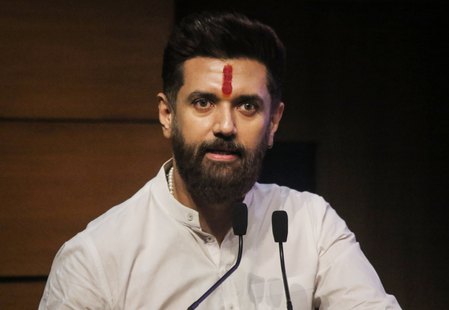
Political loyalty in South Asia has always been a transactional art, rarely burdened by sentiment. Within the ruling National Democratic Alliance, fissures are beginning to show in unexpected places. Chirag Paswan, a federal minister and leader of the Lok Janshakti Party, has emerged as a disruptive voice within the governing coalition. His recent public departures from the official NDA line signal a calculated strategy to hedge his political bets as shifting social currents threaten established power structures.
The immediate flashpoint centers on the government handling of youth-led street protests. While senior leaders within the coalition dismissed the demonstrators as misguided elements or outright agitators, Paswan took a strikingly different stance. He declared that nothing can stop the youth of this country, questioning the wisdom of barricading roads, shutting down internet connections, and halting transit networks. Coming from a minister serving in the cabinet, these remarks served as a direct rebuke to the heavy-handed administrative measures deployed by the state.
Such friction is hardly accidental. Paswan sits on a distinct political foundation in Bihar, where Dalit communities make up nearly twenty percent of the electorate. Within that demographic, his specific sub-caste commands significant numerical weight. His late father, Ram Vilas Paswan, mastered the art of maintaining strategic autonomy, shifting alliances with relative ease to protect the family base. The current minister appears to be reading from the same playbook. By distancing himself from the regime's hardline optics on civil unrest, he protects his standing among educated younger voters who increasingly question economic opportunities and public recruitment policies.
Beyond coalition optics, domestic ambitions in Bihar play a crucial role in shaping his rhetoric. With the political landscape in the state in a state of perpetual realignment, prospective leaders eye future leadership vacuums. By carving out an independent image on civil liberties and youth grievances, Paswan strengthens his bargaining power within the alliance while keeping his options open. He has previously broken ranks on sensitive administrative proposals, such as lateral entry into civil services, forcing the government to step back.
Broader tectonic shifts in Dalit politics across northern India add urgency to these maneuvers. The traditional political monopolies that once dominated marginalized communities are fracturing. The decline of older regional forces has opened space for emerging youth leaders and independent movements, altering how the younger generation engages with power. With higher education enrollment expanding among Dalit youth, aspirations have risen sharply at a time when formal job creation in the new economy remains uneven. Concerns over institutional protections and shrinking public sector jobs have fueled widespread discontent, pulling younger voters toward autonomous civic movements rather than traditional party loyalties.
This groundswell has not gone unnoticed by established leaders who rely on conservative coalitions. When grassroots mobilization bypasses traditional intermediaries, existing power brokers face an existential dilemma. By speaking up for protesting youth and warning against the dismissal of democratic dissent, Paswan attempts to future-proof his political career against these rising currents.
The strategy remains a delicate balancing act. While offering tacit support to youth aspirations to retain his street credibility, he simultaneously pulls back to criticize opposition parties, ensuring he does not burn all bridges with his current partners. In the high-stakes chess match of regional politics, survival belongs to those who can play on multiple boards at once. For now, the young minister is betting that keeping one foot inside the coalition and the other firmly planted on shifting ground is the safest path forward.