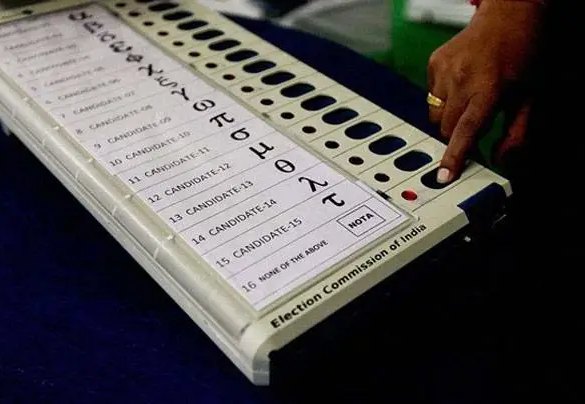
Cockroach Janta Party (CJP) founder Abhijeet Dipke urged opposition parties to stop contesting elections if they believe the electoral process is being rigged, arguing that their participation lends legitimacy to such polls. When allegations of electoral malpractice, institutional bias, and systemic irregularities surface, democratic opposition parties face an existential tactical dilemma. Should they continue participating in a contested electoral process to preserve their voice, or should they walk away entirely to deny the regime democratic legitimacy?
In contemporary political commentary, radical voices often urge opposition coalitions to take the ultimate leap: boycott elections altogether. The argument appears seductive on the surface. By entering candidates in an election they allege is manipulated, opposition parties risk acting as unwitting accomplices. Their presence on the ballot paper creates a thin veneer of political pluralism, reassuring both domestic citizens and international observers that democratic norms are functioning, even if the underlying playing field is hopelessly tilted.
Yet, urging opposition parties to abandon the ballot box fundamentally mistakes a final, desperate tactic for a workable political strategy. Electoral boycotts cannot serve as a primary line of defense. They represent a measure of absolute last resort, viable only when the process threatens utter political extinction.
The Walking-Path Analogy: Absence Creates an Effective Vacuum
To understand why opposition groups resist boycott calls, consider a simple analogy: a neighborhood street where the drainage system has collapsed, leaving an unbearable stench. Residents will vocalize their disgust and demand immediate municipal intervention. Yet they continue to walk down that very same street every day. Why? Because it remains the only physical path connecting their homes to the rest of the world. Refusing to walk down the road does not fix the drainage; it merely traps residents inside their houses.
In formal politics, electoral participation remains the sole legitimate path connecting political movements to institutional power. Abandoning elections strips opposition parties of their platform inside parliament and state assemblies. Without legislative representation, opposition leaders lose constitutional immunity, formal debate privileges, and the statutory power to hold government officials accountable.
Consider historical precedents. When insurgent groups or political parties adopt full electoral boycotts, the ruling establishment rarely pauses to reform the system. Instead, the regime routinely fills every vacant seat with its own loyalists, passes sweeping legislative changes without friction, and solidifies its control over public institutions. A boycott leaves a complete political vacuum, one that the incumbent government willingly fills.
Institutional Remedies and Their Limitations
When electoral integrity comes under fire, opposition movements typically explore four distinct avenues of institutional recourse before entertaining the radical idea of a boycott.
Only when all four mechanisms fail, when institutional avenues are blocked, judicial interventions offer no relief, public protests face total suppression, and entering the polling booth poses mortal danger, does an electoral boycott become a sensible consideration.
The Paradox of Participation
Critics argue that by competing in flawed elections, opposition parties grant moral legitimacy to an unfair system. However, history demonstrates that fighting within an imperfect framework provides strategic advantages that complete abstention destroys.
Legislative presence allows political parties to expose official overreach from within constitutional chambers. An MP speaking on the parliamentary floor commands media coverage and public attention that an external activist group cannot easily replicate. Furthermore, holding elected offices, whether as chief ministers, state legislators, or municipal councilors, provides parties with administrative footholds and resources vital for political survival.
Unrepresented political movements, such as fringe pressure groups or civil society bodies without legislative seats, can easily champion absolute boycotts because they have no formal parliamentary presence to lose. For established political parties accountable to millions of voters, walking away from the electoral battlefield means abandoning the only institutional lever they possess to protect their constituents.
Fighting the Process While Competing in It
Participating in an election while simultaneously challenging its fairness is not a contradiction; it is a pragmatic necessity. Political movements must balance two parallel battles: competing inside the voting booth to maintain their institutional presence, and fighting outside it to reform the electoral machinery.
Until an electoral framework degenerates to the point where participation guarantees total destruction, abandoning the ballot box remains a tactical blunder. Reform is rarely achieved by stepping off the field. It requires remaining inside the arena, using every available parliamentary and public mechanism to hold power accountable.