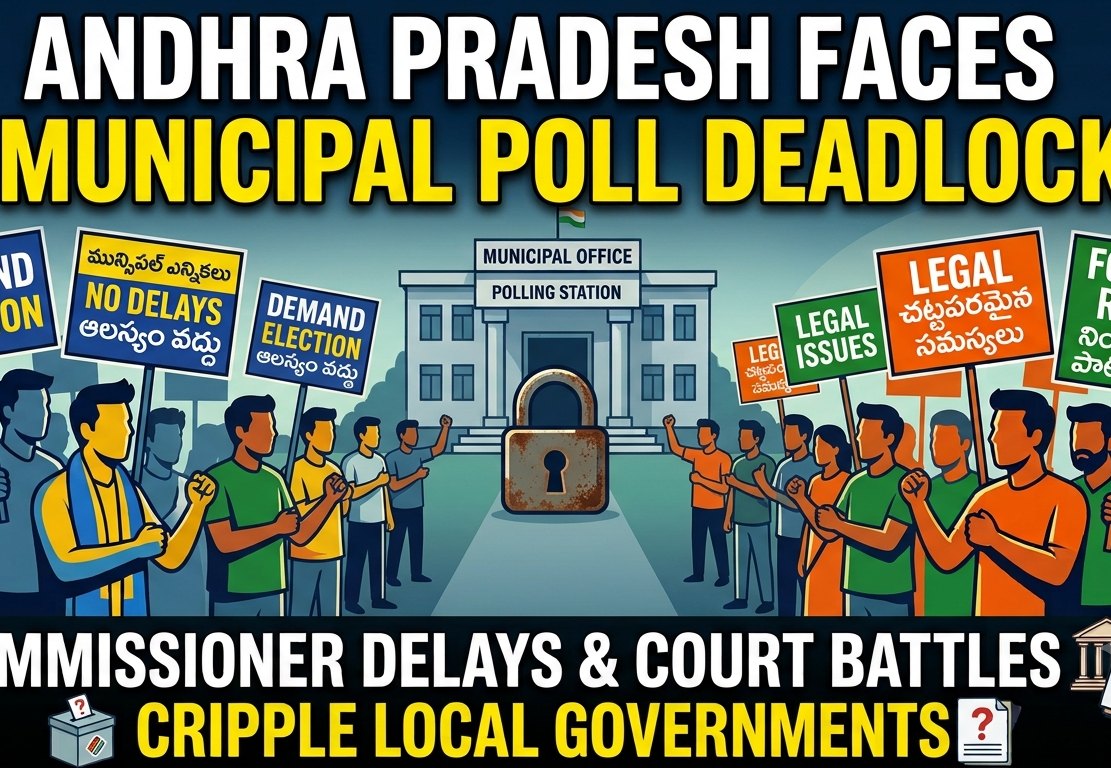
The electoral machinery in Andhra Pradesh has ground to an unexpected halt, setting off a sharp constitutional debate over local governance and the administration of justice. The State Election Commission chose to temporarily freeze the final list of candidates across one hundred urban local bodies. This pause follows intense legal scrutiny and specific directives from the Supreme Court, thrusting the state's upcoming municipal elections into a complex web of political accusations, administrative failures, and judicial intervention.
At the heart of the legal battle is a petition brought by the YSR Congress Party, which alleged widespread violence, intimidation, and a breakdown of law and order that prevented its candidates from filing nominations in several districts. The Supreme Court, in reviewing the matter, articulated a fundamental constitutional principle. While courts traditionally practice judicial restraint during active electoral cycles to maintain administrative continuity, their hands are not tied when the electoral process ceases to be free and fair. The judiciary noted that foundational democratic participation requires an environment where candidates can step forward without fear.
Rather than unilaterally halting the elections or canceling the entire process, the Supreme Court placed the onus back on the State Election Commission. The apex court instructed election officials to thoroughly examine all complaints regarding suppressed nominations, consider extending filing deadlines where violence disrupted the process, and ensure adequate security measures. Furthermore, the court directed the administration to install closed-circuit television at nomination centers and ordered the final candidate lists to be withheld until proper reviews are complete.
The political fallout has been swift and partisan. Leaders of the ruling coalition have vehemently blamed the opposition, arguing that the YSR Congress Party engineered violence out of fear of defeat and is now weaponizing the courts to obstruct local elections. Government representatives maintain that law enforcement is working to secure the peace and that opposition disruption should not be allowed to stall grassroots democracy, which is vital for securing central funds and civic development.
Independent legal analysts, however, point to a deeper administrative paradox in these arguments. If the ruling coalition acknowledges that widespread violence and intimidation occurred, it simultaneously admits a failure of the state machinery to maintain public order. The primary responsibility of preserving peace and ensuring a safe environment for all participants rests with the government and its police apparatus, regardless of which political faction is accused of instigating unrest.
The Supreme Court scheduled the next hearing to review compliance reports from both election authorities and law enforcement. Whether the temporary freeze on candidate lists translates into a permanent delay or merely a brief extension to accommodate aggrieved candidates remains to be seen. What stands clear is that the credibility of local democracy in Andhra Pradesh depends on whether the state can restore enough confidence to guarantee a genuinely open contest.