The arithmetic of Indian politics has long tempted regional strongmen with an alluring fantasy. Whenever the two dominant national forces face friction, local chieftains begin drafting blueprints for a third front. This non-aligned, non-Congress, non-Bharatiya Janata Party coalition is pitched as a genuine alternative for a diverse electorate. Yet history shows these grand alliances dissolve almost as quickly as they are conceived. The recent revival of such talk by K. T. Rama Rao known as KTR of the Bharat Rashtra Samithi in Telangana invites a sober look at the structural realities governing national opposition politics today.
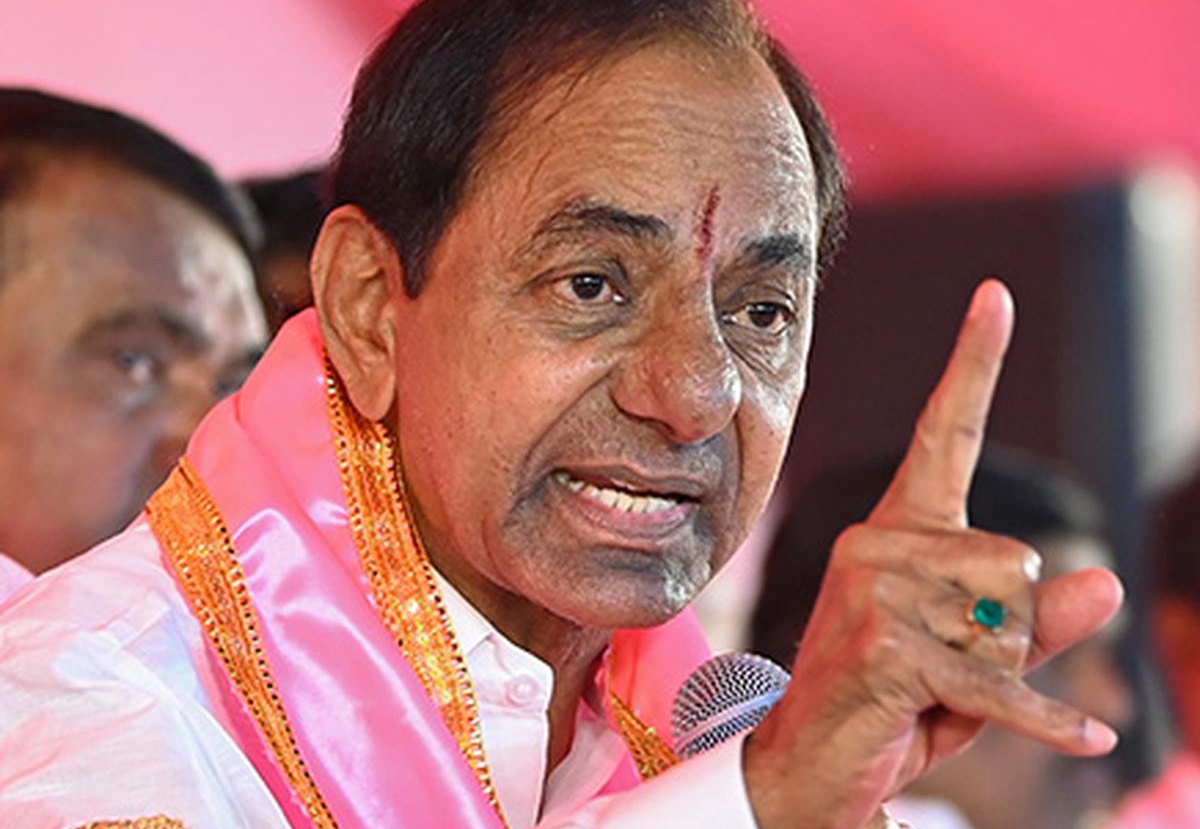
Consider the landscape of ambition from just a few years ago. Ahead of the 2023 state assembly contests, K. Chandrashekar Rao, known as KCR undertook a whirlwind diplomatic tour across regional capitals. Meetings were held with Mamata Banerjee in West Bengal, M.K. Stalin in Tamil Nadu, Arvind Kejriwal in Delhi, Akhilesh Yadav in Uttar Pradesh, alongside Sharad Pawar and Uddhav Thackeray in Maharashtra. The objective was to fashion a unified bloc that could bypass both national behemoths.
The subsequent electoral cycle dealt a severe blow to those architects. Almost every prominent leaders who sat at those exploratory tables has since lost power, suffered diminished margins, or retreated into defensive political postures. M.K. Stalin faced headwinds in Tamil Nadu, Arvind Kejriwal saw setbacks, and Mamata Banerjee confronted mounting political challenges in West Bengal. In Maharashtra, Sharad Pawar faced internal realignments, while Uddhav Thackeray saw loyalists depart toward Eknath Shinde's faction. KCR himself was voted out of power in Telangana in the 2023 assembly elections. Leaders who once projected regional dominance find themselves fighting for political survival within their own backyards. When the primary proponents of a coalition themselves lose electoral legitimacy, the foundational rationale for the alliance collapses.
Proponents of a third force often argue that public frustration with established national parties creates fertile ground for alternatives. K.T. Rama Rao, or KTR, argued that rising civil society movements and sporadic citizen protests reflect widespread discontent with the ruling Bharatiya Janata Party and a refusal to view the Congress party as a true alternative. Voters frequently express weariness with the traditional games played by professional politicians. However, interpreting civil society friction as an automatic endorsement of a regional third front is an analytical error.
Discontent directed at national incumbents rarely transfers cleanly to regional outfits that lack a compelling national narrative. Voters marching against mainstream political systems are protesting an entire ruling class, not reserving space for yet another regional party seeking national relevance. Furthermore, the 2024 general election demonstrated that the Indian electorate has largely consolidated around two clear polarities. Voters increasingly demand to know whether a regional party aligns with the governing National Democratic Alliance or the opposition INDIA bloc.
In the case of Telangana, the political cost of non-alignment became starkly evident. While the Bharat Rashtra Samithi secured roughly thirty-seven percent of the vote in the 2023 state assembly elections, its vote share plummeted to seventeen percent just months later in the Lok Sabha polls. Choosing to remain outside both the NDA and the INDIA blocs proved costly. Voters prioritizing national governance calculations appeared unwilling to cast ballots for entities that lacked a credible path to forming a government at the center.
For regional outfits, floating the idea of a third front often serves a defensive domestic purpose rather than a strategic national one. National parties routinely accuse regional parties of acting as proxy agents for their rivals, with the Congress labeling the Bharat Rashtra Samithi a B-team of the BJP, while the BJP levels similar accusations regarding Congress. Denouncing both national parties simultaneously allows regional leaders to claim absolute independence. Yet these tactical declarations rarely translate into sustainable, nationwide organizational machinery.
A realistic assessment of numbers reveals the sheer improbability of a viable third bloc under current conditions. For a non-aligned coalition to emerge as a formidable force in parliament, a critical mass of roughly one hundred and fifty seats must be won by parties belonging to neither major national alliance. Across the entire subcontinent, only a handful of significant regional actors remain outside the NDA and the INDIA bloc, including the Dravida Munnetra Kazhagam in Tamil Nadu, the Bharat Rashtra Samithi in Telangana, the YSR Congress Party led by Y.S. Jagan Mohan Reddy in Andhra Pradesh, the Biju Janata Dal in Odisha, and the Bahujan Samaj Party in Uttar Pradesh. Several of these key players face intense electoral pressure from rivals in their home states, while others have experienced sharp declines in legislative strength. The mathematical foundation required to sustain a third force simply does not exist in contemporary parliamentary arithmetic.
Compounding this structural deficit is the shifting posture of regional leaders toward the primary opposition. Following recent national and state election cycles, several prominent regional leaders have adjusted their calculus. Mamata Banerjee, despite earlier friction, works within broader national opposition frameworks, and leaders like Akhilesh Yadav or Arvind Kejriwal navigate strategic alignments rather than isolated paths. As national opposition leadership consolidates around leaders like Rahul Gandhi, the incentives for regional parties to fracture the anti-incumbent vote diminish.
Regional politics in India has always been driven by immediate survival, shifting state-level alliances, and localized grievances. True non-aligned politics requires ideological consistency and deep organizational roots across multiple states, attributes that regional parties historically lack. Whenever regional chieftains enjoy electoral success, talk of a third front recedes into the background; whenever they stumble, the rhetoric is dusted off once more. Until leaders like KCR and parties like the Bharat Rashtra Samithi can demonstrate consistent, nationwide staying power independent of electoral cycles, the third front will remain what it has always been: a transient illusion born of temporary political inconvenience.