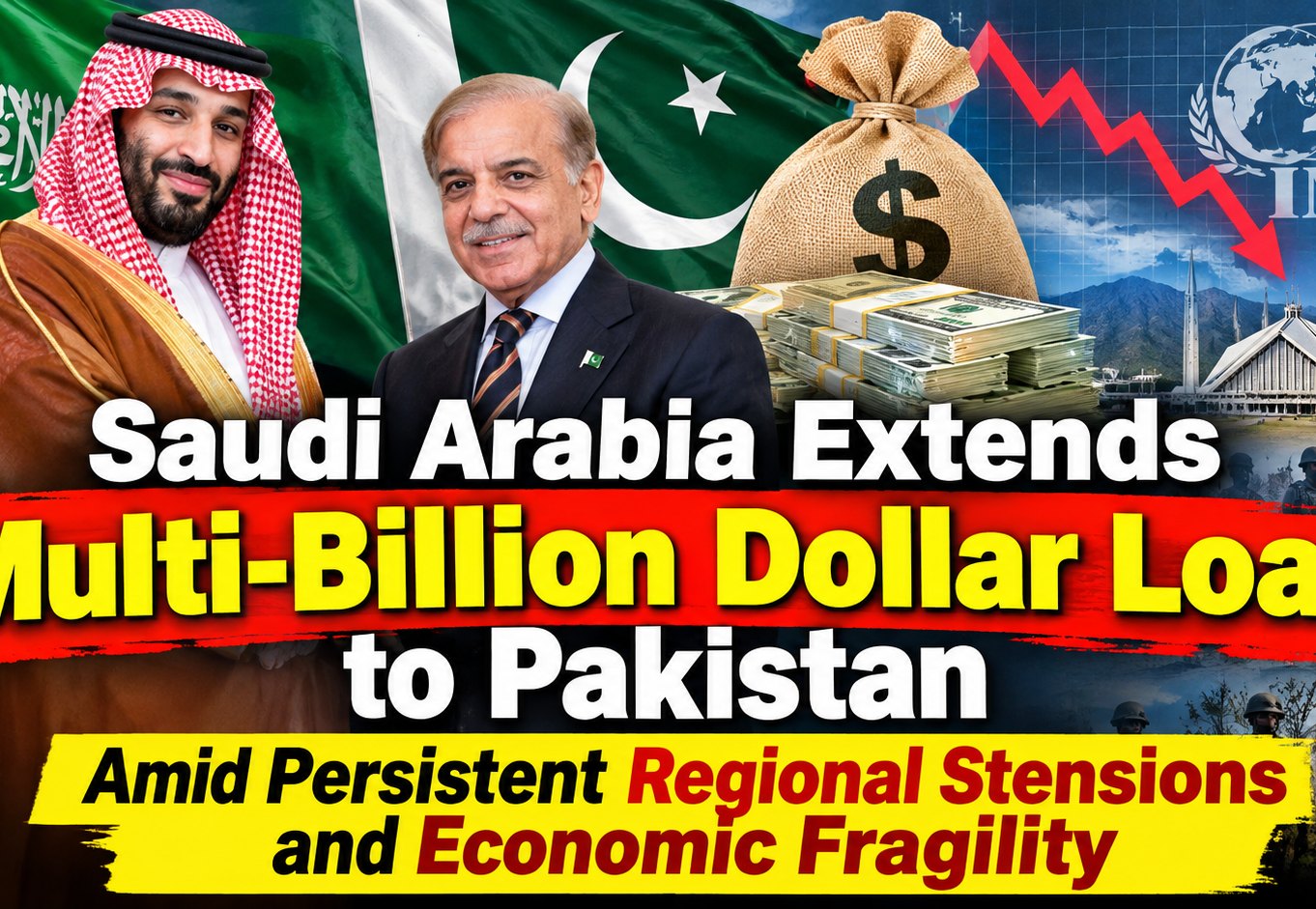
Saudi Arabia has once again extended financial support to Pakistan by rolling over a three billion dollar debt, continuing a long-standing pattern of economic bailouts. This latest extension arrives despite recent diplomatic friction, notably Pakistan's hesitation to directly commit military forces alongside Saudi Arabia during regional conflicts involving Iran and Houthi attacks. Although bilateral defense pacts exist, political leadership in Islamabad previously cited domestic conflicts with the Taliban to avoid direct military entanglement. Despite these diplomatic reservations, Riyadh continues to provide financial relief, raising questions regarding the fundamental geopolitical and economic drivers sustaining this alliance.
The Mechanics of Pakistan's Economic Vulnerability
Pakistan faces chronic economic instability, forcing the country to routinely seek external financing. When approaching the International Monetary Fund, Islamabad encounters multiple structural obstacles. IMF assistance requires approval from the United States, a process heavily influenced by changing presidential administrations and transactional diplomacy. Furthermore, IMF programs impose stringent conditionality packages that historically struggle to restore macroeconomic stability in recipient nations.
Compounding these challenges, Pakistan operates within a severe debt trap, where new loans are acquired primarily to service existing external liabilities rather than to fund productive infrastructure, industrial manufacturing, or technological development. A significant portion of incoming funds is diverted toward defense expenditures and military procurement. With foreign exchange reserves hovering around sixteen billion dollars as of March 2026, Pakistan relies heavily on external partners to meet short-term obligations. Earlier in April 2026, Islamabad secured three billion dollars from Saudi Arabia specifically to settle mounting debts owed to the United Arab Emirates. Prime Minister Shehbaz Sharif publicly acknowledged the severity of this fiscal predicament, noting that even friendly nations view the country with skepticism.
Historical Ties and the Nuclear Shield Imperative
The diplomatic relationship between Saudi Arabia and Pakistan is deeply rooted in historical developments predating formal independence. In the 1940s, high-level visits between Saudi leadership and Muslim League figures established foundational ties, which later expanded into military training cooperation initiated in the 1960s. However, financial assistance alone does not fully explain Riyadh's willingness to sustain Pakistan's fragile economy.
The primary strategic driver behind Saudi support involves regional security and nuclear deterrence. Saudi Arabia faces persistent security threats from two regional actors: Israel, which possesses an advanced nuclear arsenal, and Iran, which is perceived as a potential nuclear power. With growing skepticism regarding the reliability of United States military security guarantees following regional escalations and attacks on infrastructure, Riyadh looks toward the wider Islamic world for strategic protection.
As the sole Muslim nation possessing nuclear weapons, Pakistan offers a crucial nuclear shield. Despite previous tensions where Pakistan refrained from deploying troops under mutual defense agreements, the underlying alliance ensures that Saudi Arabia maintains a critical strategic deterrent against potential adversaries. Riyadh continues to underwrite Pakistan's economy primarily to preserve this vital security anchor in an increasingly volatile geopolitical landscape.