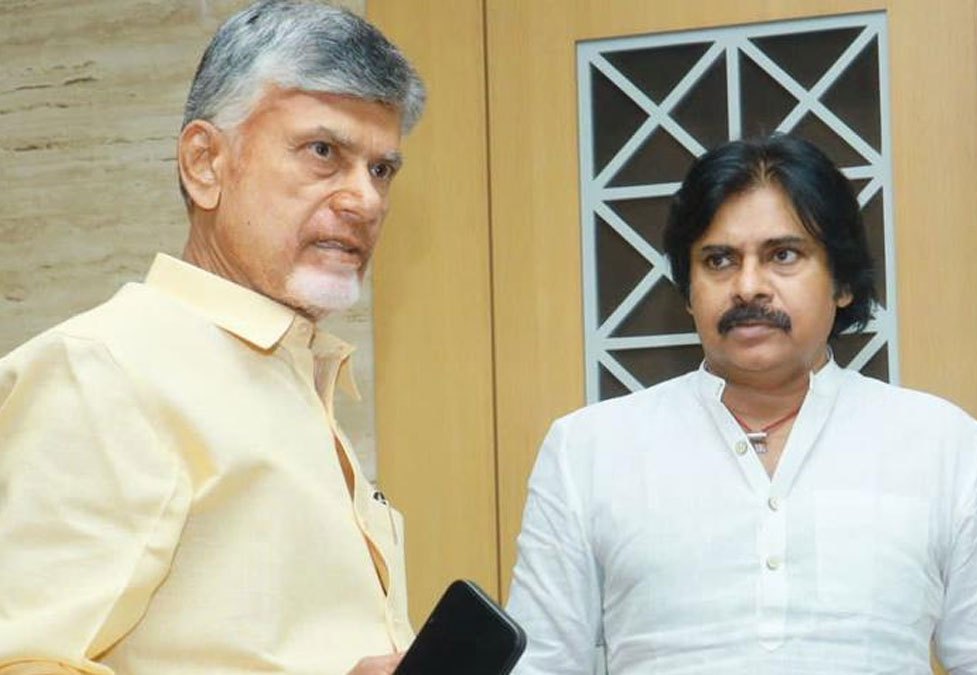
Political friction rarely travels alone. In the digital age, a whisper of dissent can circle a state within minutes, inflated by automated networks and partisan opportunism until it resembles an impending constitutional crisis. In Andhra Pradesh, a fabricated post originating from a counterfeit social media channel recently claimed that Deputy Chief Minister Pawan Kalyan was resigning from his post. The rumor spread rapidly across digital platforms, amplified by mainstream outlets eager for sensationalism, and fueled by opposition parties hoping to fracture the ruling coalition.
A closer examination of the political architecture in Andhra Pradesh reveals that such speculation rests on fragile foundations. The coalition government led by Chief Minister N. Chandrababu Naidu and supported by Pawan Kalyan's Jana Sena Party remains stable. An analysis of the underlying political incentives, historical precedents, and structural realities demonstrates why a resignation is implausible, highlighting instead how modern political discourse is increasingly driven by manufactured friction rather than material facts.
The Anatomy of Fabrication
The rumor gained traction because it played upon preexisting anxieties within the political landscape. Minor disagreements regarding local elections and the allocation of influence among grassroots cadres provide fertile ground for speculation. When political parties form alliances, competing ambitions at the local level inevitably create friction. Digital platforms capitalize on these minor tensions, transforming localized disagreements into sweeping narratives of betrayal and imminent collapse.
Studies in information propagation indicate that negative news travels faster and wider than measured political analysis. Outlets seeking immediate engagement often bypass verification standards, preferring provocative headlines that promise political upheaval. For opposition factions, any suggestion of disunity within the ruling alliance serves as a political lifeline. A fractured coalition offers the primary pathway back to relevance, prompting opposing camps to fan the flames of discord whenever a coalition leader travels without a security detail or misses a formal meeting.
Yet, superficial indicators do not dictate profound political realignments. A sudden meeting between coalition partners or the absence of a convoy is frequently interpreted as a sign of terminal rupture. In reality, coalition governance requires continuous negotiation. Minor grievances do not automatically translate into institutional breakdown.
The Arithmetic and Chemistry of Coalition
To understand why Pawan Kalyan will not abandon the government, one must examine both the arithmetic and chemistry of the current political arrangement. Political history provides clear lessons for the Jana Sena leader. When the party contested elections independently, it secured only a single seat. When it formed an alliance with Telugu Desam, its strike rate reached near-perfect levels, propelling Kalyan into the office of the Deputy Chief Minister.
This partnership represents a mutually reinforcing dynamic. Telugu Desam benefits from the Jana Sena coalition by broadening its appeal among neutral voters and consolidating an anti-incumbency front. Jana Sena benefits by sharing power and translating legislative presence into tangible policy influence. Neither party possesses a compelling incentive to dismantle a partnership that delivers mutual electoral security.
Furthermore, political cohesion is frequently maintained by the presence of a formidable common adversary. The prospect of the opposition returning to power acts as a powerful deterrent against internal fragmentation. As long as the perceived threat from political rivals persists, the coalition partners find compelling reasons to set aside tactical disputes and maintain a united front.
External Forces and Structural Stability
Applying physical principles of inertia to political bodies yields useful insights. Political systems tend to remain in their current state of equilibrium unless acted upon by a significant external force. For the ruling alliance to fracture, an influential external actor would need to intervene decisively. At the national level, major political players show no inclination to destabilize the existing arrangement in Andhra Pradesh. Without external pressure or a strategic realignment from national leadership, the coalition's internal balance remains undisturbed.
Speculation regarding leadership transitions also fails to withstand scrutiny. Discussions concerning potential shifts in leadership or succession timelines belong to a distant political horizon rather than the immediate future. Current leadership remains active and fully engaged in governance, rendering near-term succession maneuvers unlikely.
The Reality of Democratic Friction
Disagreements within a coalition are a normal byproduct of democratic politics. Parties representing distinct social bases will inevitably negotiate hard over local governance, candidate selections, and policy priorities. These tensions reflect the messy reality of coalition management rather than an impending divorce.
The widespread dissemination of the resignation rumor underscores a broader vulnerability in contemporary media ecosystems. As digital communication expands, the temptation to manufacture crises for audience engagement grows stronger. Responsible political analysis requires distinguishing between genuine structural realignment and the manufactured turbulence of online platforms. For now, the coalition in Andhra Pradesh remains secure, bound by shared electoral interests and the pragmatic recognition that unity offers the surest path to sustained governance.