In the theater of modern politics, the vocabulary of dissent has become a contested battleground. When public intellectuals articulate a desire for political transformation, ruling establishments frequently reach for a familiar and potent rhetorical weapon. They conflate the critique of a sitting administration with an assault on the sovereign state itself. This linguistic sleight of hand transforms standard parliamentary friction into an existential threat, branding political opposition as subversive or unpatriotic. Yet a sober examination of constitutional principles reveals a fundamental truth. A government is merely a temporary steward of the apparatus of state, and seeking its replacement through democratic means is not an act of treason. It is the very engine of representative governance.
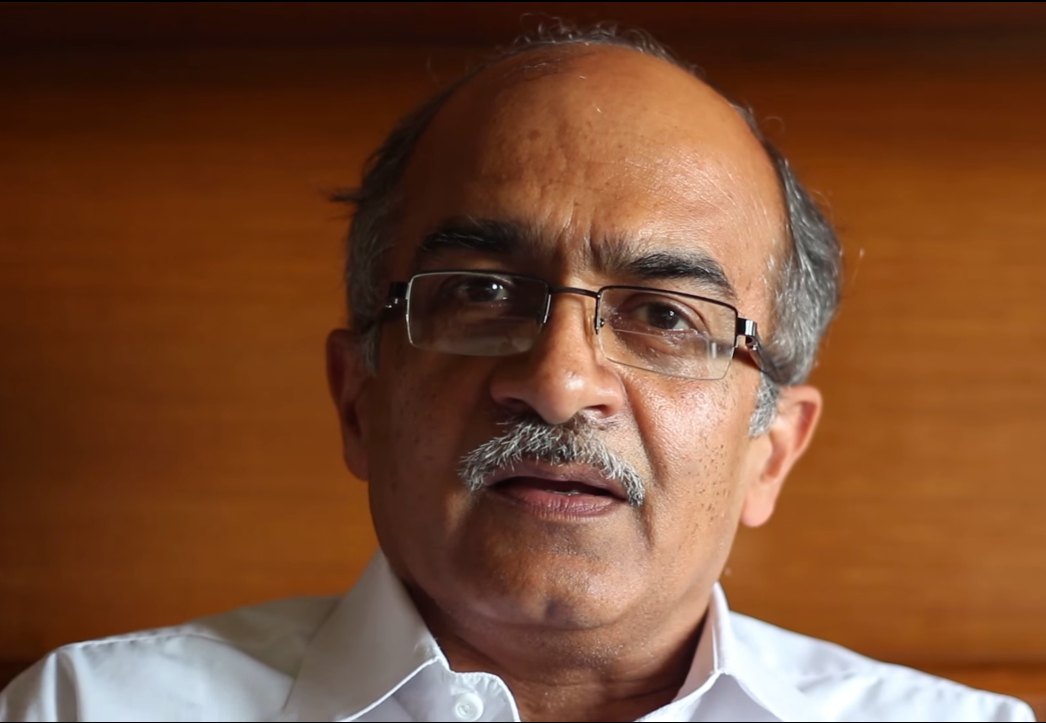
The fault lines of this debate were recently exposed during a press conference by prashant bhushan regarding institutional independence and electoral oversight. Prominent legal voices and activists declared that pushing for structural reform and leadership accountability ultimately aims at bringing about a political transition. Predictably, the ruling party seized upon these statements, weaponizing the phrase to discredit protesters and opposition leaders. The controversy deepened when certain remarks invoked turbulent uprisings in neighboring nations as inspirational templates. That rhetorical misstep handed critics a convenient cudgel, allowing them to paint legitimate domestic dissent with the brush of violent overthrow.
To understand why this equivalence is false, one must parse the precise meaning of political transitions. In democratic theory, a regime change simply denotes the replacement of one government by another. It carries no inherent connotation of violence, illegal insurrection, or foreign subversion. Constitutional democracies provide multiple, institutionalized avenues for such transformation. Citizens can alter the executive through regularly scheduled elections. Lawmakers can unseat administrations mid-term via votes of no confidence or shifting parliamentary coalitions. Furthermore, massive public movements can so thoroughly shift the national mood that ruling parties are forced to dissolve legislatures early and face the electorate.
These mechanisms are entirely democratic, constitutional, and legitimate. The desire to unseat a prime minister or a ruling party through these legal channels is a core component of political competition. The problem arises only when critics advocate for unconstitutional methods, such as military coups, mob violence, or foreign-backed anarchy. Yet ruling parties often blur these lines deliberately, encouraging the public to believe that any call for a change in administration is an attack on the nation's integrity.
This conflation ignores a foundational distinction in political science and constitutional jurisprudence. The government is not the country. The prime minister is not the constitution. The ruling party of the day is a transient political entity, whereas the permanent executive machinery, the judiciary, and the sovereign nation remain enduring pillars. Courts have repeatedly affirmed that dissent is integral to democracy and that opposition to government policies cannot be equated with anti-national activity. Even historical leaders and legal luminaries have long maintained that affection for a government cannot be manufactured by decree, and that public criticism of state leadership is a protected liberty.
Consider the mechanics of parliamentary democracy itself. In systems modeled on the Westminster tradition, the leader of the opposition is explicitly designated as a prime minister in waiting, flanked by a shadow cabinet. This institutional design acknowledges that the ruling party holds power only by virtue of a temporary electoral plurality, often representing a minority of the total popular vote. The opposition's legitimate function is not to applaud the administration from the sidelines, but to systematically build an alternative narrative, marshal public opinion, and prepare to assume power. To forbid this contestation between elections would reduce representative government to an elective dictatorship.
History shows that ruling parties themselves are rarely shy about agitating for political transitions when they find themselves on the other side of the aisle. Mass campaigns against corruption, nationwide protests, and relentless electoral mobilization have long been standard tools for political parties of all stripes seeking to capture the reins of power. To label these tactics as treasonous when deployed against oneself is a form of selective amnesia.
Ultimately, the health of a democracy is measured by its tolerance for friction. Freedom of speech and peaceful assembly guarantee citizens the right to express dissatisfaction, organize protests, and urge voters toward a different political future. Whether such efforts succeed is decided at the ballot box, not through the criminalization of political ambition. As long as the pursuit of a new government remains anchored in constitutional norms, demanding its arrival is not an act of defiance against the nation. It is the fulfillment of it.