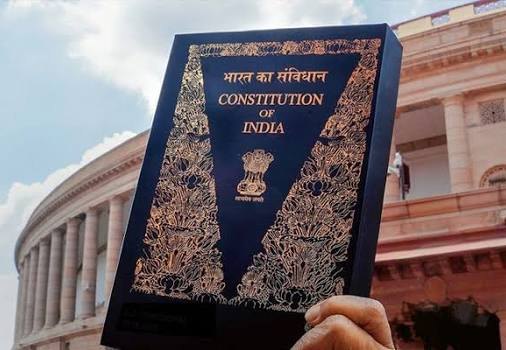
Democracies rarely collapse in a single dramatic midnight seizure. More often, they undergo a slow, legalistic erosion where the machinery of popular consent is systematically repurposed to hollow out the checks that protect minority rights and institutional independence. This tension between the raw power of the ballot box and the restraining framework of fundamental law forms the core of a growing debate over India’s political trajectory.
The distinction is not merely academic. Electoral democracy guarantees legitimacy through majority support. A party or coalition wins an election, forms a government, and claims a mandate to rule. Yet constitutional democracy introduces a vital constraint: it subjects that raw majority power to enduring principles, codified rules, and the supremacy of a foundational document rather than the shifting whims of political incumbents.
When lawmakers or political strategists begin treating the constitution as a flexible hurdle rather than an unyielding anchor, the republic enters a precarious phase. Observers watching these developments closely note that the architecture of Indian governance is being tested by executive overreach, the weaponization of criminal law, and a systematic erosion of federal balance.
The Majoritarian Impulse and the Basic Structure
At the heart of India's legal identity sits a landmark judicial doctrine established decades ago by the Supreme Court. The basic structure doctrine dictates that even a parliament armed with an overwhelming electoral mandate cannot alter the core identity of the constitution. The preamble, safeguarding secularism, federalism, and the separation of powers, stands immune to simple legislative amendment.
Yet this foundational boundary faces sustained political skepticism. Critics within the ruling establishment frequently dismiss secularism as a historical afterthought, pointing out that the specific word was added to the preamble during the emergency of the 1970s. While the judiciary previously settled this question by affirming that the amendment merely made explicit what was already implicit in the founding text, public rhetoric increasingly treats secular governance as negotiable.
This rhetoric fuels a deeper apprehension among legal scholars. If political pressure mounts against foundational rulings, the possibility arises that future judicial benches might be constituted to revisit and dilute the basic structure doctrine itself. Such a move would transform the constitution from a permanent shield for citizens into a provisional document vulnerable to the immediate desires of whichever coalition holds temporary power.
Executive Preponderance and Institutional Erosion
Separation of powers remains the primary defense against the concentration of authority. The executive, the legislature, and the judiciary derive their mandates from distinct constitutional spheres, designed to hold each other in check. Over the decades, however, that balance has tilted heavily toward the executive.
Legislative accountability has largely withered. Parliaments increasingly function as arenas for swift passage of legislation rather than rigorous debate, while the executive asserts dominance over policy design. More troubling is the encroachment upon bodies designed to remain strictly neutral.
Consider the administration of elections. The legal framework governing the appointment of election commissioners has seen structural revisions that remove the chief justice from the selection panel, replacing judicial oversight with a majority of executive ministers. This shift strikes at the perception of impartiality required for free and fair polls. When massive electoral roll discrepancies and administrative controversies surface without swift, independent redress, public faith in the electoral referee begins to fracture.
Simultaneously, the judiciary faces internal and external pressures. Observers note an alarming trend where members of the bench publicly align themselves with executive priorities or accept post-retirement appointments that compromise the appearance of absolute detachment. When the institutional distance between the arbiters of the law and the enforcers of state policy narrows, the system loses its capacity to act as a credible counterweight.
The Shrinking Margins of Liberty and Federalism
A robust constitutional democracy measures its health by how it treats dissent. Freedom of speech, assembly, and protest form the lifeblood of a pluralistic society. Yet contemporary state practice increasingly relies on stringent counter-terrorism and financial crime statutes to target critics, journalists, and political opponents.
Statistical realities underscore this chilling shift. Low conviction rates under stringent security laws suggest that these statutes function less as instruments of definitive justice and more as mechanisms of pretrial detention. When dissent is routinely treated as a criminal enterprise, citizens grow hesitant to question authority, creating an atmosphere of enforced consensus that stifles democratic vitality.
Federalism faces a parallel squeeze. The relationship between national and state governments is increasingly strained by the partisan deployment of gubernatorial offices to obstruct opposition-led state administrations. Furthermore, upcoming legislative delimitation exercises threaten to politically marginalize southern and western states that successfully managed population growth, exacerbating regional friction. States are constitutional entities with distinct spheres of autonomy, not regional branch offices of the central government.
Preserving the Republican Promise
None of this implies that India’s democratic experiment has failed. The country has sustained periodic elections, peaceful transfers of power, a resilient multi-party system, and civilian control over the military for nearly eight decades, successfully outliving the average lifespan of many global constitutions.
Yet survival is not synonymous with health. A constitutional democracy requires more than regular voting; it demands a vibrant civic culture, independent institutions, and a governing elite willing to respect boundaries even when they are inconvenient. If the current trend toward centralization and majoritarian impatience continues unchecked, the republic risks trading its substantive soul for procedural shell games, leaving the foundational promises of its constitution stranded in the gap between text and reality.
[This Article Is Based On Authour's Lecture At The Plenary Session Of Vidhwata National Law Fest-2026 Organised By Dr. B. R. Ambedkar Law College, Hyderabad, India.]