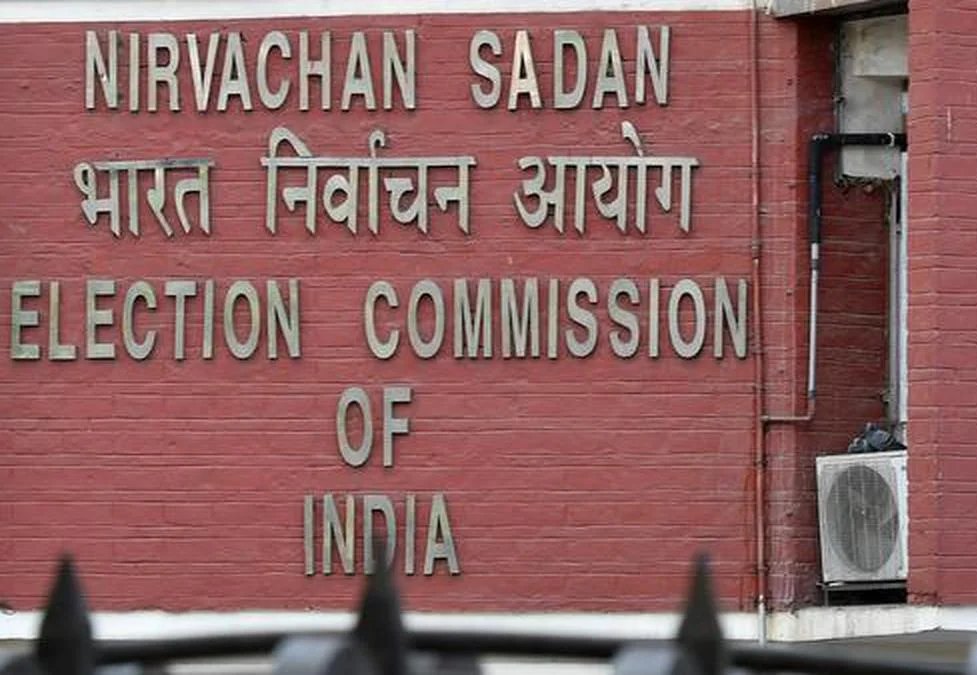
Over the past several months, a fierce wave of dissent has swept across the nation, driven by opposition parties, civil society groups, and legal scholars. At the heart of this confrontation is the Election Commission of India and its controversial leadership under Chief Election Commissioner Gyanesh Kumar. Critics accuse the institution of orchestrating a massive disenfranchisement campaign under the guise of special revision exercises. Yet, amidst state resistance and a heavy-handed police response, the relentless street agitations have yielded tangible concessions, forcing a cornered electoral authority into a series of humiliating retreats.
The controversy erupted when the commission initiated an aggressive special intensive revision that abruptly stripped millions of citizens of their voting rights. Observers estimate that upwards of 130 million voters have been expunged from electoral rolls. This systemic purge threatens to fracture the nation into two distinct classes of inhabitants: those possessing the franchise and those stripped of it. Such a division strikes at the very foundation of universal adult suffrage, a constitutional guarantee upheld since nineteen fifty. Analysts warn that creating a massive populace of disenfranchised citizens sows the seeds of severe internal conflict and undermines national cohesion.
Despite initial intransigence from the government and the election watchdog, public resistance has already forced critical policy reversals. The first major victory of the agitations is the reinstatement of the annual special summary revision. Following the twenty twenty-four general elections, the leadership had suspended this continuous enrollment mechanism, which allows young citizens turning eighteen to register without waiting for lengthy yearly cycles. Two election commissioners formally dissented against this suspension, arguing that halting a seventy-year-old constitutional practice was arbitrary and illegal. Following intense public backlash and media exposure, the commission relented and restored the summary revision, opening the doors for millions of new young voters to claim their democratic voice.
A second major reversal involves the introduction of special verification drives to re-enroll voters who were erroneously deleted. The sudden necessity of these corrective drives serves as a tacit admission of administrative failure by the commission. If millions of entries were genuinely dead or duplicate, remedial re-enrollment campaigns would be entirely superfluous. The reality that the electoral authority has had to scramble to reinstate arbitrarily removed citizens casts a dark shadow over the credibility of recent state polls held in regions like West Bengal and Bihar.
Further pressure led to the correction of Form Six, the official document used for voter registration. An extra-legal annexure had been surreptitiously added, requiring applicants to submit detailed ancestry proofs tracing back generations. The commission falsely claimed that the Supreme Court had approved this modification, a claim swiftly debunked by the judiciary. Faced with widespread outcry, the electoral body was forced to drop the ancestry requirement for general applicants, preventing a scenario where entire generations of families would be locked out of the voting process simply because their parents' names were missing from targeted rolls.
Similarly, the weaponization of Form Seven, which allows citizens to challenge suspicious voter entries, has been curbed. Political operatives had been exploiting this mechanism by submitting bulk applications to wipe out rival voter bases en masse. Following public protests, the commission was compelled to impose caps on Form Seven submissions to prevent coordinated mass deletions. Furthermore, after persistent demands from political parties and candidates, the commission agreed to provide electoral rolls in machine-readable PDF formats. This crucial concession allows stakeholders to independently audit lists and detect fraudulent duplicate entries, a task previously rendered nearly impossible through physical documentation alone.
Another profound battleground concerned the reversal of the burden of proof. Constitutional jurisprudence dictates that verifying and maintaining voter rolls is the statutory duty of election officials and booth level officers, not the individual citizen. Yet the revision drive unlawfully shifted this burden onto the public, forcing veterans, and ordinary citizens alike to stand in queues and prove their citizenship all over again despite holding valid passports, Aadhaar cards, and voter identity cards. Under the weight of relentless criticism, the commission has now retreated, clarifying that booth level officers will conduct door-to-door verifications instead of requiring citizens to queue up with documentary proofs.
Meanwhile, the legal front has witnessed equally dramatic shifts. Earlier in the year, the Supreme Court had issued rulings broadly supporting the constitutional validity of the revision framework. However, the judicial mood has visibly evolved as petitions regarding mass deletions in Delhi, West Bengal, and the systemic appointment process of election commissioners come under renewed scrutiny. The apex court has openly questioned why the chief election commissioner enjoys sweeping civil and criminal immunities that even judges and the prime minister do not possess. Sitting judges have explicitly termed the mass deletion of 130 million voters arbitrary and unconstitutional, signaling that further legal protections for the electoral machinery may soon crumble.
Despite these hard-fought victories, significant challenges remain. Only a tiny fraction of the millions of aggrieved citizens who filed complaints before appellate tribunals have had their cases resolved. Statistical sampling from early tribunal rulings reveals that over ninety percent of appellants whose cases are actually processed successfully regain their franchise, proving that the vast majority of deletions were indeed unlawful. Deep disparities also persist in gender and demographic deletion rates, with female and minority voters disproportionately targeted in states like West Bengal and Bihar.
The overarching question remains whether an official who presided over such a deeply flawed and constitutionally suspect process can retain moral or administrative authority. Calls for the resignation of the chief election commissioner grow louder as the country prepares for upcoming electoral battles in pivotal states like Uttar Pradesh. The events of recent months demonstrate that institutions tasked with guarding democracy are not immune to public pressure. It is only through continuous street protests, vigilant civil society action, and relentless public scrutiny that the integrity of the Indian republic can be defended against executive overreach.