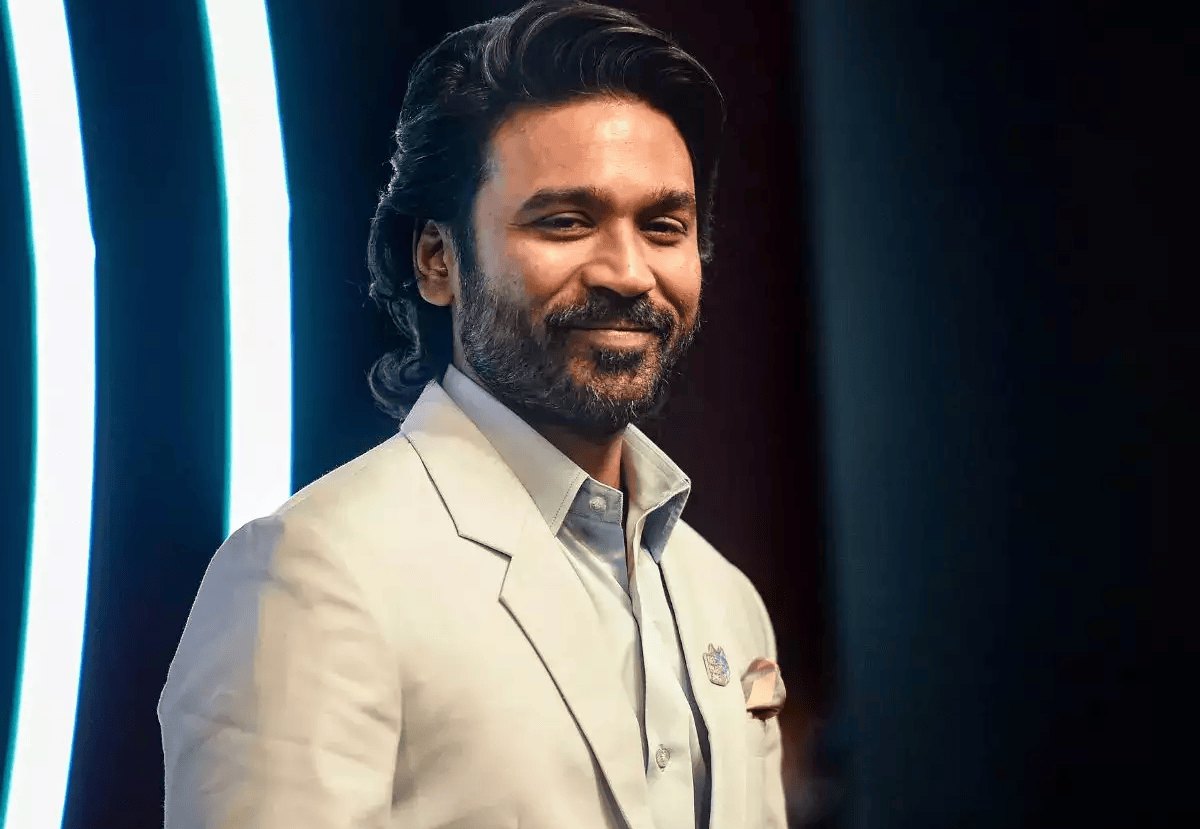
Tamil Nadu has long treated the boundary between the silver screen and the legislative assembly as a permeable membrane. From the foundational mythology of Dravidian nationalism to the electoral dominance of cinematic icons, the state’s political architecture is inextricably tied to the charisma of the projector room. Yet, rumors swirling around the potential political entry of popular star Dhanush have injected a new layer of volatility into an already unstable regional ecosystem. While the actor has offered no formal confirmation, the frantic repositioning of rival parties suggests that the threat of a new political launch is being taken with absolute seriousness.
The urgency among established players stems from recent electoral data rather than idle speculation. Two recent by-elections in Madurantakam and Dharapuram, triggered by the resignation of two former AIADMK legislators who defected to Vijay’s newly minted party, Tamilaga Vettri Kazhagam (TVK), laid bare a tectonic shift in voter alignment. In Madurantakam, the AIADMK vote share plummeted by over nine percentage points compared to the general assembly elections held earlier in the year. Nearly all of those hemorrhaged votes migrated directly into the TVK column, while the DMK maintained a stubborn, immovable baseline of support.
Dharapuram revealed an even starker erosion for the opposition. The AIADMK candidate suffered a loss of more than fifteen percentage points, mirroring a near-fourteen-point surge for TVK. This data points to a growing structural crisis for the AIADMK, which found itself relegated to third place. With Edappadi K. Palaniswami lacking the cinematic magnetism that traditionally captivates younger demographics, female voters, and economically disadvantaged constituencies, his party faces an existential threat. The AIADMK desperately needs a counterweight to the theatrical appeal of actors-turned-politicians, which explains why factions within the party have extended informal overtures to Dhanush, hoping to plug a widening demographic leak.
Whether Dhanush would willingly subordinate himself to Palaniswami’s leadership remains an open question. Political alliances in the state are governed by cold arithmetic rather than sentimental loyalty. The Bharatiya Janata Party, eager to carve out a viable southern foothold, has previously attempted to broker coalitions between the AIADMK and TVK, only to stumble over leadership disputes and Vijay’s insistence on the chief ministerial mantle. If Dhanush were to enter the fray, the strategic calculus shifts. He could either anchor an internal faction within the AIADMK, mirroring Pawan Kalyan’s trajectory in Andhra Pradesh, or launch an independent vehicle that aligns with the National Democratic Alliance, transforming a traditional bipolar or tripolar contest into a four-way scramble.
Compounding these calculations is the looming shadow of Rajinikanth. As a close relative of the veteran superstar, Dhanush carries familial and ideological associations that point away from the traditional Dravidian paradigm. Rajinikanth’s brand of spiritual politics has long found ideological alignment with national conservative forces, standing outside the historical Dravidian ethos championed by both the DMK and Vijay, who projects himself as the modern heir to M.G. Ramachandran. While Rajinikanth himself demurred on direct electoral entry due to age and health constraints, analysts estimate his residual pull remains significant. Should Dhanush leverage that familial capital with tacit or explicit backing from national strategists, the configuration of anti-DMK votes would splinter further.
History offers a sobering reminder, however, that celebrity status alone does not guarantee legislative permanence. Tamil Nadu is littered with the political wreckage of popular actors whose initial mass appeal failed to translate into durable organizational machinery. Sivaji Ganesan, Vijayakanth, and Kamal Haasan all discovered that box office success does not automatically convert into enduring legislative seats without a distinct political vacuum and disciplined grassroots infrastructure. Vijay managed to exploit a specific opening left by the fragmentation of the AIADMK post-Jayalalithaa, capitalizing on widespread fatigue with the established duopoly.
For Dhanush, carving out a distinct ideological and spatial niche will be the ultimate test. If he enters the arena, he will inevitably siphon votes away from Vijay and further squeeze an ailing AIADMK, complicating equations for every major player in the state. The calculations playing out in secret meetings and public posturing are not merely about a new star finding a platform. They represent a high-stakes scramble for survival in a political marketplace where the currency of stardom is constantly being devalued by the brutal arithmetic of the ballot box.