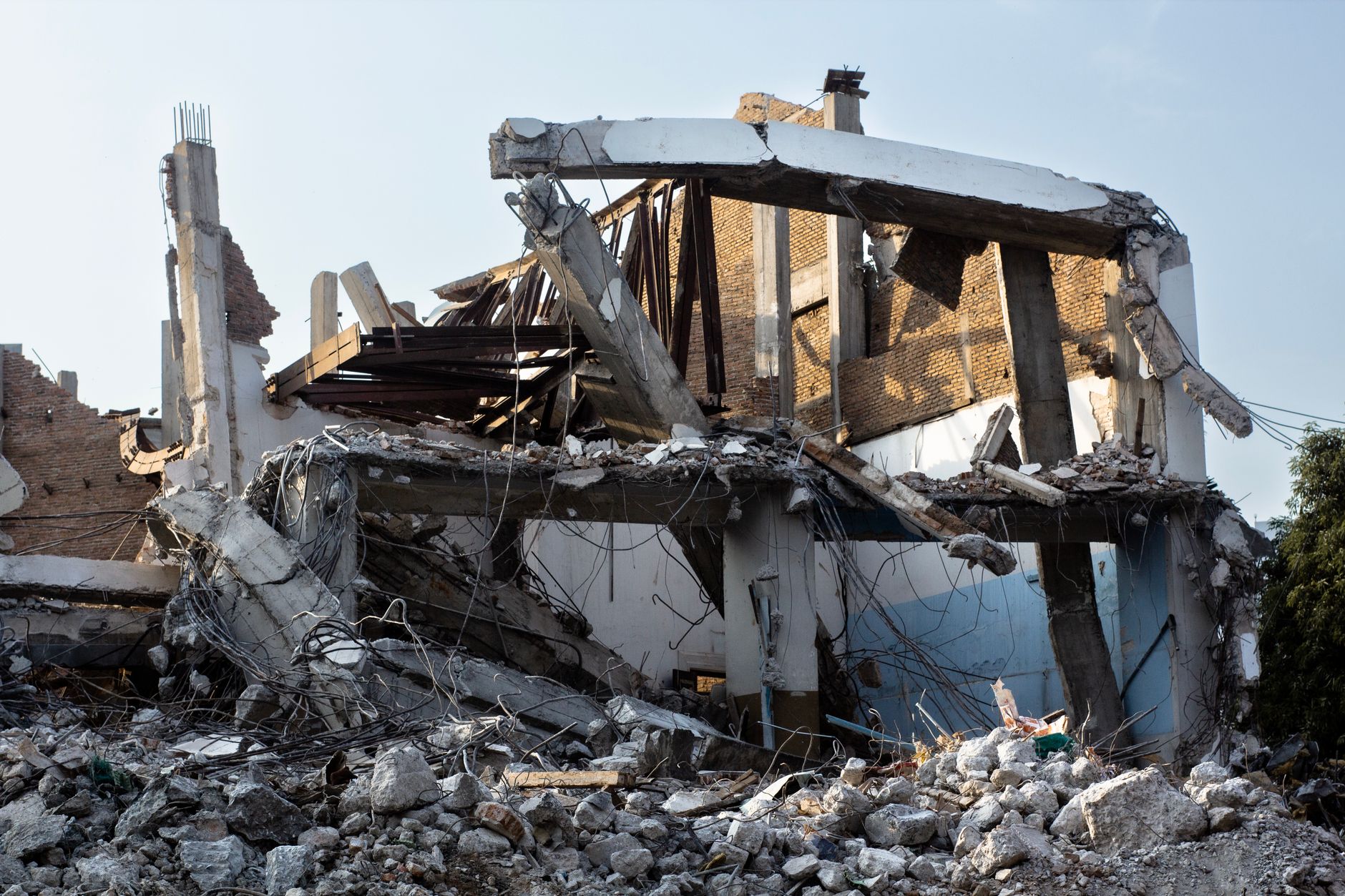
A tragic hostel collapse in Delhi lays bare the dangerous economic deficit in student infrastructure and the tragic limits of state-led grandiosity.
When a 50-year-old student accommodation building collapsed in the Indian capital recently, killing seven young inhabitants, the standard political choreography played out precisely as expected. High court expressed righteous indignation, five municipal bureaucrats were suspended, and building owners were hauled off in handcuffs. To any observer accustomed to South Asian governance, this post-mortem theater is painfully familiar. It offers a fleeting illusion of accountability while leaving the systemic rot entirely untouched.
The loss of life is not a tragic anomaly; it is a predictable byproduct of severe state neglect. India prides itself on rapid growth, boasting annual gross domestic product expansion of nearly 8 percent and ambitions to dominate global technology supply chains. Yet, its regulatory architecture and social infrastructure remain stubbornly primitive. Nowhere is this contradiction more acute than in the hyper-competitive educational ecosystem of New Delhi.
The Capital’s Infinite Demand
Every year, hundreds of thousands of ambitious young adults converge on Delhi. They come driven by the relentless dream of social mobility, seeking degrees at elite public institutions like Delhi University and Jawaharlal Nehru University, or grinding through brutal schedules at private coaching centers in hubs like Mukherjee Nagar to crack the Union Public Service Commission examinations.
The arithmetic of this migration reveals a stark imbalance. Delhi University alone educates over 200,000 students across 91 affiliated colleges, admitting roughly 50,000 fresh undergraduate applicants each year. Across this entire university ecosystem, there are just 18 official hostels capable of housing barely 9,000 students. More than 60 percent of enrollees originate from outside the capital, joining an estimated 300,000 competitive examination aspirants who rely entirely on non-institutional private accommodation.
This overwhelming structural deficit has birthed an unregulated, underground private housing market. Private paying-guest accommodations, unregulated hostels, and subdivided tenements charge students anywhere between 8,000 and 12,000 rupees ($95 to $145) per month for cramped, windowless quarters. Aggregated across the capital's migrant student population, this unmapped shadow economy generates tens of billions of rupees annually, operating almost entirely in the dark without basic institutional oversight.
Capitalist Incentives and Regulatory Failure
In a functioning market, high profit margins attract capital investment, expanding supply and improving quality through competition. In Delhi's student housing market, chronic undersupply distorts basic market incentives.
Because demand outstrips institutional supply by orders of magnitude, property owners face zero market pressure to maintain safety or structural integrity. A half-century-old structure on the verge of collapse commands high rents regardless of its condition. Landlords have no financial reason to spend money on renovations when a long queue of desperate teenagers stands outside their doors every semester.
Concurrently, local regulatory agencies, from municipal planning boards to fire inspectors, operate with complete indifference. Rather than enforcing building codes, sanitation standards, or fire safety protocols, inspection regimes routinely dissolve into extortion networks. Small bribes purchase clean inspection reports, leaving vulnerable students trapped in firetraps with poor ventilation, contaminated drinking water, and structural fatigue.
Misplaced Public Priorities
The tragedy exposes a profound misalignment of state expenditure. Over recent years, India's federal authorities have spent tens of billions of rupees constructing grand state symbols in the capital, including the sprawling Central Vista redevelopment project costing over 200 billion rupees ($2.4 billion), new parliamentary chambers, and luxury transport fleets for high-ranking dignitaries.
While state institutions readily spend billions on national monuments, they display astonishing neglect toward basic public educational infrastructure. Asking young citizens to build a modern economy while denying them safe living conditions is a deeply contradictory strategy.
This institutional hypocrisy is especially striking given India's political elite. Many prominent national ministers and state leaders began their political careers on the student union boards of Delhi University. Yet, despite intimate knowledge of campus conditions, successive administrations have allowed the housing shortage to worsen into a chronic crisis.
The Economic Cost of Neglect
The consequences extend far beyond immediate physical safety:
Sending satellites to the moon while failing to provide basic, safe housing for students represents a clear failure of urban governance. Until Indian authorities move past superficial suspensions and address the structural undersupply of public housing, the capital's students will continue to pay for state neglect with their lives.