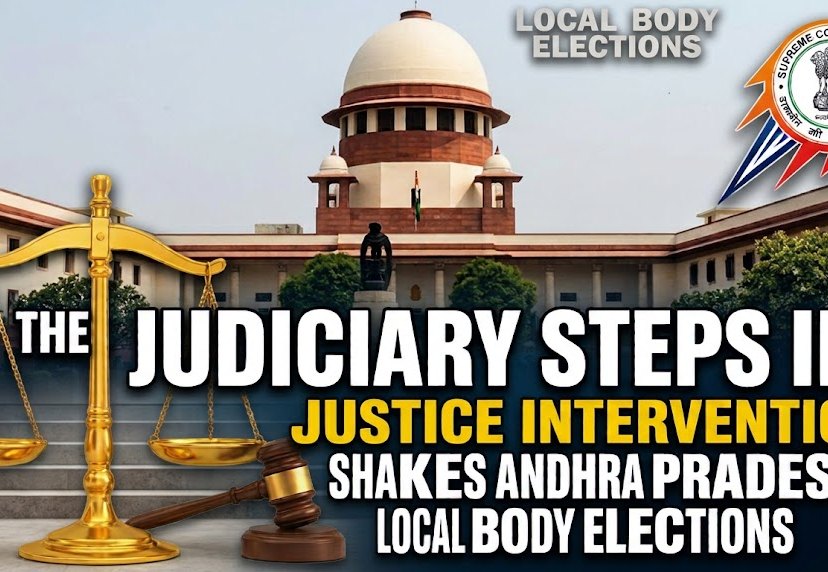
Constitutional courts typically maintain a strict distance from active electoral processes. The reasoning is straightforward: allowing constant judicial intervention risks bogging down democratic timelines in endless litigation. Yet the Supreme Court of India recently demonstrated that this principle is not absolute. In a significant development concerning the local body elections in Andhra Pradesh, the apex court delivered an interim order that provides substantial relief to the opposition YSR Congress Party while dealing a sharp procedural blow to the ruling coalition government.
The core issue before the court centered on allegations that free and fair elections had broken out under the weight of violence and lawlessness. The YSR Congress Party approached the judiciary with grievances that its prospective candidates were physically prevented from filing nomination papers, particularly in areas where uncontested or unanimous elections were being engineered. When both the state election commission and the Andhra Pradesh High Court declined to intervene or extend deadlines, the matter escalated to the highest court in the country.
During the proceedings, the Supreme Court addressed the fundamental boundaries of judicial review during elections. While acknowledging the general doctrine of judicial restraint and deference to election authorities, the bench made it clear that courts cannot remain passive bystanders when an electoral process violates constitutional principles. Free and fair elections form a core part of the basic structure of the Constitution. When that integrity is threatened to the point where candidates are effectively blocked from participating, judicial hands are not tied.
The court accepted, at least on a prima facie basis, the evidentiary representations brought forward by the opposition, noting that the integrity of the electoral process appeared compromised. Consequently, the bench directed the state election commission to examine the grievances raised by the YSR Congress Party and consider extending the nomination deadlines. Furthermore, the court advised halting the scheduled publication of the final list of candidates, effectively putting a temporary brake on the wave of uncontested wins that had sparked political friction.
The ruling triggered immediate political fallout. The ruling coalition argued that the opposition had engaged in similar tactics during its own tenure in power, raising questions about past electoral conduct. However, the legal scrutiny focused strictly on constitutional mandates rather than historical political sparring. past actions do not excuse present violations of universal adult franchise and transparent nomination procedures.
This intervention highlights a delicate balance within India’s constitutional framework. Independent election bodies possess the primary duty to conduct elections smoothly and within designated schedules. Yet that autonomy does not grant immunity from judicial review if the foundational guarantee of a free ballot is undermined. By stepping in to protect the right to contest, the Supreme Court signaled that administrative expediency must never override democratic legitimacy.