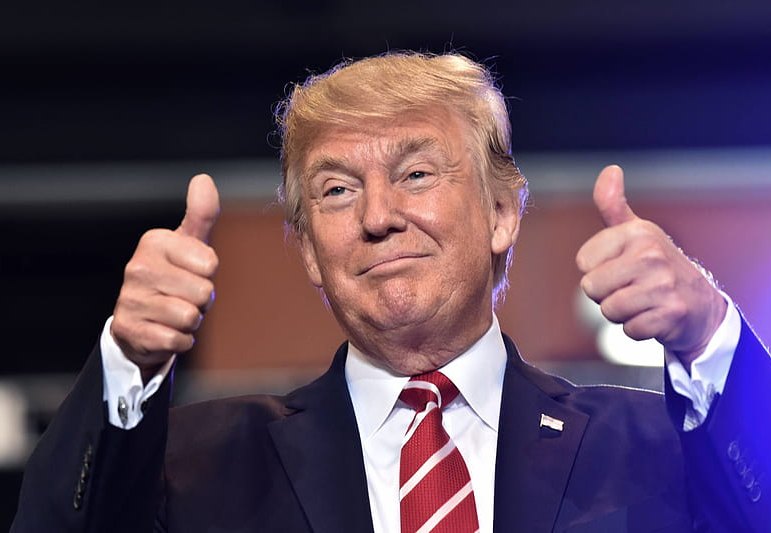
The political geography of the United States has undergone a seismic shift. In what can only be described as a comprehensive national rebuke, American voters have dealt Donald Trump and the Republican Party a sweeping defeat in the midterm elections. Across the country, a formidable Democratic wave breached long-standing conservative bastions, wiping out legislative advantages and shattering decades-old electoral records. The Trump administration that built its brand on unyielding political dominance, the outcome is a stark reality check. The electorate has not merely registered a mild protest; it has delivered a verdict that fundamentally alters the balance of power in Washington and threatens to consume the internal politics of the Republican Party.
To understand the magnitude of this electoral earthquake, one must look beyond standard political forecasting. Midterm losses for a sitting president are a familiar rhythm in American history, but the depth and geographical reach of this repudiation transcend ordinary political cycles. Consider the fallen strongholds. In Texas, where Republicans maintained an iron grip on the Senate seat for nearly four decades without a serious challenge since 1988, the Democratic candidate secured a stunning victory by defeating a sitting attorney general. In South Carolina, unseated conservative power structures stunned observers in a state where a prominent Republican incumbent had held sway for decades. Most remarkably, in Kansas, a state that had not sent a Democrat to the Senate in ninety-four years, the conservative firewall completely collapsed.
Similar narratives played out in North Carolina, Iowa, and parts of Ohio, where conservative advantages built over generations evaporated overnight. When a political wave penetrates deep into rural heartlands and historically safe districts, it ceases to be a localized swing. It represents a systemic rejection of the governing party's agenda.
Voter turnout patterns reveal the intensity of the backlash. While midterms typically suffer from a significant drop in participation compared to presidential election years, Democratic voters appeared at the polls with the same fierce urgency they displayed in the previous presidential cycle. More importantly, independent and unaffiliated voters, alongside specific ethnic groups that leaned towards Trump in 2024, decisively broke away. Suburban and rural voters who previously anchored the conservative coalition signaled profound fatigue with the Trump administration's economic pressures, soaring living costs, and aggressive foreign policy maneuvers.
The political consequences inside Washington will be immediate and bruising. Control of both chambers of the American Congress has slipped away from the Republican majority. The House of Representatives and the Senate now rest in opposition hands, ensuring that the remainder of the presidential term will be defined by institutional gridlock and aggressive congressional oversight. Committees armed with subpoena power are poised to launch intense investigations into executive actions, block legislative priorities, and scrutinize funding for foreign and domestic initiatives.
Yet the most turbulent fallout may occur within the conservative movement itself. As the scale of the defeat became clear, the internal contradictions of the party's leadership came to the surface. Rather than engaging in introspection, Trump dismissed the results through characteristic defiance, arguing publicly that the outcome would have favored them only if the leader's name had personally appeared on every ballot. This disconnect has alarmed pragmatic conservatives who recognize that tethering the party's future entirely to one polarizing figure has alienated the broader electorate.
For the remainder of the presidential term, governance will resemble trench warfare. The separation of powers ensures that the executive retains substantial defensive authorities, including the veto, but the legislative branch now possesses the tools to stall executive ambitions entirely. As the party looks toward the 2028 presidential race, a fierce internal battle is brewing. Moderate figures and strategists are quietly questioning whether the movement can survive without shedding its most radical populist elements. Tuesday's election proved that the American voter retains the capacity to redraw the political map with astonishing speed, leaving the ruling party to grapple with an uncomfortably narrow path forward.