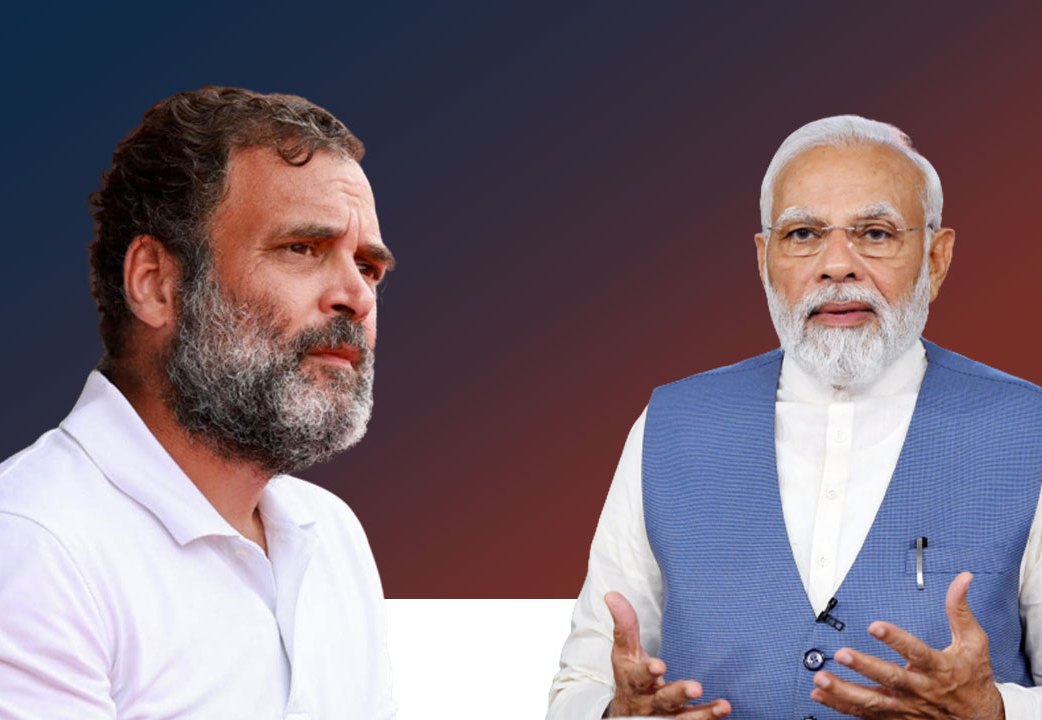
In the architecture of modern Indian politics, leaders rarely expend political capital on adversaries they deem irrelevant. When Prime Minister Narendra Modi repeatedly trains his rhetorical firepower on Congress leader Rahul Gandhi, the act itself reveals an underlying calculation of threat rather than dismissal. Modi recently mocked the opposition by remarking that the Indian Space Research Organisation does not launch rockets as frequently as the Congress party attempts to launch Rahul Gandhi. Yet this persistent fixation prompts a more probing question: if the opposition leader is truly a spent force, why does the apex of the Bharatiya Janata Party feel compelled to continually dismantle his credibility on the national stage?
The electoral arithmetic offers a straightforward rationale for the ruling party's initial confidence. Over the past twelve years, the electoral record under Modi has yielded successive national victories, leaving the Congress party trailing significantly in parliamentary numbers. In terms of sheer electoral strike rate and governing continuity, the gap between Modi and Rahul Gandhi remains substantial. The ruling party has successfully leveraged this disparity, branding its chief rival with derogatory monikers to diminish his stature among voters. Even leaders within the National Democratic Alliance, such as Nara Lokesh, have acknowledged that Rahul Gandhi remains one of the most trolled political leaders in the country, a narrative largely amplified by BJP ecosystems.
Yet political longevity is rarely governed by past margins alone. History suggests that when public discontent accumulates against an administration, the identity of the challenger matters less than the weight of the grievances driving the electorate. In 1977, Indira Gandhi was defeated in her Rae Bareli constituency by an ordinary leader named Rajnarain, whose political stature bore no comparison to hers. Similarly, when Smriti Irani faced Rahul Gandhi, or when NTR was upset by Chittaranjan Das in Kalwakurthy, elections demonstrated that voter fatigue can rapidly erode personal charisma. In the 2024 general elections, Rahul Gandhi secured a massive majority in Rae Bareli, surpassing the margin recorded by Modi in Varanasi, prompting Rahul Gandhi to remark that if Priyanka Gandhi had contested, the outcome for the ruling party might have been even more severe.
The turning point in this dynamic lies in the evolution of Rahul Gandhi from a conventional campaigner into a more resilient street fighter. When the Congress leader launched aggressive campaigns concerning electoral rolls and administrative transparency, such as his work addressing the deletion of thirteen crore voter names, initial reactions from the BJP ranged from indifference to outright dismissal. However, as these grievances resonated with broader public anxieties, transforming into widespread political movements that forced the ruling party to launch counter-campaigns, the strategic calculus shifted. Political momentum proved to be dictated by the potency of the underlying issues rather than established hierarchies.
Circumstances and burning issues create leaders, not the other way around. The BJP once coined the slogan of a Congress-mukt Bharat, yet the Congress party still retains power in southern strongholds such as Telangana, Karnataka, Tamil Nadu, and Kerala. By investing immense energy into a persistent campaign of personal vilification against Rahul Gandhi, the ruling party inadvertently acknowledges that its primary ideological antagonist retains the capacity to galvanize dissent. Constant targeting risks humanizing the target, allowing a perceived underdog to recast himself as a persistent defender of democratic norms against centralizing authority.
Ultimately, the longevity of democratic competition depends on mutual recognition of legitimacy rather than the systematic erosion of an adversary's public standing. Political fortunes oscillate with economic realities, social friction, and public trust. Treating any political actor as a permanent non-entity ignores the cyclical nature of democratic politics. When the machinery of the state focuses disproportionately on neutralizing a single individual like Rahul Gandhi, it betrays a latent anxiety within the Modi administration about the fragility of consensus. True political dominance rests not on the incessant belittlement of rivals, but on the enduring delivery of governance that renders such anxiety obsolete.