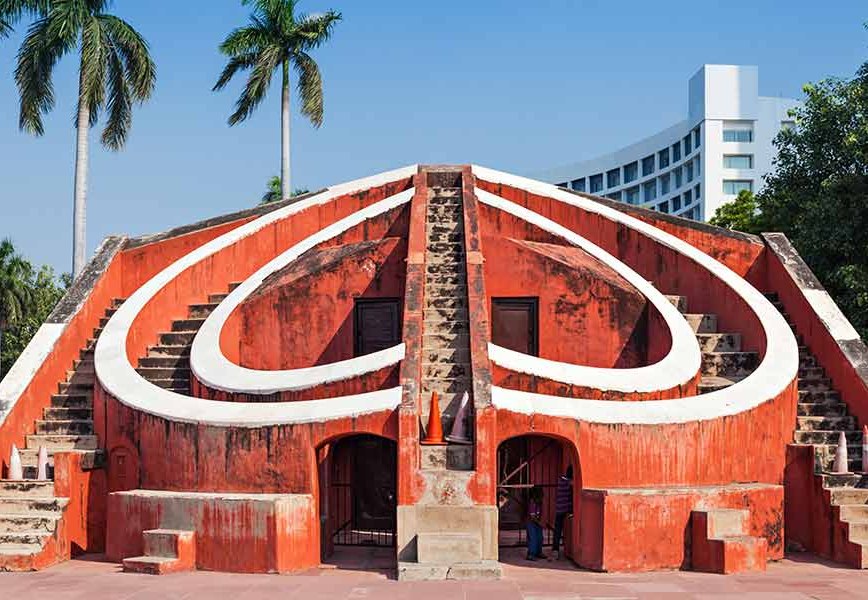
Democracy often reveals its underlying anxieties through the physical spaces it closes off to citizens. In any functioning republic, the right to gather, dissent, and petition the government in public squares forms the foundational bedrock of political accountability. Yet, governments across the world frequently succumb to the temptation of sanitizing public spaces, banishing protests to distant peripheries where dissent can be neatly ignored. In India, this tension has converged sharply upon a historic urban landmark that has long served as the crucible of civic activism. The systematic restriction of protests at Jantar Mantar is not merely a bureaucratic adjustment of urban zoning or public order management. It is a revealing political signal, prompting a fundamental question about why the government feels so profoundly unsettled by the visual and auditory presence of dissent in the heart of the national capital.
For decades, Jantar Mantar functioned as the default epicenter of democratic resistance. Situated within walking distance of the seats of federal power, its historic pavement accommodated farmers, trade unionists, students, retired soldiers, and marginalized communities seeking redress from the state. Protesters did not merely congregate to voice grievances; they occupied a symbolic space that forced those inside the corridors of power to confront the human cost of policy failures. The logic of permitting demonstrations in such prominent locations rests on the premise that political leaders must be reachable, accountable, and visibly responsive to public discontent. By systematically curbing access, erecting barricades, and shifting authorized protest zones to remote corners on the outskirts of the city, the authorities have signaled a decisive shift away from this participatory ideal.
The official rationale for restricting gatherings in central urban zones invariably relies on the familiar vocabulary of public safety, traffic management, and law and order. Modern metropolises face undeniable logistical challenges, and large-scale demonstrations can disrupt urban mobility and commerce. However, public policy must constantly weigh the convenience of commuters against the fundamental constitutional rights of citizens to assemble peaceably. When restrictions become so pervasive that public dissent is effectively rendered invisible to the wider public and the media, the balance tilts dangerously toward authoritarian containment. A government that prioritizes uninterrupted traffic over the unhindered expression of popular grievances is revealing a deep-seated discomfort with the messy, unpredictable nature of democratic contestation.
This defensive posture points to a broader political vulnerability. Regimes confident in their popular mandate and institutional legitimacy generally tolerate public dissent as a healthy safety valve. Conversely, governments that perceive rising undercurrents of economic dissatisfaction, agrarian distress, or social friction often view public protest as an existential threat to their narrative of stability and competence. The impulse to suppress demonstrations at Jantar Mantar suggests an governament acutely sensitive to optics. A crowd gathered blocks away from government offices carries immense political resonance. It creates visual narratives that easily pierce through official media campaigns, reminding both domestic citizens and international observers of unresolved societal crises.
Urban spaces are inherently political, acting as canvases upon which citizens write their demands and assert their rights. When the state fences off these historic grounds, it attempts to sever the direct physical link between the governed and the governing. This spatial isolation carries profound long-term consequences for democratic health. When peaceful avenues for public expression are choked off or banished to the margins, frustration inevitably festers, risking more erratic or disruptive forms of civil disobedience.
Ultimately, the clampdown on protests at Jantar Mantar serves as a stark barometer of the health of civic freedoms. It demonstrates how easily administrative mechanisms can be deployed to insulate political leaders from accountability. A confident democracy welcomes the noise of the street, recognizing that dissent is not an administrative nuisance to be cleared away, but an essential corrective. Until the authorities reverse course and restore the accessibility of central public spaces, the barricades around Jantar Mantar will stand as a monument not to public order, but to official apprehension.