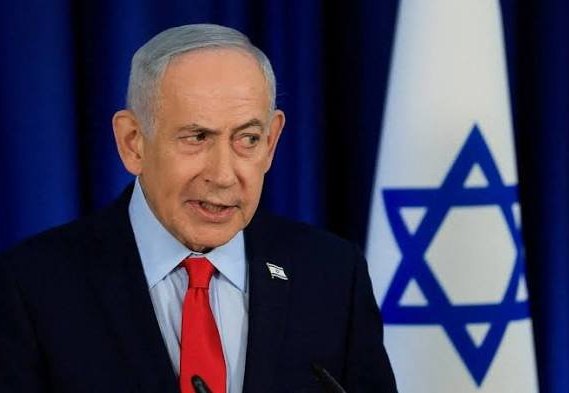
The recent Israeli elections have delivered a familiar yet intensified political riddle. Despite a campaign defined by fierce polarization and mounting public fatigue, the results point toward a hung parliament where no single faction holds an outright majority. Benjamin Netanyahu and his right-wing coalition are projected to secure around fifty-three seats, while the opposition bloc trails with forty-eight. With the 120-seat Knesset requiring sixty-one seats to form a government, the arithmetic dictates that neither side can govern alone.
Yet the deeper story of this election goes beyond raw seat counts. It lies in the deliberate weaponization of identity politics and the paralysis gripping Israel's democratic architecture.
The Demographic Reality and the Arab Bloc
To understand the current deadlock, one must examine Israel's internal composition. Within the country's internationally recognized borders, the population comprises roughly seventy-five percent Jewish citizens and twenty-one percent Arab citizens. These Arab citizens are not recent arrivals or occupants of the West Bank and Gaza; they are long-standing residents who have held voting rights for decades. They participate fully in civic life, though they remain structurally distinct from the Jewish majority.
In this election cycle, Arab parties secured nineteen seats, positioning themselves as potential kingmakers. Among them, the United Arab List, known as Ra'am, took a pragmatic step by signaling a willingness to acknowledge Israel as a Jewish state in pursuit of domestic integration. Even the Arab Joint List represents secular and liberal currents advocating for coexistence.
Despite this pragmatic shift, these parties remain politically untouchable within mainstream Jewish political discourse. The reason is rooted in a deliberate strategy deployed by Netanyahu.
The Politics of Division
Over years of political survival, Netanyahu has fostered a majoritarian mindset that frames national politics as an existential struggle between Jewish identity and Arab participation. By casting any political alignment with Arab parties as an existential threat, he has effectively quarantined one-fifth of the electorate.
This tactic has parallels in other major democracies where nationalist leaders leverage majoritarian anxieties to discipline the political center. By equating minority inclusion with treason, Netanyahu has forced opposition parties into a corner. Fearful of losing nationalist Jewish voters to right-wing campaigns, opposition leaders have publicly vowed to exclude Arab parties from any governing coalition.
Consequently, even though the broader anti-Netanyahu sentiment commands significant weight in the Knesset, the opposition's self-imposed exclusion of Arab factions prevents them from assembling a governing majority.
The Survival Playbook
This dynamic leaves Netanyahu uniquely positioned to retain power or force the country into yet another round of elections. He has called upon all Zionist factions to unite under the banner of Jewish solidarity, effectively daring opposition parties to break ranks with nationalist orthodoxy.
If the opposition refuses to bridge the divide with Arab representatives, the political deadlock becomes absolute. Critics argue that this perpetual state of crisis serves Netanyahu's interests by subordinating policy governance to identity survival. Sustained military friction and regional escalation historically serve to consolidate Jewish majoritarian solidarity, neutralizing internal dissent and sidelining socioeconomic grievances.
Israel now stands at a structural crossroads. Breaking the cycle requires opposition parties to look beyond manufactured polarization and integrate the legitimate political weight of the Arab minority into a functional, secular coalition. Without such a bold recalibration, the country risks remaining trapped in a permanent loop of instability, governed by a playbook that values division over durability.