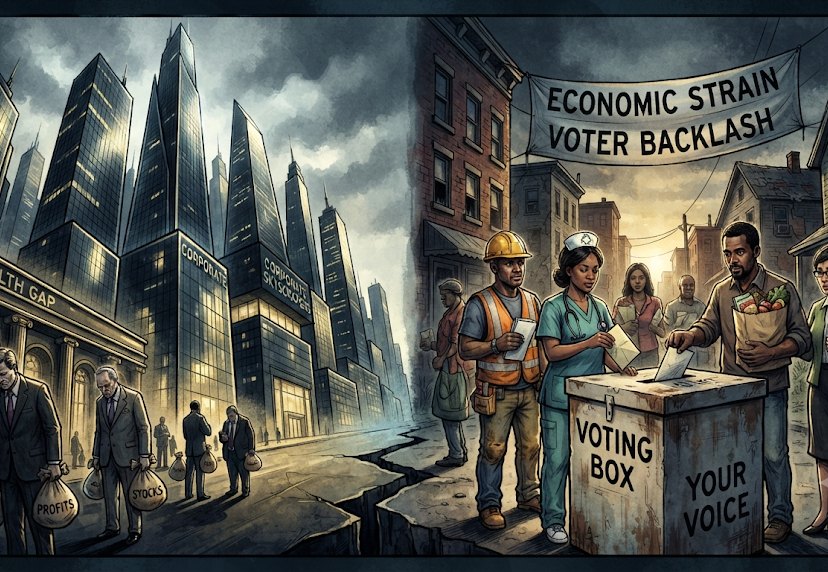
When Donald Trump assumed office following the 2024 presidential election, he campaigned on sweeping promises. He assured voters he would deliver the strongest economy in history, marked by exceptional job growth, higher paychecks, and renewed prosperity for the American middle class. However, the economic reality experienced by everyday households has diverged sharply from those political assurances.
Rising Costs and Inflationary Pressures
Although macroeconomic indicators show an overall economic growth rate of three percent, inflation remains elevated at 3.7 percent, with consumer goods inflation running at two percent. Estimates from the Yale University budget lab indicate that consumer goods inflation adds an annual financial burden of $1,100 to the average American household. Compounding this strain, ongoing geopolitical tensions and the conflict involving Iran have added another $1,000 per household in secondary costs. For low-income families, these combined pressures have become severe.
Grocery inflation has soared, and diesel prices have climbed past six dollars per gallon. As general inflation accelerated, the Federal Reserve responded by raising interest rates, which directly drove up borrowing costs across the economy.
Social welfare systems have also faced severe retrenchment. Recent policy shifts and funding rollbacks removed approximately five million people from food stamp assistance programs. Reductions in Medicaid funding further restricted access to healthcare safety nets for millions of low-income Americans. Furthermore, healthcare costs surged as federal support lapsed; according to estimates from the health research group KFF, average individual insurance premiums jumped by $800.
Tax Policy and the Divergence of Incomes
The introduction of major legislative tax packages—frequently promoted as broad tax relief—disproportionately favored high-income earners. While the average tax refund for typical citizens hovered around $340, wealthy Americans reaped massive gains from extensive tax cuts.
An analysis of income distribution reveals a stark contrast in outcomes:
Real hourly wages for typical workers fell by 0.7 percent. Meanwhile, the labor share of non-farm business output dropped to its lowest level in eighty years.
The Housing Market and Asset Concentration
The housing sector experienced parallel divides due to surging mortgage rates, which climbed to seven percent following Federal Reserve rate hikes. High borrowing costs placed homeownership out of reach for many prospective buyers. Data from online real estate platforms and industry associations indicate that starter home sales fell by 5.4 percent, driven by rising material costs—such as an estimated $11,000 increase in raw construction supplies—and a 4.2 percent rise in labor costs. Conversely, luxury home sales rose by 6.2 percent, reflecting the insulated purchasing power of high-net-worth buyers.
This wealth concentration extended directly into financial markets. Over a two-year period following late 2024, the S&P 500 index surged, creating roughly $17 trillion in new equity and mutual fund wealth. However, this capital accumulation remained highly concentrated: the top ten percent of American households captured 90 percent of that $17 trillion gain, while the bottom 50 percent of the population captured a mere 0.6 percent.
Even the agricultural sector faced severe disruption. Despite being a core political constituency, farmers experienced rising bankruptcy rates driven heavily by soaring fuel and operational expenses.
Public Sentiment and Political Fallout
Data from the Pew Research Center highlights the depth of this discontent, showing that roughly two-thirds of Americans believe their personal economic conditions have worsened. Even among Republican voters, over 35 percent acknowledged a decline in their financial standing.
As the cost of living, healthcare, housing, and everyday necessities climbed while wages stagnated for the working class, public frustration culminated in a decisive electoral backlash against the trump administration.