India has traditionally maintained a bipartisan foreign policy framework since 1947. Under this established approach, successive governments operated on the principle that the internal political outcomes of foreign nations do not dictate bilateral relations. Whether voters in the United States choose Donald Trump or a Democratic candidate, or whether voters in the United Kingdom elect conservative or labor leadership, India's core diplomatic objective has remained engagement with whoever holds power.
However, this traditional framework experienced a distinct departure following the rise of the Bharatiya Janata Party and Prime Minister Narendra Modi. Even during the tenure of Atal Bihari Vajpayee, foreign policy maintained continuity rather than sharp, overt shifts. Under the Modi administration, two primary deviations have emerged: personalized diplomacy and ideological alignment.
The Pitfalls of Personalized Diplomacy
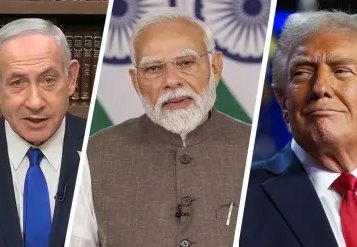
Personalized diplomacy relies heavily on direct interpersonal relationships between leaders, characterized by public embraces, affectionate salutations, and close association. This style became a hallmark of engagements with global figures such as Donald Trump in the United States and Benjamin Netanyahu in Israel.
This strategy carried significant diplomatic risks. Donald Trump publicly praised Narendra Modi as a best friend while simultaneously imposing tariffs on Indian goods and describing India as a dead economy. When a foreign leader does not act as a friend to India, they cannot genuinely serve as a friend to an individual leader or political party. Despite these contradictions, the Bharatiya Janata Party utilized high-profile events like the Howdy Modi rally and the Namaste Trump campaign to project Narendra Modi as a global leader to domestic audiences. While this integration of foreign policy and domestic politics may have yielded domestic political benefits, it ultimately compromised broader national interests.
The consequences of this personalized approach became starkly evident in West Asia. India historically possessed the diplomatic leverage and balanced relationships required to act as a mediator in the region, maintaining ties with the United States, Iran, Israel, and Gulf nations. Because of the intense personal alignment with Benjamin Netanyahu and shifting regional dynamics, India lost its mediatory standing, allowing smaller nations like Qatar and actors associated with Pakistan to step into mediation roles.
Ideological Alignment Versus National Interest
Foreign policy traditionally operates on national interest rather than ideological affinity. Global powers routinely engage with ideologically divergent nations. For instance, the United States has maintained decades of diplomatic and economic engagement with China despite ideological differences between a capitalist democracy and a communist state. Similarly, the Bharatiya Janata Party administration has engaged with the Taliban in Afghanistan and hosted delegations from the Chinese Communist Party, with representatives visiting party and Rashtriya Swayamsevak Sangh offices for discussions.
Despite such pragmatic engagements, ideological preferences frequently influence diplomatic posture. The Bharatiya Janata Party shares an affinity with right-wing politics, creating friction with progressive and democratic socialist elements within foreign political systems. For example, when a political figure of Indian origin was elected in New York, a major global financial center, Modi did not extend formal congratulations. This reluctance stems from a discomfort with democratic socialist victories, reflecting a broader pattern where right-wing ideological alignment shapes foreign relations.
Conclusion
A foreign policy driven by personal rapport and ideological sympathy rather than strict national interest creates avoidable diplomatic vulnerabilities. While historical and geopolitical exceptions exist, such as India's foundational relationship with the Awami League due to its role in the liberation movement of Bangladesh, major international relations should remain anchored in institutional diplomacy. Moving forward, separating domestic political projection from international statecraft remains essential to safeguarding India's strategic standing on the global stage.