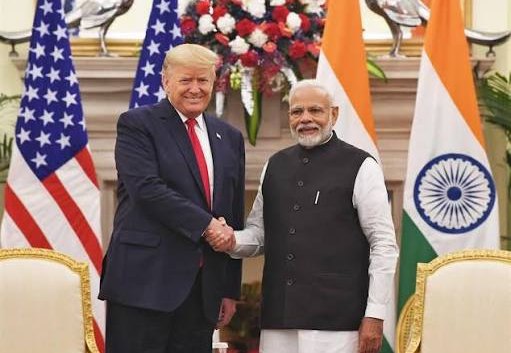
Recent international political developments have sparked considerable debate regarding whether global trends can serve as a reliable blueprint for domestic outcomes. Following significant political shifts in the United States, Brazil, Serbia, and Israel, political analysts have increasingly questioned if similar anti right wing momentum could challenge the administration of Prime Minister Narendra Modi in India. Examining these developments requires looking closely at structural differences, voting patterns, economic concerns, and media landscapes without assuming direct cause and effect.
International Rejections Of Right Wing Politics
Across multiple democracies, recent elections have demonstrated a clear pushback against right wing and authoritarian governance. In the United States, progressive candidates within the Democratic Party secured notable victories. Figures such as Abdul Syed won election in Michigan, Zohran Mamdani emerged victorious in New York, and Nitya Raman won in Los Angeles. Despite intense campaigning and rhetoric from Donald Trump targeting minority groups and progressive platforms, voters supported candidates who rejected divisive identity politics. Similar trends appeared globally. In Serbia, student led protests successfully challenged long standing leader Aleksandar Vucic, whose administration maintained heavy control over domestic media and utilized religious institutions. In Brazil, voters defeated the son of Jair Bolsonaro, who maintained close ties with right wing counterparts abroad. Meanwhile, in Israel, Prime Minister Benjamin Netanyahu faced a formidable coalition led by opponents like Gadi Eisenkot and Arab parties, signaling a broader international fatigue with right wing political dominance.
Structural Differences In Electoral Systems
Despite apparent tactical similarities such as nationalist rhetoric, anti minority policies, and the labeling of opponents as foreign agents, India and the United States operate under fundamentally distinct political architectures. The American model relies on a rigid two party system where voters discontented with the Republican Party have no alternative other than the Democratic Party. This concentrates anti incumbent sentiment directly.
In contrast, India features a fragmented, multi layered, multi party electoral ecosystem. Out of five hundred and forty three Lok Sabha seats, the Indian National Congress competes directly with the Bharatiya Janata Party in roughly two hundred constituencies. Across the remaining seats, regional parties dominate, and in several states like Tamil Nadu, neither national party commands the primary space. Regional contests often involve fierce competition between local alternatives, such as the Congress and the Aam Aadmi Party in Punjab, or the Congress and Left parties in Kerala. Consequently, anti BJP votes do not consolidate into a single unified opposition block in the manner anti Republican votes do in the United States.
Voting Percentages And Electoral Math
Voting thresholds further separate the two political environments. During the US presidential election, Donald Trump secured a substantial share of votes before experiencing a drop in subsequent polling metrics. In India, however, the BJP historically secures a national vote share hovering around thirty seven to thirty eight percent. While a thirty five percent drop in Western democracies can dismantle a major party's electoral viability, thirty seven to thirty eight percent of the national vote in India is sufficient to comfortably secure governance, particularly when combined with regional alliances. For the ruling party to face a definitive defeat, vote shares would need to experience a catastrophic decline down into the mid twenties, a scenario not currently reflected in standard electoral dynamics.
Economic Pressures Versus Identity Discourse
Economic grievances played a decisive role in recent international outcomes. Google search index data during the US midterms revealed that between thirty four and forty one percent of public queries focused on inflation and fuel prices, while additional searches concentrated on foreign conflicts and trade tariffs. These economic hardships directly mobilized voters against the incumbent administration.
The domestic Indian information landscape presents a different priority matrix. Search index data indicates that public engagement heavily centers on political personalities rather than structural economic data. Queries concerning opposition figures like Rahul Gandhi routinely surpass public search volumes for inflation, while unemployment searches remain minimal. Cultural markers and identity politics frequently overshadow systemic financial concerns, with public curiosity often veering toward sensationalized identity metrics rather than foundational fiscal policy. Without economic issues dominating the primary voter agenda in a cohesive manner, replicating a broad anti incumbent wave remains challenging.
Class Divides And Corporate Discourse
Western progressive movements effectively weaponized class divides during recent campaigns. American political figures framed economic hardship around structural inequality, pointing to data showing that wealth concentration disproportionately benefited top earners while median workers experienced declining real wages and lower starter home affordability. Progressive leaders explicitly targeted billionaire influence and corporate tax policies.
In India, opposition critiques often personalize economic disparities rather than challenging structural market systems. Critiques frequently target the personal relationships between political leaders and prominent corporate figures like Adani and Ambani rather than addressing the underlying mechanics of capital concentration. Because major national opposition parties have historically overseen pro business economic frameworks themselves, their messaging targets personal cronyism rather than systemic economic restructuring.
Media Independence And Institutional Checks
The robustness of institutional checks and independent media also creates a divergence between the two nations. In the United States, independent outlets such as The Atlantic, The New York Times, and Common Dreams sustain rigorous, critical scrutiny of executive power, while judicial bodies retain the authority to strike down major administrative actions like trade tariffs.
In contrast, mainstream television media across English, Hindi, and regional language channels frequently amplifies administration narratives, leaving limited space for unvarnished institutional critique. While superficial tactical parallels exist between global right wing movements and Indian politics, structural realities, multi party fragmentation, voting arithmetic, and media ecosystems ensure that domestic outcomes will be determined entirely by local political and economic conditions.