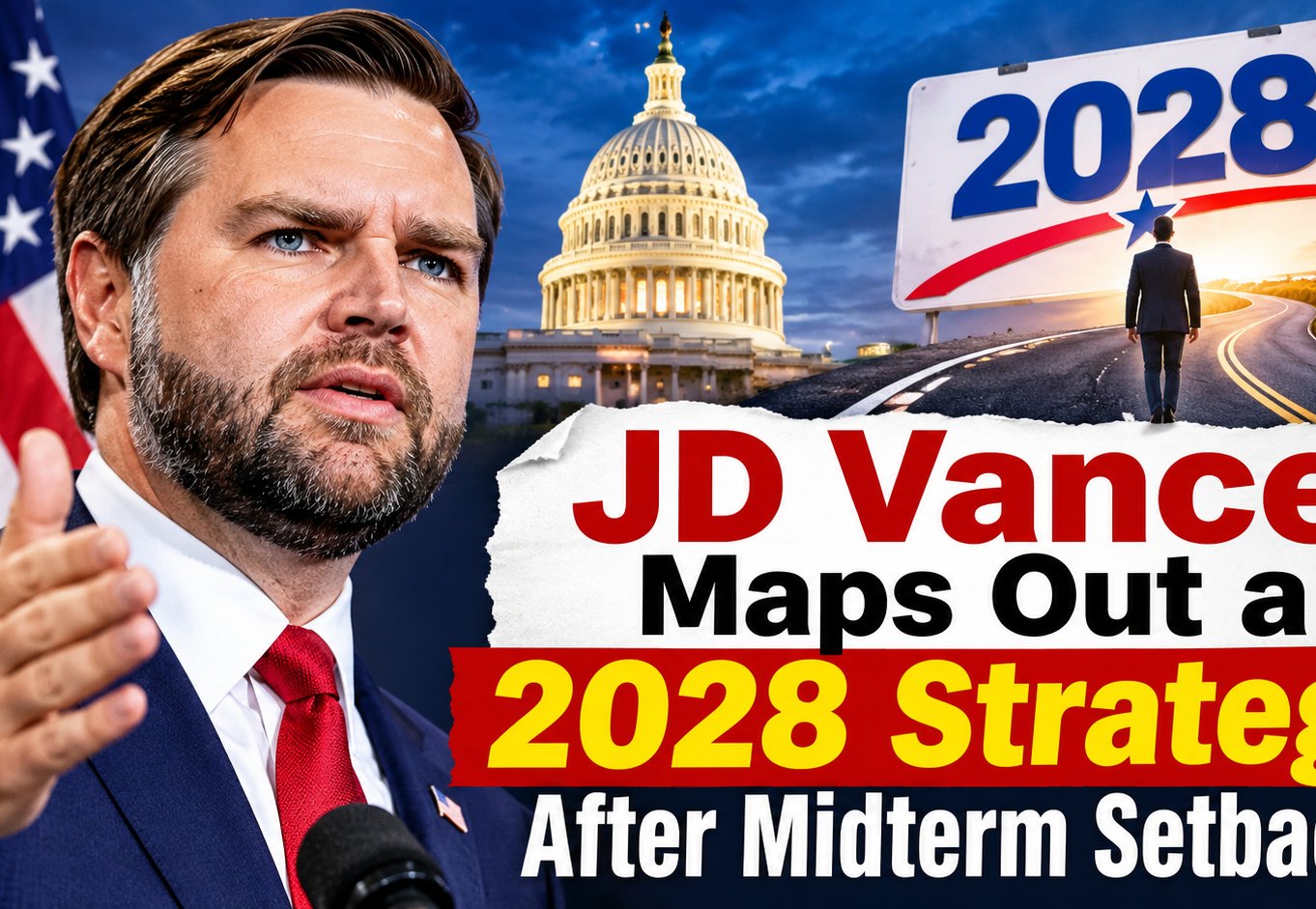
The political landscape in Washington faces a period of intense recalculation following the recent midterm congressional elections. The Republican Party lost its majority in both the House of Representatives and the Senate, leaving party strategists to question how the conservative movement will position itself for the upcoming presidential contest. President Donald Trump has faced sharp declines in public approval ratings, and political analysts are actively debating who will emerge as the next standard-bearer for the party.
Among the leading figures positioning for the future, Vice President JD Vance has begun implementing a distinct political playbook. Navigating the path to the presidency requires clearing two separate hurdles that can often conflict with one another. A successful candidate must first secure the nomination within the party primaries, which traditionally demands a strong connection to the Make America Great Again base. This nationalist, conservative faction forms the bedrock of the contemporary Republican coalition. Yet, winning a general election requires broader appeal among independent, liberal, and moderate voters. Balancing these two worlds defines the core challenge for any Republican aspiring to succeed Trump.
Vance has approached this dilemma by carefully recalibrating his public stance on key national and international issues. During recent midterm campaign events, Vance noticeably adjusted his messaging strategy. Observers noted that he avoided mentioning Donald Trump by name in several campaign stops, and some Republican candidates opted to keep surrogates at a distance as public frustration grew. Vance also steered clear of controversial topics such as mass deportations and the military engagement involving Iran. Instead, his campaign speeches concentrated on economic nationalism, public safety, living costs, and government accountability.
This calculated distance allows Vance to retain the core loyalty of the nationalist base while attempting to sidestep the heavier political baggage associated with the current administration. Observers point to specific policy areas where Vance has clearly demarcated his position from Trump. Following recent events, Vance addressed the outcome of the Iran conflict directly, noting that while he intends to maintain certain defense postures without regret, his tone and framing diverged from the White House narrative. Furthermore, while the administration previously dismissed concerns over the rising cost of living as political rhetoric from opponents, Vance publicly acknowledged the affordability crisis as a critical issue that Republicans must address. Another notable divergence involves foreign policy regarding Israel, where Vance has signaled the need to reevaluate current approaches compared to the direct endorsements issued by Trump.
Despite these strategic maneuvers, significant obstacles remain on the horizon. Critics within both parties point out that as the sitting Vice President, Vance cannot completely disassociate himself from the policies and electoral setbacks of the current administration. Furthermore, campaign trail realities present complications. Republicans suffered defeats not only in areas where Trump campaigned directly, but also in regions where Vance made appearances. Opponents within the party are likely to question whether his personal brand holds the electoral pulling power necessary to unite a fractured conservative movement.
As the political machinery turns toward the next presidential cycle, Vance continues his brand-building efforts. By maintaining a delicate balance between grassroots nationalist loyalty and independent policy positioning, he aims to cement his status as a primary contender for the leadership of the Republican Party.