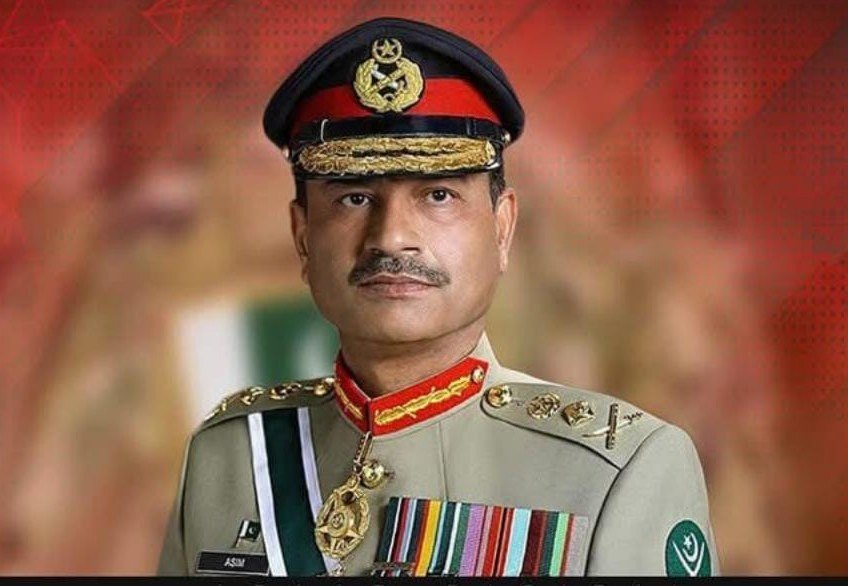
In the shifting architecture of international relations, states under severe structural stress often resort to ideological expedients. Few actors illustrate this mechanism as clearly as Pakistan. Facing profound economic insolvency, deep internal security fractures, and a diminishing diplomatic footprint in the broader Islamic world, the country’s military establishment has sought refuge in familiar rhetoric. The recent pronouncements by Pakistan’s Army Chief and Field Marshal Asim Munir, framing India-Israel relations as a grand civilisational conspiracy against global Muslims, represent more than standard diplomatic posturing. They are a textbook exercise in manufacturing external threats to mask domestic failure.
The core of General Munir’s argument relies on an ideological sleight of hand. By characterizing the cooperative ties between New Delhi and Jerusalem not as bilateral state-to-state diplomacy, but as a deliberate Hindu-Jewish entente targeted at Islam, Islamabad attempts to inject a visceral, communal gravity into a standard geopolitical alignment. Yet this narrative collapses under even the most superficial historical and contemporary scrutiny. The international system is defined by shifting interests rather than monolithic religious blocs, a reality that Pakistan’s own foreign policy history demonstrates with stark irony.
To accept the premise of a unified Islamic solidarity challenged by a Hindu-Jewish axis requires a willful suspension of historical fact. The modern map of the Middle East and South Asia is littered with conflicts fought entirely within the house of Islam. The devastating eight-year war between Iran and Iraq in the nineteen-eighties claimed hundreds of thousands of Muslim lives, untroubled by any external religious coalition. Decades later, regional interventions and proxy conflicts, from the Houthi campaign against Saudi Arabia to internal fractures within the Gulf Cooperation Council, underline that sovereign interests routinely override religious fraternity.
More damaging to Islamabad’s thesis is its own immediate neighborhood. The Afghan Taliban, an ideological progeny nurtured and financed by elements within Pakistan’s security apparatus, now engage in steady border skirmishes with the Pakistani state. The Tehreek-e-Taliban Pakistan wages a relentless insurgency against the Pakistani military. In both instances, combatants and victims alike belong to the same faith. When the state deploys kinetic force against its own restive populations in Balochistan or the former Federally Administered Tribal Areas, questions of religious solidarity are conspicuously absent.
The invocation of a grand religious threat also ignores the pragmatic diplomatic shifts occurring across West Asia. The Abraham Accords, which established formal normalization between Israel and several Arab nations such as the United Arab Emirates and Bahrain, reflect a region pivoting toward economic pragmatism and strategic alignment against common security concerns, notably Iran. Strategic relationships and intelligence-sharing arrangements do not operate along medieval theological fault lines.
Beneath the rhetorical veneer of religious defense lies a deeper strategic vulnerability. Pakistan’s foreign policy finds itself caught in a persistent contradiction. While its military leadership rails against Western powers and their partnerships, Islamabad remains heavily dependent on external financial bailouts and strategic validation from Western capitals. General Munir’s frequent accommodation of American diplomatic and military priorities, even as Washington executes counter-terrorism operations across Muslim-majority regions from Somalia to South Asia, exposes the hollowness of his professed pan-Islamic vanguardism.
Furthermore, the numbers defy the Pakistani military's premise. India is home to one of the largest Muslim populations in the world, integrated within a constitutional framework that rejects theocratic governance. Millions of Muslims serve with distinction in India’s civil services, judiciary, and armed forces. By contrast, Pakistan’s persistent economic stagnation, compounded by political instability and structural governance crises, has left the state searching for external scapegoats.
Prominent Pakistani journalists and analysts have increasingly criticized these inflammatory remarks, recognizing that weaponizing religion for geopolitical posturing diminishes the country’s remaining diplomatic credibility. When state survival depends on manufacturing external phantoms, governance inevitably yields to grievance. The rhetoric of a Hindu-Jewish alliance against Muslims is not an analysis of global power dynamics; it is the desperate language of a state running out of domestic alternatives.