For more than a decade, the Bharatiya Janata Party operated as the default inquisitor of Indian politics. Between the twilight of the second United Progressive Alliance government in 2013 and its third successive parliamentary triumph, the party excelled at dictating the terms of national debate. Armed with Narendra Modi’s political narrative, an extraordinary digital strategy, and an adept control over traditional media, the ruling establishment rarely felt compelled to justify its actions. It questioned the credentials of its rivals, defined the boundaries of national identity, and shifted the burden of proof entirely onto a fractured opposition.
That dynamic is undergoing a subtle structural shift. The political machinery that navigated elections against the Indian National Congress and regional dynasties now faces an uncomfortable transition: moving from setting the agenda to answering for it.
The Architecture of Dominance
The central power of the party during its rise lay in its capacity to decouple policy implementation from political liability. Even drastic economic interventions, such as the 2016 demonetisation drive, left its core electoral base intact. The political narrative transformed potential policy friction into an ideological statement: measures were interpreted as sacrifices for national renewal.
This apparatus rested on four distinct pillars.
Simultaneously, a targeted welfare scheme provided direct benefits, creating a broad base of recipients (labharthis) that tied state delivery directly to the central executive.
The Four Political Arenas
To understand the current tension, one must evaluate the three distinct battles the ruling party fought and won, alongside the fourth arena now taking shape.
The Limits of Retaliatory Rhetoric
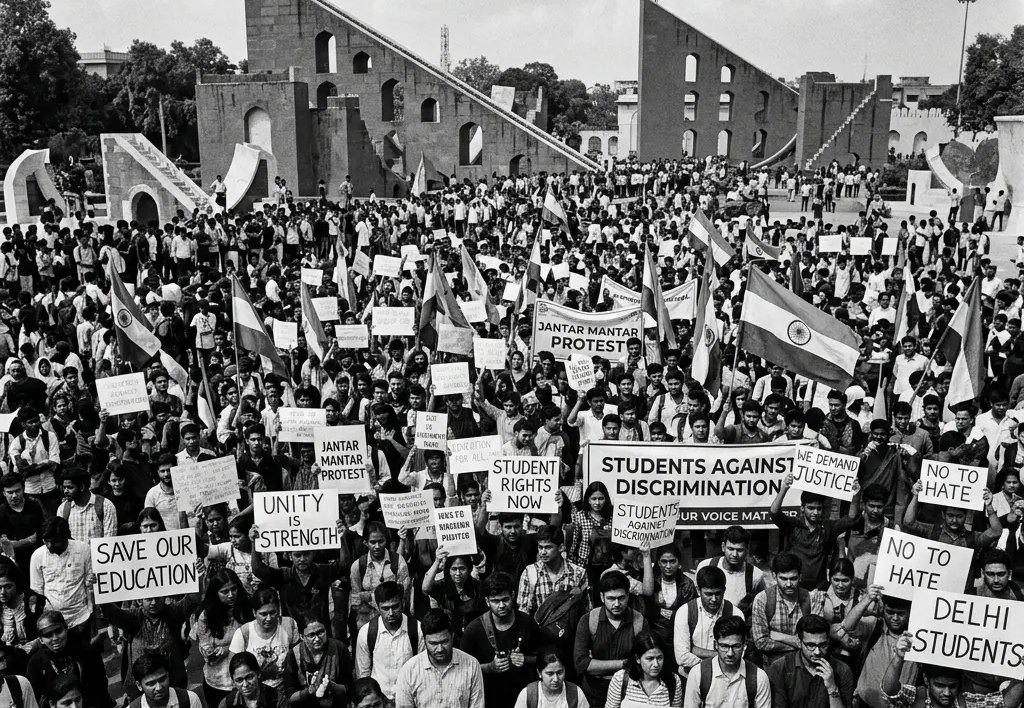
When friction arises from civil society or younger demographics rather than formal political rivals, established political labeling shows diminishing returns. Attempts to categorize organic public critique through standard ideological tags have met with growing skepticism.
Recent domestic debates around educational standardizations, examination integrity, and administrative appointments have tested the limits of standard communications strategy. When challenges emerge from civil society groups, attempts to apply ideological dismissals often resonate poorly, forcing the administration to respond directly on technical merit.
Even within broader coalitions and traditional policy networks, subtle friction has surfaced. Coalition partners now voice independent positions on regulatory and institutional matters, while internal commentators and sympathetic analysts raised questions about the efficacy of digital communications strategies and administrative overreach.
The Horizon
This dynamic does not signal an immediate collapse of political authority; the ruling party retains an organizational scale, financial backing, and grassroots mobilization capacity that rivals cannot easily match. Yet, the terms of engagement are shifting.
The primary challenge facing the administration is no longer overcoming an organized political opposition. It is adapting a political apparatus designed for offensive ideological debates to an era defined by practical demands for public accountability, institutional transparency, and economic delivery. When a governing party must spend its political capital explaining outcomes rather than setting agendas, the balance of political narrative undergoes an enduring change.