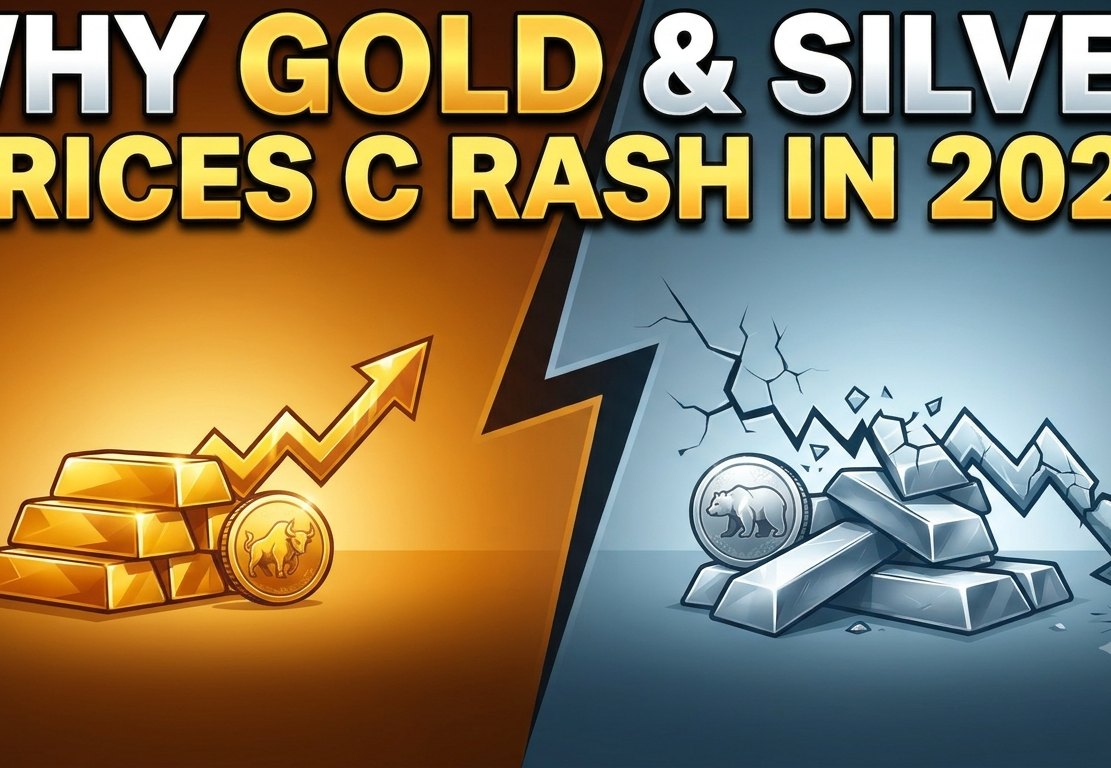
Gold and silver markets have experienced steep declines through 2026, catching many buyers and observers off guard because traditional price drivers remain active. By November 18, 2026, 24 carat gold for 10 grams in India stood between 1,33,000 and 1,36,000, marking a drop of nearly 25 percent from its peak around 1,80,000 at the start of January. Silver has fallen even more sharply, dropping from above 4 lakh to between 1.66 lakh and 1.69 lakh, a decline of nearly 60 percent or more.
Why Prices Should Be Rising
Ordinarily, conditions in 2026 look supportive for higher bullion prices. Geopolitical uncertainty remains high, which typically pushes investors toward gold as a safe haven when currency values, wars, and economic stability feel unpredictable. Ongoing conflicts involving Ukraine and Iran continue without a clear end date. In addition, Donald Trump recently lost an election, creating uncertainty over whether he will push harder or step back over the next two years, alongside questions about the next American president.
Central bank buying is another factor that normally supports gold. Institutions such as the Reserve Bank of India hold foreign exchange reserves across currencies and gold. Over time, gold has taken the place once held by the euro behind the dollar in global central bank reserves, as institutions increase gold holdings when confidence in the dollar weakens. In the first nine months of 2026, central banks bought 675 tons of gold, up 6 percent from the same period a year earlier. Survey findings cited in the discussion indicate that 89 percent of respondents expect central bank gold purchases to rise over the next 12 months, while 74 percent expect dollar holdings to be reduced.
Silver has an extra supply-side factor in its favor because industrial supply continues to face deficits and shortages relative to demand. Normally, a supply gap alongside geopolitical risk and central bank gold buying would point toward firmer prices rather than a steep selloff.
Forces Pulling Prices Down
Despite those supportive elements, downward pressures have taken control in 2026. Interest rates in the United States have been rising, with expectations that increases could continue. In a market survey, 90 percent of respondents indicated interest rates are expected to rise over the coming period, and speculation has grown around another rate hike by the US Federal Reserve in December. Higher interest rates tend to attract investors toward dollar-denominated assets that offer better returns rather than gold, which pays no interest.
US bond yields have also climbed from 4 percent to more than 5 percent in 2026, a historically high level that makes interest-bearing government debt more appealing than non-yielding gold. That shift has strengthened the US dollar, with the dollar index rising by around 5 percent. Because gold and the dollar generally move in opposite directions, a stronger dollar weighs on gold demand after dollar weakness had helped lift gold in 2025.
Silver faces two additional drags on demand. Industrial demand from China, a major leader in industrial uses including solar panels, has softened amid a slowdown in China's economic growth. At the same time, solar panel manufacturers have trimmed silver usage by around 3 percent as they explore alternative materials.
What This Means Going Into 2027
Rather than acting in isolation, geopolitical tensions, central bank gold purchases, interest rates, US bond yields, dollar strength, and industrial silver demand push and pull against one another at the same time. Price direction depends on which set of forces carries more weight in a given period. Factors pushing prices higher dominated in 2025, while factors pushing prices lower have dominated in 2026. Because these competing forces stay in play and shift in strength over time, price swings in gold and silver remain a recurring feature of the market heading into 2027.