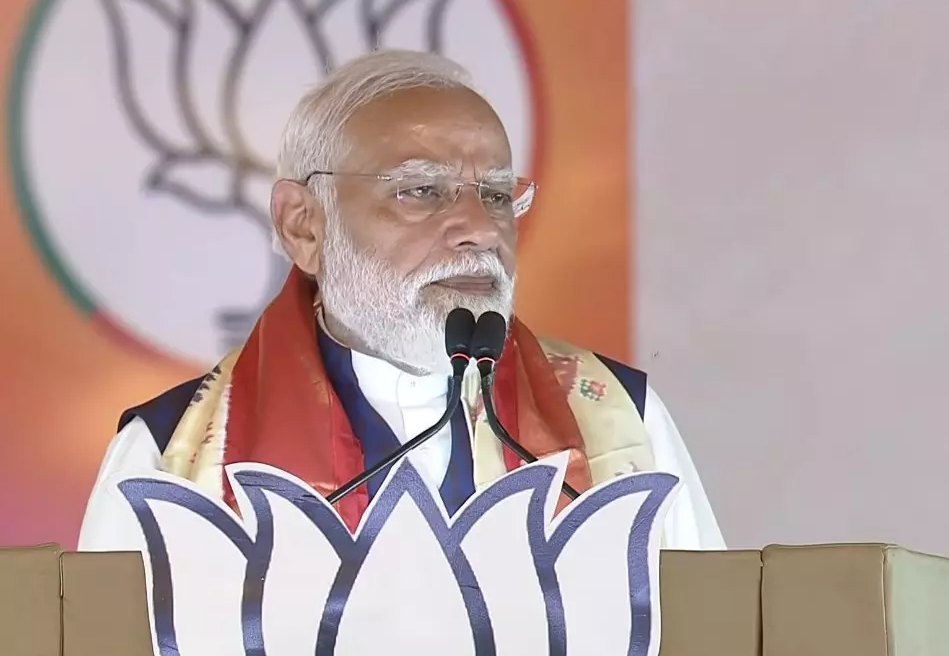
Gold prices began falling months before a public appeal by Modi urging citizens to hold off on buying bullion for a year, with data showing downward movement starting in January rather than after a May 10 address. While Prime Minister Narendra Modi linked lower gold prices to his call to defer non-essential gold purchases for a year and compared public response to Lal Bahadur Shastri's appeal to skip one meal, price records and global market mechanics point to external forces behind the drop.
Domestic gold prices reached a peak above 180,000 per tola or 10 grams in January. By May 11, following a May 10 Sunday address when trading was closed, the price stood at 146,260, reflecting a drop of more than 34,000 to around 35,000 between January and May. From May 11 to November 23, the price moved from 146,260 to 126,560, a decline of roughly 20,000 over a comparable stretch of months. Because prices had already fallen by over 34,000 prior to the May appeal compared with about 20,000 afterward, the downturn was already underway well before the call was made.
Price Timeline and Appeal Context
Tracking the numbers across the year highlights how timing separates the price slide from the call to postpone purchases. On May 1, the price stood at 140,780 before reaching 146,260 on May 11, and then slipping to 126,560 on November 23. Comparing the January to May window with the May to November window shows a larger drop before the appeal than after it, even though both spans cover several months.
The appeal itself also extended beyond gold to other areas, including reducing fuel consumption and cutting foreign travel. Yet fuel prices did not drop on the back of that call, and data on reduced foreign travel was not shown to mirror the bullion slide, even though some people gave up subsidized gas connections when called upon to do so. In addition, an import duty hike in India in May raised duty on gold from 6 percent to 15 percent, which pushes domestic prices up rather than down. High volatility and uncertainty over whether prices will rise or fall next can also make buyers cautious during sharp swings.
How Domestic and Global Factors Set Prices
Gold prices in India do not move on domestic supply and demand alone. Even if lower buying in India saves foreign exchange, local purchase restraint by itself does not set the price of gold because bullion pricing is tied to international markets. Worldwide, gold prices fell by roughly 30 percent between January and November, including across major markets such as the United States, China, and Russia.
Three core variables determine gold prices in India:
Several global and market factors weighed on gold alongside those core drivers. A higher dollar price pushed gold lower, while rising interest rates in the United States and expectations of further rate increases added pressure. Yields on American bonds rose above 5 percent, drawing investors toward US bonds rather than gold. Recent appreciation of the rupee also moderated domestic prices after earlier currency weakness had made gold costlier, while losses in other investments such as stocks prompted profit booking and forced some holders to sell gold at higher price levels.
Outlook for Buyers and Markets
Looking ahead, gold price direction remains tied to global financial conditions, currency moves, and tax or duty rules rather than domestic buying pauses alone. A drop of more than 34,000 from the January peak to May 11 and a further drop of roughly 20,000 to 126,560 by November 23 show that sharp swings can occur across both rising and falling stretches.
For market participants tracking bullion, near-term movement depends on whether international prices continue their broader slide, how US interest rates and bond yields behave, how the rupee trades against the dollar, and whether customs duty or GST changes alter landed costs. With international prices down by around 30 percent from January to November and volatility still high, price swings remain driven by global market forces rather than local purchase restraint.