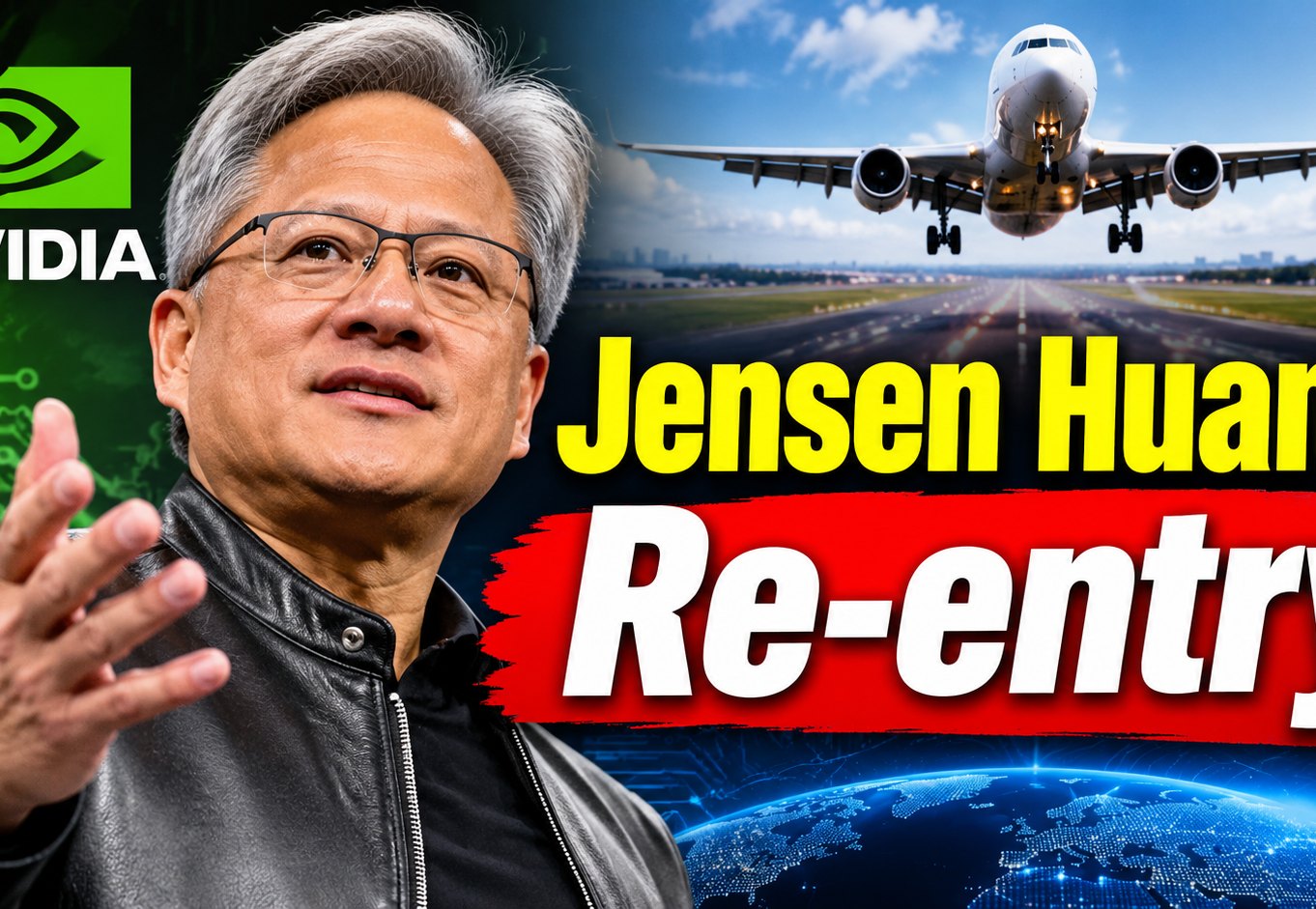
Jensen Huang has returned as chief executive officer of Nvidia eleven days after resigning amid allegations of an improper relationship with Alice Huang, a person suspected of being a Chinese spy. The board decision reversed repeated earlier statements that Huang would not be reappointed under any circumstances. Following the announcement, Nvidia shares jumped more than 30 percent, adding 500 billion dollars to its market capitalization within ten minutes.
The return came after steep market losses tied to the controversy. Over the prior month, Nvidia shares fell 40 percent, with sharp drops continuing into the previous week. Broader markets also absorbed heavy pressure, with the American stock market losing 4 trillion dollars after the controversy emerged as technology shares linked to Nvidia declined, and Chinese technology stocks dropping 1.7 trillion dollars. Once news of Huang returning broke, Nvidia shares surged past 30 percent in opening trade and climbed further, lifting major indexes: the Nasdaq rose 7 percent, the S&P 500 gained 5 percent, and the Dow Jones climbed more than 3 percent.
Commercial priorities outweighed moral concerns as investors, shareholders, customers, and many employees focused on company stability and returns rather than personal conduct. Technology figures including Elon Musk stood behind Huang, reflecting a view that professional leadership mattered more than personal life handled within a family. Because Nvidia is closely tied to artificial intelligence, and artificial intelligence drives American stock market and economic growth, many market participants struggled to picture Nvidia without Huang or saw the company future in doubt during the sell-off.
Security questions went beyond personal misconduct because Alice Huang is a Chinese citizen and an executive at a company in Singapore. Concerns centered on whether critical technology or advanced chips reached China or threatened American dominance in the chip industry due to personal vulnerability. Under American Commerce Department surveillance, unopened chip packages at a company in Malaysia limked to Alice Huang raised suspicion that the site acted as a transit point to send chips back to China.
Government intervention shifted the board's calculus before an investigation concluded. The administration of President Donald Trump stated that no critical, sensitive national security information had been passed along and that Huang's relationship did not pose a national security threat. With that official assurance removing a major hurdle for the board, artificial intelligence remained central to Trump's economic and political agenda, including protecting American supremacy under the Make America Great Again banner and supporting stock market gains credited to artificial intelligence investment over the past year.
Officials also acted to keep leadership steady at a company described as too big to fail in the American economy, since Nvidia supplies most chips needed to power artificial intelligence and a setback could help China gain ground in the trade war. Trump used personal influence and sent Vice President JD Vance to hold discussions with Huang and the Nvidia board so Huang would agree to return, later calling the outcome a victory. Ties between Trump and Huang had grown alongside investments in the United States, including a dinner at Trump's residence attended by Huang's family where Huang agreed to invest 500 billion dollars in artificial intelligence infrastructure in America, while also negotiating around China chip restrictions so Nvidia could sell specially made chips for China.
Questions around conduct and oversight have not ended. During the investigation, Huang acknowledged an improper relationship with Alice Huang without naming her, saying he had been unfaithful to the family, and illegal contact with two senior-level officials inside Nvidia also surfaced. While Trump, the Nvidia board, and China all denied that trade or technology secrets reached China, Alice Huang has not spoken publicly, her whereabouts are unclear with reports placing her in China, and Democrats are pursuing congressional hearings where Huang will face questioning before committees.
Operations at Nvidia remain heavily concentrated around Huang. Sixty top-level executives report directly to him rather than operating through a decentralized structure, and he has not planned a successor for the chief executive role. In addition, business with many companies, customers, and production partners has relied on mutual trust without written contracts, including a 30-year relationship with Taiwan-based chip manufacturer TSMC without a deal on paper. Because commercial ties rest so heavily on personal trust in Huang, stepping aside risked throwing unwritten arrangements and supply chain partners into uncertainty across the wider industry.