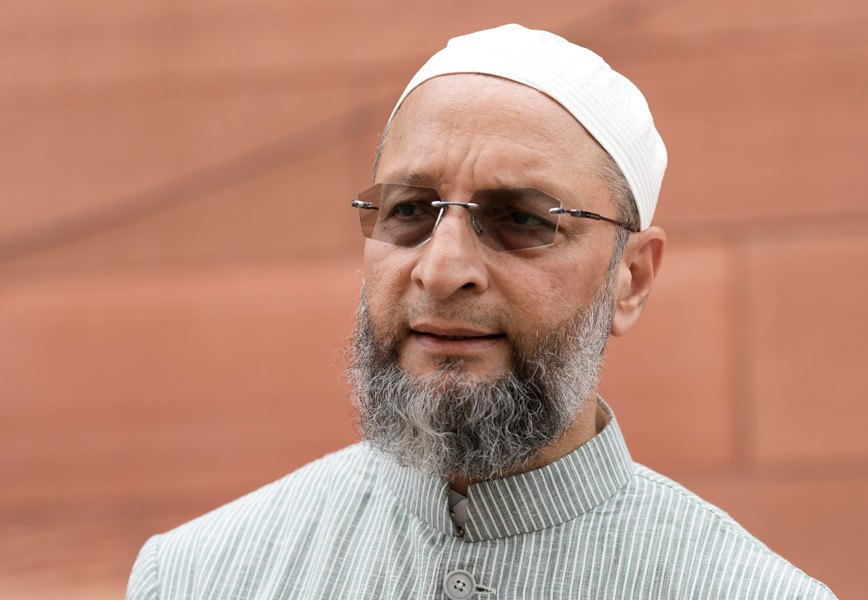
The recent overtures by Asaduddin Owaisi, leader of the All India Majlis-e-Ittehadul Muslimeen (AIMIM), to join the opposition INDIA alliance ahead of the upcoming Uttar Pradesh assembly elections have presented the Congress Party and Samajwadi Party with a quintessential tactical trap. The Hyderabad-based politician has framed his offer around a singular imperative: preventing the Bharatiya Janata Party (BJP) from retaining power in India’s most populous state. Yet for the opposition leadership, bringing AIMIM into the fold risks destabilising the fragile secular alliance it seeks to build.
This is not the first time AIMIM has pressed for inclusion in an anti-BJP coalition. In Bihar, party representatives staged demonstrations outside the residences of opposition leaders to demand entry into the Mahagathbandhan, an unprecedented spectacle of an independent political party picketing for partnership. That bid was flatly rejected, and history appears poised to repeat itself in Uttar Pradesh. While Congress and the Samajwadi Party maintained a joint front during the parliamentary elections, their seat-sharing arrangements for the state assembly race remain fluid. Congress has reportedly kept open channels with the Bahujan Samaj Party (BSP) as a contingency plan, signaling a pragmatic shift away from political rigidity following recent electoral realignments in states like Tamil Nadu.
The dilemma posed by AIMIM highlights the structural challenges confronting India’s secular opposition. Accepting Owaisi into the coalition introduces a severe electoral risk. The BJP thrives on polarising campaigns that frame opposition parties as practitioners of minority appeasement. Owaisi, with his unapologetic focus on Muslim identity and provocative rhetoric, serves as an easy target for consolidation among Hindu voters. In northern states where religious fault lines run deep, his inclusion could handed the ruling party a potent narrative. Rather than broadening the alliance's appeal, aligning with AIMIM threatens to alienate moderate electors and trigger counter-mobilisation in favor of the BJP.
Conversely, excluding AIMIM creates an equally troubling scenario for the opposition block. Operating as an independent entity, AIMIM inevitably splits the anti-BJP electorate, particularly within Muslim communities that form the bedrock of the Samajwadi Party’s traditional coalition. Previous state elections demonstrate the consequences of this fragmentation. In Bihar, AIMIM secured five assembly seats, indirectly undercutting the Rashtriya Janata Dal (RJD) in several closely contested constituencies before most of its elected representatives eventually migrated to RJD. Senior opposition leaders, including Congress MP Imran Masood, have cautioned that while AIMIM may capture only a handful of seats on its own, its presence in the field effectively serves to dilute the opposition vote to the ruling party's benefit.
From Owaisi’s perspective, however, the strategy rests on an uncomfortable truth about secular politics in contemporary India. He argues that mainstream opposition parties routinely draw upon Muslim votes while offering negligible substantive representation or policy support in return. As the BJP’s dominance has shifted the center of political gravity, secular parties have increasingly avoided addressing minority grievances or appointing Muslim leaders to high-profile positions out of fear of provoking a Hindu backlash. In major political debates and local crises, opposition groups have frequently adopted a stance of cautious silence, treating minority support as guaranteed due to the lack of viable alternatives.
This perceived neglect has created a distinct political vacuum that AIMIM seeks to fill. By challenging the traditional parties to offer genuine partnership or face divided constituencies, Owaisi highlights the growing friction between tactical voting and political identity. For the INDIA bloc, managing this dynamic without alienating key voting blocs or handing momentum to the ruling party remains one of the most delicate balancing acts in the lead-up to the state assembly polls.