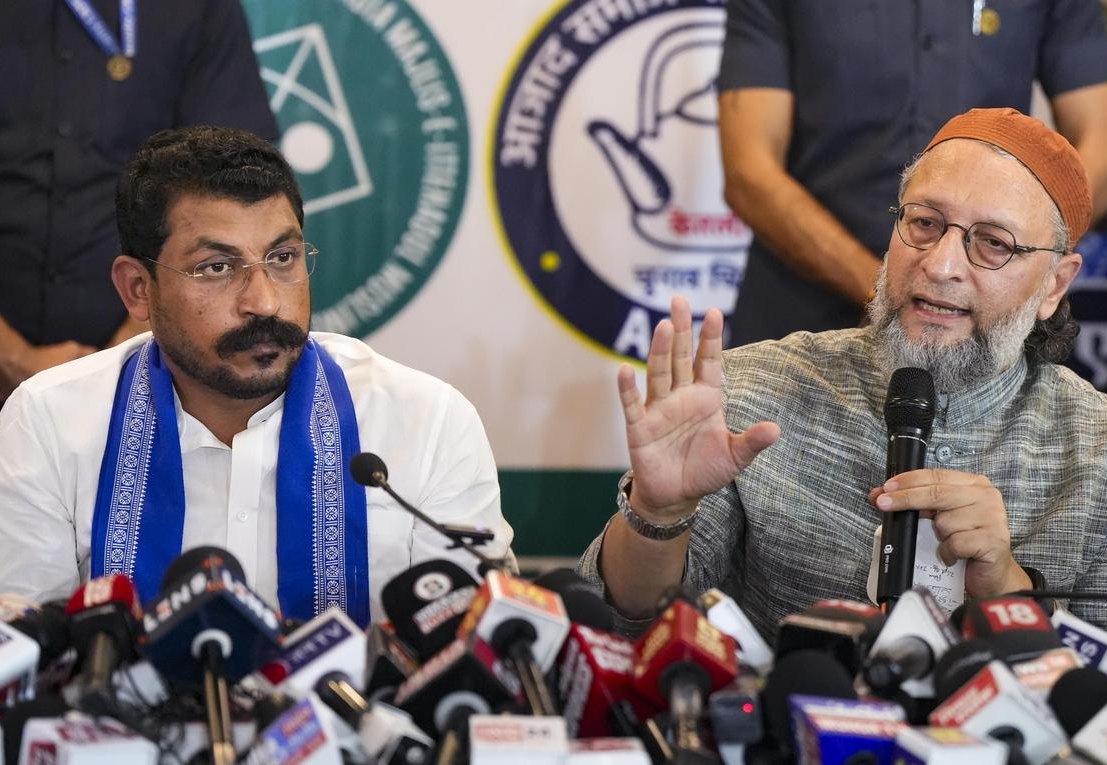
Recent political developments in Uttar Pradesh have introduced a fresh dynamic as the All India Majlis-e-Ittehadul Muslimeen (AIMIM), led by Asaduddin Owaisi, joins forces with Chandrashekhar Azad of the Azad Samaj Party. This electoral partnership enters a landscape where the ruling National Democratic Alliance (NDA) and the opposition INDIA bloc, spearheaded by the Samajwadi Party, are locked in fierce competition. While the coalition claims its primary objective is to prevent the ruling party from securing a third consecutive term, political analysts are closely examining the arithmetic behind this new front and the distinct advantages it inadvertently creates for the incumbent party.
The Emerging Social Arithmetic and Coalition Pressures
To understand the anxieties within the opposition camp, one must examine the specific demographic segments targeted by this newly formed front. In Uttar Pradesh, the Muslim population stands at roughly twenty percent, while Dalit communities account for another twenty percent. Combined, these two groups represent a substantial block of the electorate.
Historically, the Samajwadi Party built its core foundation on the Muslim-Yadav combination. Although Akhilesh Yadav later expanded this framework to incorporate broader PDA formulations, focusing on backward classes, Dalits, and minorities, the alliance between Owaisi and Azad directly cuts into the representation of these specific identity groups. Azad positions himself as a representative of Dalit interests, while Owaisi represents minority communities.
The opposition camp harbors deep concerns because a similar dynamic unfolded previously in neighboring Bihar, where Owaisi sought inclusion in the opposition coalition only to be rebuffed. The primary fear among opposition strategists is that associating with Owaisi invites aggressive counter-mobilization by the ruling party, potentially consolidating the majority vote. Consequently, secular opposition parties often find themselves trapped in a difficult dilemma. If they embrace minority leadership, they risk immediate polarization from the majority electorate; if they distance themselves, leaders like Owaisi appeal directly to alienated voters by arguing that mainstream secular parties utilize minority populations merely as a dependable vote bank while denying them meaningful legislative representation.
Electoral Data and Vote Share Realities
A purely numerical evaluation of past election results reveals why political observers debate the precise impact of this alliance. During the previous assembly elections, AIMIM contested numerous seats but secured a fraction of the total vote share, while the Azad Samaj Party similarly registered modest totals. However, subsequent parliamentary elections demonstrated that individual leaders within the coalition can secure notable victories, lifting their political profile.
In the general parliamentary elections across the state, the governing party secured a substantial vote share, yet the primary opposition alliance managed to edge ahead in total seats won through carefully coordinated voter alignment. Official post-poll studies indicate that the vast majority of minority voters and significant segments of non-Jatav Dalit voters supported the opposition bloc.
When a contest relies on remarkably narrow margins between major contenders, even a small shift in vote distribution alters the final outcome. If the new front manages to draw away a specific percentage of minority and Dalit votes that would otherwise flow to the primary opposition, the resulting arithmetic directly benefits the ruling party. Because politics involves division and multiplication rather than simple addition, a fractured opposition creates favorable conditions for the incumbent party in tightly contested constituencies.
Strategic Dilemmas and Voter Sentiment
The core challenge for the opposition lies in convincing the electorate that voting for smaller third fronts ultimately aids the ruling party. However, this narrative faces resistance due to ongoing debates regarding political representation. Leaders of the newly formed front argues that minority populations often receive least legislative representation within mainstream coalitions.
Ultimately, unless the primary opposition effectively persuades voters that third-front alternatives serve as vote-splitters aiding the incumbent party, the new alliance retains the capacity to disrupt established equations. As campaigns intensify across the state, the ruling party watches these realignments unfold with considerable strategic comfort, knowing that a divided opposition fundamentally alters the path to electoral victory.