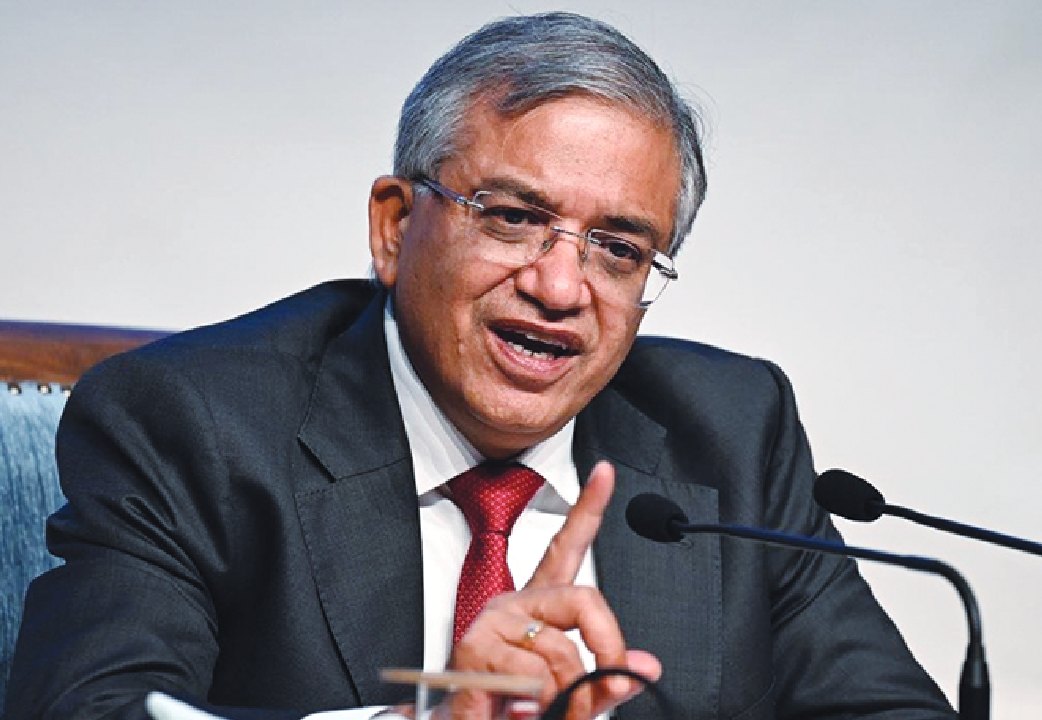
India’s Election Commission has long projected an image of administrative invincibility. For decades, the institutional guardian of the world’s largest democracy claimed a level of public trust that elected politicians could only envy. That carefully curated aura of impartial technocracy is now dissolving. At the center of the gathering storm stands Chief Election Commissioner Gyanesh Kumar, whose tenure has rapidly transformed from a steady stewardship into a high-stakes struggle for institutional survival.
The immediate catalyst for this crisis is an unprecedented rift at the very top of Nirvachan Sadan, the commission's headquarters in New Delhi. Investigative disclosures revealed that the two other Election Commissioners, Sukhbir Singh Sandhu and Vivek Joshi, formally recorded dissent or procedural objections on at least 14 separate occasions over a ten-month period. Their grievances were not minor administrative quibbles. They concerned core operational decisions: wholesale modifications to voter registration software, centralisation of electoral roll data, controversial additions to application forms, and orders issued without full bench consultation.
Under the statutory framework governing the poll body, decisions are meant to be reached through consensus or majority vote. When two members of a three-member constitutional panel repeatedly signal that directives are being executed over their heads, the fiction of collegial governance collapses. The commission’s official explanation that differing internal views represent routine administrative deliberation has failed to quell the mounting unease.
The Arithmetic of Exclusion
What elevates these internal disputes from a bureaucratic turf war to a full-blown constitutional emergency is their direct connection to the Special Intensive Revision (SIR) of electoral rolls. Intended as a routine exercise to purge duplicate entries, rectify addresses, and remove deceased electors, the nationwide drive has instead produced administrative chaos on a staggering scale.
Across 30 states and union territories, more than 130m names-roughly 13% of the total registered electorate,were excluded from draft rolls. In major political battlegrounds, the figures are striking: over 20m names struck off in Maharashtra, another 20m in Uttar Pradesh, nearly 10m in Tamil Nadu, and 4.7m in Delhi alone. In the national capital, where roughly a third of the electorate found themselves flagged or purged, millions of long-time voters were suddenly required to present documentary proof to re-establish their fundamental democratic right.
Administering an electoral roll of nearly a billion people is inherently imprecise. In a mobile, rapidly urbanising society, voters move, pass away, or register twice. Yet the sheer velocity and volume of the recent purges suggest a failure of administrative design. The addition of new requirements to online registration forms forcing first-time voters to declare whether their parents featured in previous historical revision lists created artificial hurdles that disproportionately penalised younger citizens and migrant workers.
When administrative friction of this magnitude meets a hyper-polarised political landscape, suspicion spreads rapidly. Opposition parties have framed the exercise not as a technical cleanup, but as a deliberate effort to alter the composition of the electorate. Street demonstrations led by political coalitions and youth movements have moved from regional capitals directly to Delhi’s Jantar Mantar. The political demand is no longer limited to procedural corrections; it has escalated to explicit calls for Mr Kumar’s immediate resignation and criminal investigation into how electoral data was managed.
The Price of Centralisation
The structural vulnerabilities now exposed within the Election Commission stem from two distinct choices made in recent years: one technical, the other legislative.
The technical choice was the rapid centralisation of electoral roll management software. Historically, voter lists were compiled and verified at the district level by local registration officers who possessed granular context about their jurisdictions. Digitisation streamlined this process, but centralising control over data access and algorithmic flags reduced local oversight. When software updates or automated deletion protocols are issued from New Delhi without multi-member clearance, a single glitch or flawed parameter can disenfranchise millions at the stroke of a key.
The legislative choice relates to how the commission’s leadership is selected. The 2023 legislation governing the appointment of the Chief Election Commissioner and Election Commissioners altered the selection panel, effectively giving the executive branch the deciding vote over appointments. Critics warned at the time that removing independent judicial representation from the selection panel would weaken the perception of institutional autonomy.
That warning has proven prescient. The current crisis demonstrates that when an institution's political independence is questioned, even routine administrative errors are viewed through the prism of partisan manipulation. When internal checks break down, as evidenced by the recorded objections of Kumar's colleagues,the institutional safeguards designed to prevent executive overreach appear compromised.
Restoring Faith in the Ballot
India's democratic resilience has long rested on an unwritten covenant between the citizen and the ballot box. Millions of voters endure long lines in extreme weather because they believe the outcome reflects the collective will of the nation. If citizens come to believe that their names can be quietly erased by central software commands or unilateral administrative decrees, that foundational trust evaporates.
Repairing this breach will require more than defensive press releases. First, the Election Commission must embrace full procedural transparency. Releasing the specific notes of objection recorded by the commissioners, along with the technical rationales for major software changes, is a necessary first step toward restoring public confidence.
Second, the mechanism for voter deletion requires immediate recalibration. Broad purges based on automated flags must yield to rigorous, multi-tiered verification that defaults toward inclusion rather than disenfranchisement. The burden of proof should rest squarely on the state to demonstrate why a citizen should lose their vote, not on the individual to prove they exist.
Finally, the political consensus around institutional appointments must be restored. An election authority that operates under a cloud of political distrust cannot effectively referee elections in a nation of 1.4 billion people. Whether Mr Kumar remains in his post or is forced to yield to mounting pressure, the deeper challenge facing Nirvachan Sadan is institutional, not personal. To regain its authority, the Election Commission must prove that it serves the electorate rather than the executive, ensuring that the right to vote remains a permanent constitutional guarantee rather than an administrative privilege.