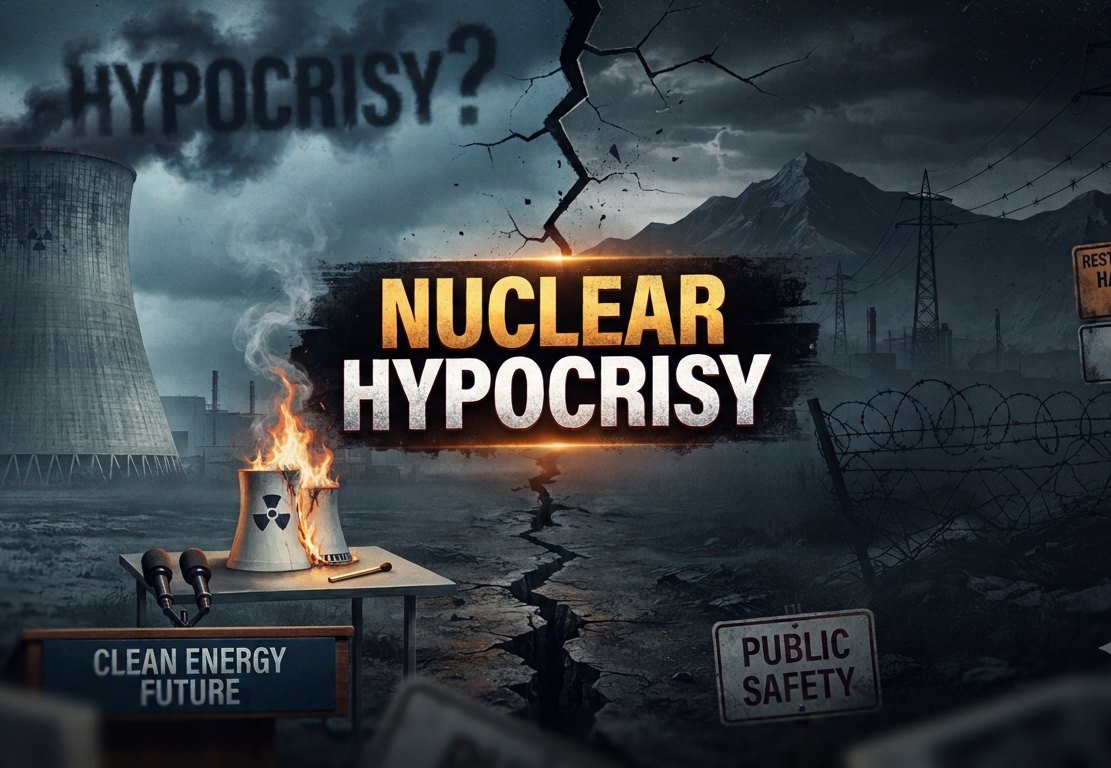
Leaders of the United States, China, and Russia used the APEC summit platform to issue a joint appeal calling on the world to avert nuclear threats. The appeal lands in a global landscape where nuclear weapons remain the single largest threat facing humanity, yet the countries holding the largest arsenals continue to maintain vast destructive capacity and expand or modernize their forces.
A straightforward look at the balance of nuclear arms shows why the call draws sharp scrutiny. The United States and Russia hold the vast majority of nuclear weapons worldwide, with China holding a smaller but growing share. Six other nations round out the nuclear picture: France and the United Kingdom alongside de facto nuclear powers India, Israel, Pakistan, and North Korea. Compared with the arsenals held by the United States and Russia, the stockpiles of those six countries are negligible.
Stockpiles, Modernization, and the Reality of Nuclear War
The scale of existing arsenals underscores how little credibility joint pledges carry without concrete action. Arsenals attributed to the United States are described as capable of destroying the Earth a thousand times over, while Russia's stockpiles are described as capable of destroying the Earth a hundred times over. Rather than scaling down from levels that already far exceed what any single conflict could justify, major powers keep expanding and modernizing. China, competing alongside the United States and Russia, is also modernizing its nuclear weapons.
Albert Einstein's warning captures the core peril of any nuclear exchange: nobody wins a nuclear war, and everyone faces destruction. If preventing a nuclear threat is the genuine goal, the most direct path is for the three major powers holding the largest arsenals to give up their nuclear weapons and move toward complete, universal disarmament.
Double Standards and Nuclear Apartheid
In practice, countries that possess nuclear weapons are not pursuing a nuclear-weapon-free world. Instead, their approach centers on preserving nuclear dominance and what critics call nuclear apartheid or nuclear blackmail. Under this logic, owning nuclear weapons is treated as harmless when held by oneself or by allies, yet dangerous when held by adversaries or countries out of favor.
Examples from recent decades highlight those double standards. Washington has raised no objection to Pakistan possessing nuclear weapons. Speaking on a platform in Florida, Asim warned that Pakistan holds nuclear weapons and could bring down half the world if pushed to the brink of collapse, while Donald Trump praised Pakistan and his favorite field marshal. Israel developed nuclear weapons in 1967 with assistance from the United States and maintains a nuclear doctrine that openly signals readiness to use them first if its existence is threatened.
Yet nuclear possession by Israel and Pakistan is treated as non-threatening, whereas North Korea and Iran are cast as dangers. That selective standard extends even to countries accused of holding weapons they do not actually have. Saddam Hussein in Iraq faced military action over claims of weapons of mass destruction even though no such nuclear weapons existed there.
Disarmament Versus Non-Proliferation Treaties
A central divide separates genuine disarmament from non-proliferation. Nuclear disarmament aims to build a world free of nuclear weapons anywhere on Earth. Nuclear non-proliferation focuses on preventing the spread of nuclear weapons to additional countries while leaving existing stockpiles intact.
Three international agreements illustrate this divide:
Each of these frameworks reflects an existing nuclear apartheid in which a select set of states keeps nuclear arms while rules restrict others from acquiring them. True security requires that no country hold nuclear weapons at all.
Who Has Used and Threatened Nuclear Force
History shows that the most severe precedents in nuclear use and nuclear threats trace back to major powers. The United States is the only nation to have actually used a nuclear weapon in war, and it has also been the only nation to repeatedly threaten their use from the beginning. In more recent times, Vladimir Putin in Russia has also spoken in threatening terms about nuclear weapons. At the same time, sharp warnings about readiness to use nuclear arms have come from Pakistan, while Israel's nuclear program was built with American support.
When leaders who hold vast arsenals, support allies armed with nuclear weapons, or invoke nuclear threats lecture the world about winning or losing a nuclear war, the message rings hollow. Any real effort to eliminate the nuclear threat has to start with those who hold the greatest power and the largest stockpiles taking the first step to disarm.