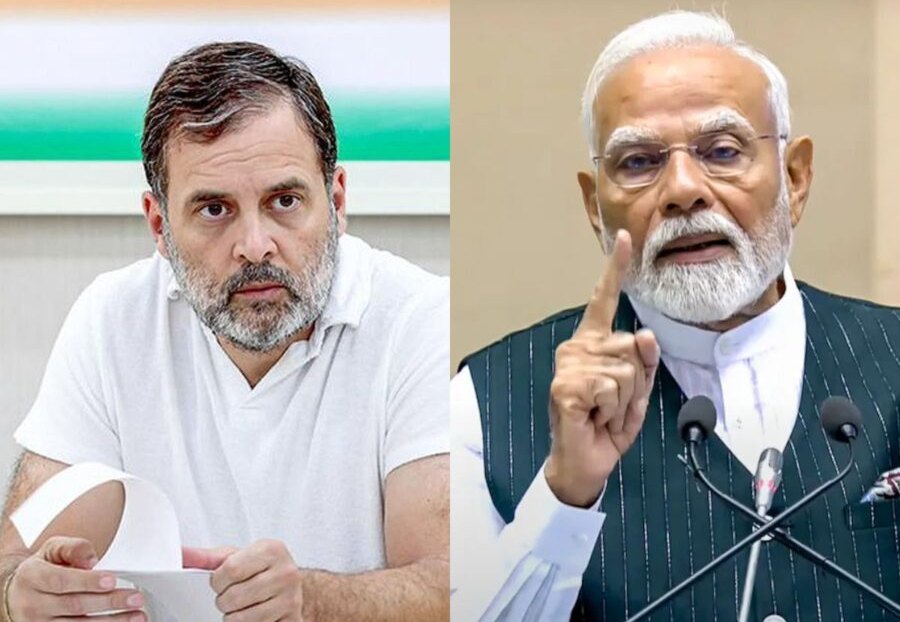
The political landscape in India frequently witnesses high-stakes rhetorical challenges, but few have sparked as much analytical debate as the recent statements made by Congress leader Rahul Gandhi regarding Prime Minister Narendra Modi. Declaring that a one-on-one debate between the two leaders would immediately expose the true nature of governance and bring a definitive end to Narendra Modi's political career, this challenge has triggered intense scrutiny from political commentators. Evaluating such a claim requires moving past partisan enthusiasm and examining the empirical realities of Indian electoral politics, historical trajectories, and the fundamental mechanics of democratic mandates.
The Weight of Electoral History
When assessing claims about political survival and career longevity, electoral records provide the most objective metric. Narendra Modi's political journey spans over twenty-five continuous years of executive leadership, beginning as the Chief Minister of Gujarat and extending through successive terms as the Prime Minister of India. Throughout this extensive period, his electoral record has remained remarkably unbroken. Even when accounting for reduced majorities in the 2024 general elections compared to the sweeping victories of 2019, the underlying electoral stability remains striking. Public opinion metrics and approval ratings demonstrate that Modi retains robust public backing, maintaining positive ratings above fifty percent even years into governance. When compared internationally to figures like Donald Trump, whose approval ratings dropped significantly after taking office, Modi's sustained electoral durability stands out as a unique phenomenon in contemporary politics.
In sharp contrast, the electoral trajectory of the Indian National Congress presents a starkly different picture. Historically, the party commanded overwhelming parliamentary dominance, exemplified in 1984 when Rajiv Gandhi secured four hundred and four seats in the aftermath of Indira Gandhi's assassination. Over the ensuing decades, however, the party experienced a dramatic contraction across numerous states. In Gujarat, the Congress party has remained out of power for decades. In West Bengal, the party lost formal state power in the 1970s, remaining out of governance for more than fifty years. Similar organizational erosion occurred across major states including Uttar Pradesh, Tamil Nadu, Andhra Pradesh, and others.
During the 2014 and 2019 general elections, the party's Lok Sabha tally plunged to a low of fifty seats. Although recent electoral cycles saw a recovery to around one hundred seats and the formal acquisition of the Leader of the Opposition status, the party's territorial footprint remains restricted. Currently, full governmental power is concentrated in a handful of states such as Telangana, Andhra Pradesh, Kerala, and Himachal Pradesh, alongside a minor coalition partnership in Tamil Nadu and Jharkhand. Given this macro-level electoral contraction, assertions that a single debate could dismantle a dominant political career appear disconnected from the historical momentum that built it.
Dynastic Privilege Versus Grassroots Ascent
Beyond aggregate electoral numbers, the personal backgrounds of the two principal figures offer a profound study in contrasts. Rahul Gandhi represents a prominent dynastic lineage in Indian democracy, carrying the political legacy of his great-grandfather Jawaharlal Nehru, his grandmother Indira Gandhi, and his father Rajiv Gandhi. Access to leadership roles within the party structure was shaped significantly by this family background, even during periods of electoral setback.
Conversely, Narendra Modi's rise followed an entirely different path. Hailing from an ordinary family without financial privilege or political patronage, his early life included working humbly at a railway station tea stall before dedicating himself as an organizational pracharak for the Rashtriya Swayamsevak Sangh. Building a mass political base from the grassroots level without the backing of a political dynasty represents an extraordinary trajectory. Comparing a leader who emerged through decades of organizational struggle and administrative execution with one rooted in dynastic succession highlights the fundamental gap in their political foundations. When such disparate career paths are juxtaposed, the premise that a rhetorical challenge could easily erase decades of hard-won grassroots authority lacks persuasive weight.
The Fallacy of Debating Competence as Electoral Legitimacy
A central pillar of the ongoing discourse is the underlying assumption that political leadership can be measured, tested, and decided upon a debate stage. Proponents of debate challenges often frame verbal sparring as the ultimate test of political capability. However, democratic politics is not a collegiate debate competition.
Consider the mechanics of intellectual capability versus electoral mandate. Intellectuals, academics, and professional commentators frequently possess comprehensive knowledge spanning national and international economics, public policy, science, philosophy, and social issues. Many individuals can speak articulately for hours without consulting notes, referencing statistical data, historical precedents, and global literature with absolute fluency. Yet, mastery of debate does not translate directly into public representation.
Individuals who excel in competitive speaking from their school and university days, winning numerous accolades across academic levels, often find themselves unable to secure electoral victories when stepping into public office. Securing thousands of votes in parliamentary or assembly constituencies depends on public trust, organizational depth, developmental delivery, and grassroots connection rather than conversational agility. Figures across the political spectrum, from regional leaders to prominent parliamentarians, win massive popular mandates despite not participating in formal intellectual debate competitions. Democracy operates through the collective will of millions of voters casting ballots at polling booths, not through verdicts delivered by panel judges on television sets.
The Role of the Opposition Leader in Parliamentary Democracy
While the claim that a debate would end a political career is an exaggeration, the act of issuing a challenge itself warrants examination through institutional norms. India operates under a parliamentary democracy modeled largely on the Westminster system. Within this framework, the Leader of the Opposition is formally recognized as the shadow Prime Minister.
In this capacity, Rahul Gandhi holds the democratic right and institutional standing to question the executive head of government and propose policy debates. Regional leaders or junior party spokespersons issuing similar challenges might lack institutional equivalence, but the Leader of the Opposition occupies a constitutional position that justifies rigorous policy engagement. Therefore, inviting the Prime Minister to engage in a structured national conversation aligns with healthy democratic traditions.
However, transforming an institutional invitation into a melodramatic prediction of political annihilation introduces unnecessary hyperbole. Suggesting that the nation's political future hangs entirely upon the outcome of a single debate table diminishes the seriousness of legislative forums and public elections.
Conclusion
Political longevity and leadership legitimacy are forged through long-term engagement with public aspirations, administrative performance, and disciplined party building. While debates serve as useful tools for democratic accountability, they are neither the sole nor the primary arbiters of political survival. The contrasting trajectories of India's major political forces reflect deep-seated structural realities, grassroots organizing capacities, and enduring voter trust. Grand rhetorical claims may generate temporary headlines, but the ultimate verdict in a functioning democracy rests firmly with the citizens who shape the nation's political destiny at the ballot box.