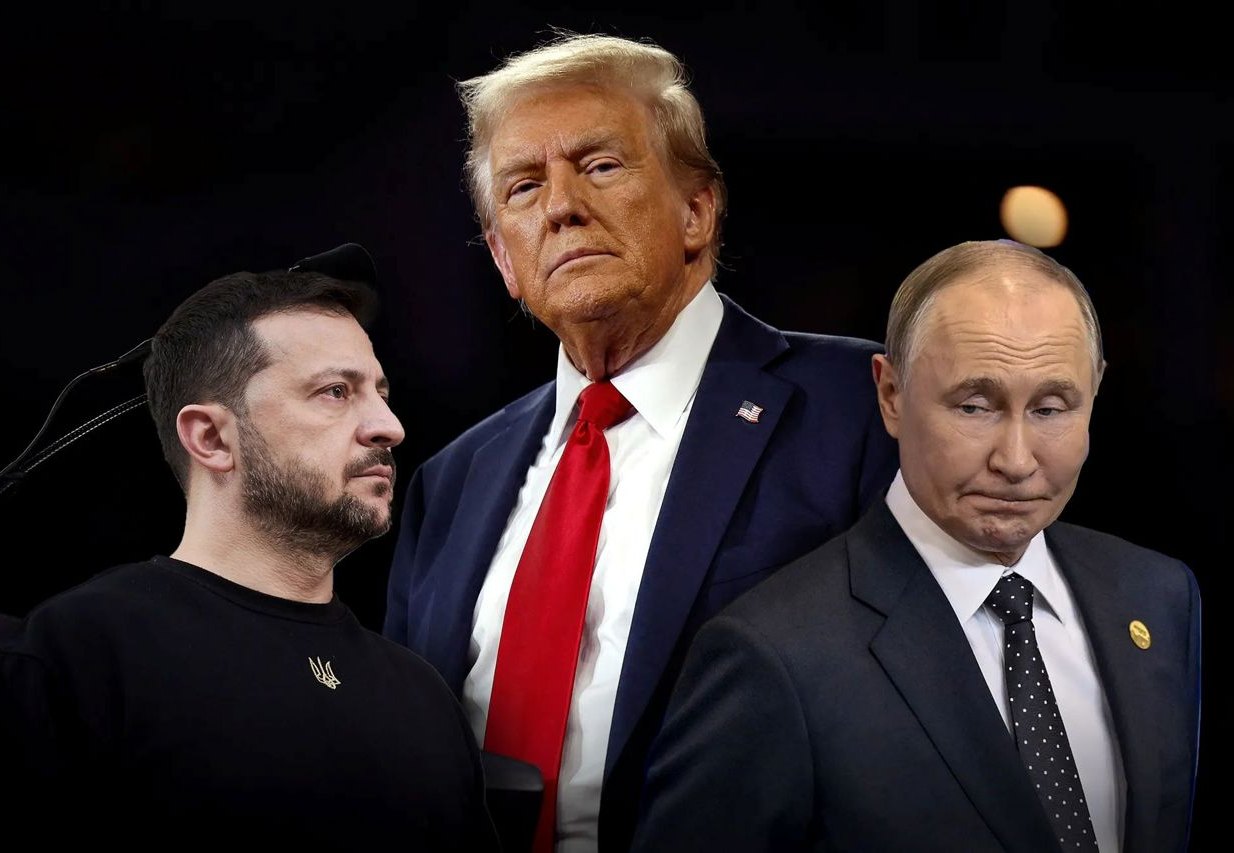
The evolving dynamic of the ongoing conflict between Russia and Ukraine has taken a sharp turn following a fresh diplomatic proposal from the United States. Washington has put forward a potential settlement that involves extending NATO membership to Ukraine, conditioned on Kyiv relinquishing control of the roughly twenty percent of its territory currently occupied by Russian forces. This formula mirrors the longstanding "land for peace" concept, though it revives a complex web of geopolitical friction that initially triggered the military engagement.
The perspective of Donald Trump highlights a pragmatic view that Russia maintains a formidable military advantage, arguing that a smaller nation like Ukraine cannot sustain an indefinite military campaign against a vastly superior power. From this viewpoint, securing membership in the alliance while conceding the currently held territory is framed as a pragmatic way to halt further territorial loss. However, this stance ignores the trajectory of how the conflict escalated in the first place, rooted in years of strategic posturing between Western powers and Moscow.
The historical roots of the current hostility trace back well before the major escalation in 2022, notably marked by Russia's annexation of Crimea in 2014. Throughout the post-Cold War era, the expansion of NATO eastward toward Russian borders became a central security concern for Moscow. Following the dissolution of the Soviet Union, Eastern European nations gradually integrated into Western economic and security frameworks. Russian leadership repeatedly warned that incorporating nations directly on its doorstep into a military alliance presented an unacceptable security threat. Despite these explicit warnings from President Vladimir Putin, discussions regarding Ukrainian membership in NATO continued under Western encouragement.
Critics of Western strategy point out a critical contradiction in the timeline of events. If the United States and European allies had formally admitted Ukraine into NATO prior to the invasion, the calculus for Moscow would have been entirely different. Under Article Five of the NATO charter, an attack on one member is treated as an attack on all. Confronted with the prospect of a direct military confrontation with the entire alliance, Russia likely would have reconsidered a full-scale invasion. Instead, Ukraine was encouraged to pursue alliance membership without being granted formal protection, leaving it exposed while tensions escalated. Ironically, the ongoing hostilities failed to halt NATO expansion entirely, as previously neutral nations like Sweden and Finland also sought and secured membership out of security concerns.
The new American proposal places Ukrainian leadership in a difficult position. President Volodymyr Zelenskyy has noted that ceding the twenty percent of territory primarily located in the Donbas region, including areas like Donetsk, Luhansk, and Zaporizhzhia, is not a decision he can make unilaterally. These eastern borderlands feature significant Russian-speaking populations who share cultural and linguistic ties with Russia, complicating the political landscape. While a national referendum could theoretically gauge public sentiment on such a territorial compromise, conducting a vote in the middle of an active conflict presents immense logistical and political challenges.
Moreover, accepting the proposal guarantees no immediate end to friction. Even if Ukraine agrees to surrender the occupied territory in exchange for security guarantees through NATO, it remains uncertain whether Russia would accept a truncated Ukrainian state joining the Western security umbrella. Moscow has consistently opposed the presence of alliance infrastructure on its immediate border, meaning the core security dilemma that ignited the war in 2022 remains unresolved. The diplomatic cycle has thus returned to its starting point, underscoring how major global powers navigate geopolitical chessboards at the expense of regional stability.