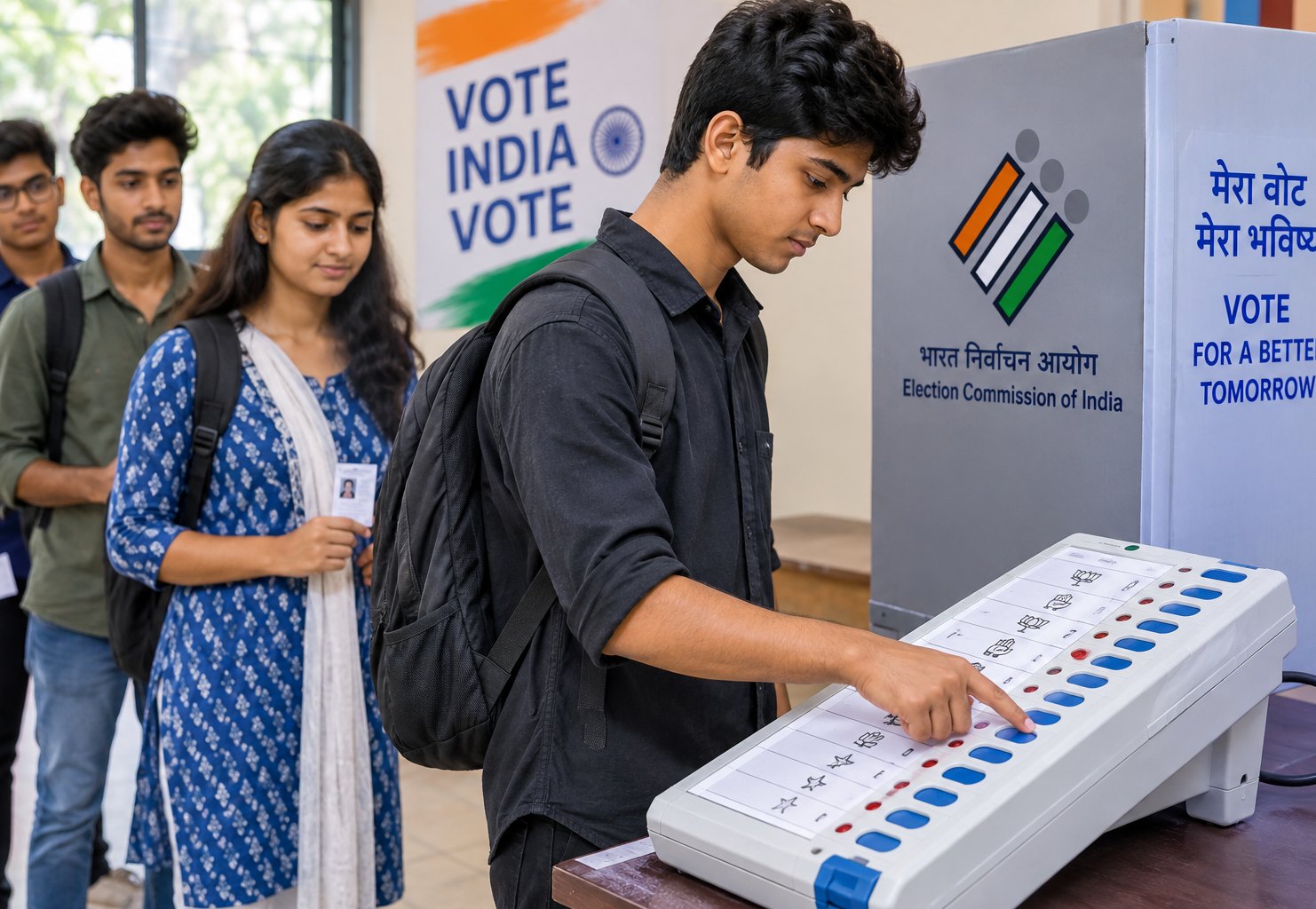
The Election Commission of India finds itself entangled in an escalating political controversy following revelations that the routine enrollment of first-time voters has been suspended. Reports indicating that the annual Special Summary Revision (SSR) has not taken place since the 2024 Lok Sabha elections have ignited sharp criticism from opposition parties, institutional critics, and civil society groups. At the center of the debate is the decision by Chief Election Commissioner Gyanesh Kumar to pause the long-standing voter addition process in favor of an intensive voter verification initiative, a move that opponents allege systematically excludes millions of young, first-time voters from the democratic process.
The Disruption of a Decades-Old Protocol
Since 1958, the Election Commission of India (ECI) has conducted the Special Summary Revision annually. The primary objective of the SSR is to maintain accurate, up-to-date electoral rolls by enrolling citizens who have turned 18 years old. To ensure broader political participation, the commission previously expanded its eligibility policy from a single annual cutoff date on January 1 to four quarterly cutoff dates: January 1, April 1, July 1, and October 1. This system ensured that individuals reaching the voting age throughout the year could register promptly and exercise their franchise in upcoming state or national elections.
For the first time in nearly seven decades, this systematic updating mechanism has come to a standstill. Following the general elections in mid-2024, the ECI did not launch the regular SSR cycle. Consequently, young citizens who reached the age of 18 over the past two years have encountered significant barriers to placing their names on the voter register, preventing them from participating in key state assembly elections, including those in Bihar, as well as upcoming polls in Uttar Pradesh and Goa.
Institutional Friction: SSR versus SIR
The suspension of the summary revision stems from the introduction of a separate electoral updating process known as the Special Intensive Revision (SIR). While the traditional SSR focuses primarily on adding eligible new voters and processing general updates, the SIR functions as a rigorous, door-to-door verification campaign aimed at removing invalid entries, duplicate registrations, and deceased voters from the rolls.
Reports suggest that Chief Election Commissioner Gyanesh Kumar sought legal advice on whether to suspend the routine SSR while the intensive SIR campaign was underway, ultimately deciding to prioritize the latter. However, this decision has caused internal discord within the election body. Documents and reporting from national news outlets highlight that Election Commissioners S.S. Sandhu and Vivek Joshi expressed formal objections to the unilateral suspension on it. The two commissioners maintained that the purging process of the SIR should not supersede or replace the statutory obligation to register new voters through the SSR.
Critics emphasize the contrasting outcomes of the two exercises: while the SSR is designed to expand the electorate by adding young citizens, the SIR focuses largely on exclusion and verification. Opponents argue that substituting the enrollment process with a purge-focused exercise effectively narrows the voting base.
Political Fallout and Backlash
The decision to pause new voter registrations has quickly become a political flashpoint. Opposition parties, led by the Indian National Congress, allege that the move is politically motivated. Party spokespersons contend that the current administration is wary of young voters, pointing to growing economic dissatisfaction among youth regarding employment availability, competitive exam paper leaks, and student welfare issues.
Opposition leaders contrast the current policy with historical reforms, such as the lowering of the voting age from 21 to 18 under the Rajiv Gandhi administration in the late 1980s, framing the present pause as an erosion of established democratic rights. Recent electoral outcomes in several constituencies, combined with youth-led demonstrations at locations like Jantar Mantar in New Delhi, underscore the potential impact of young voters on key races. Critics assert that stalling the SSR in states like Uttar Pradesh and Goa, where intensive revisions have already concluded, indicates an effort to minimize youth turnout in critical upcoming polls.
In response to these developments, opposition coalitions have demanded greater accountability within the Election Commission. Actions being considered include parliamentary motions to censor or impeach the Chief Election Commissioner, alongside street protests demanding the immediate restoration of regular voter registration schedules.
Jurisdictional Inconsistencies and Administrative Concerns
Administrative analysts have noted logical inconsistencies in the application of the ECI’s current policy. The official rationale for pausing the summary revision rests on avoiding overlapping procedures while the Special Intensive Revision is active in states like Punjab and Uttarakhand. However, in states where the intensive cleanup drive has already concluded or is not currently active, the routine SSR has similarly failed to resume.
This blanket pause across different states has drawn scrutiny from legal experts and former election officials, who note that statutory voter registration should remain continuous to prevent voter suppression. The procedural delays leave millions of eligible young people off the voter rolls, raising concerns about the administrative integrity and independence of the electoral commission.
As public pressure mounts and legal challenges loom, the Election Commission faces calls to reconcile its roll-cleansing operations with its mandate to ensure universal suffrage. Whether the commission will bow to institutional and political pressure to reinstate the Special Summary Revision remains to be seen, but the outcome will directly influence the demographic composition of India's electorate in upcoming elections.