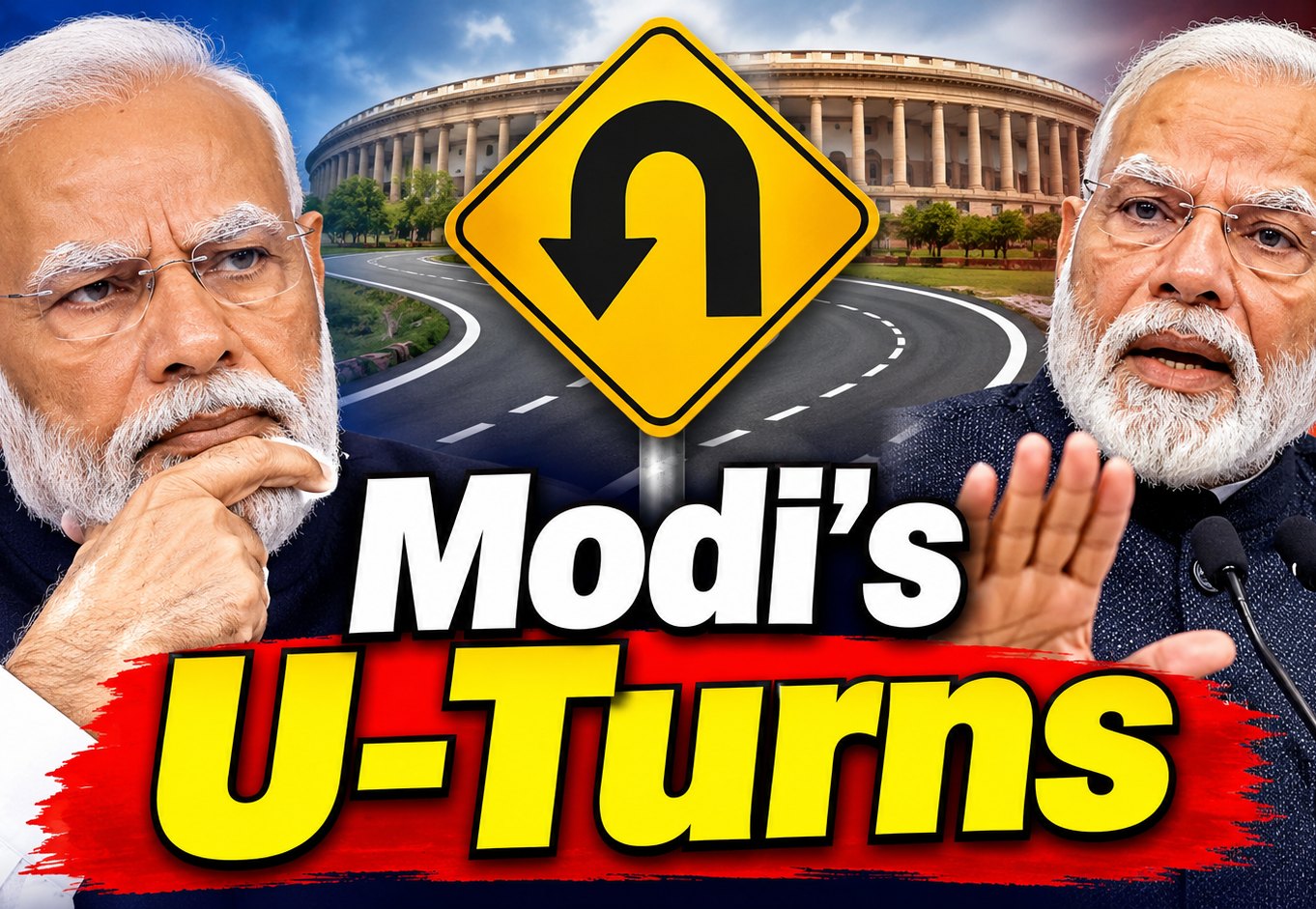
The recent policy adjustment regarding the Agnipath scheme, which extends the service period for Agniveers from four years to six years, highlights a recurring pattern of government backtracking on major reforms. This development brings to the forefront critical questions about policy consistency, national security, and the influence of electoral calculations on governance.
A pattern of policy reversals has emerged across various sectors over recent years. A primary example involves the farm laws introduced in 2022. Initially, the government strongly defended the legislation, labeling protesting farmer leaders as extremists and deploying investigative agencies against supporting celebrities. Ruling party workers campaigned heavily against the agitation. However, the legislation was eventually repealed, accompanied by an apology from Prime Minister Narendra Modi.
Another prominent instance centers on competitive examinations and paper leaks. BJP dismissed criticism and called the protests a foreign conspiracy. Subsequently, the government retreated, and the concerned minister resigned.
Similarly, guidelines concerning social justice in higher education faced significant pushback. Following widespread opposition and resignations among party office-bearers in Uttar Pradesh, the government informed the Supreme Court that it was reconsidering and withdrawing those specific equity provisions.
Lateral entry recruitment into administrative positions at the joint secretary level witnessed a similar trajectory. Initially heralded as a visionary administrative reform championed by the leadership, the advertising of these positions through the Union Public Service Commission was swiftly withdrawn following intense pushback from political allies, including Chirag Paswan.
Electoral administration has also seen adjustments. Debates surrounding voter list revisions and electoral processes led to sequential modifications, with procedures initially defended and later altered or reinstated through various administrative directives and judicial contexts.
The implementation of demonetization serves as an earlier macroeconomic example. Promoted as a definitive measure to curb black money, the policy ultimately resulted in currency returning through the banking network, prompting questions regarding the long-term utility of such sweeping economic interventions.
Implications for Military Personnel and National Security
Applying frequent policy shifts to national defense presents distinct concerns compared to civil administration. The Agniveer scheme, when first launched, faced widespread criticism from military experts and analysts who questioned the viability of training soldiers for only four years.
Military training demands rigorous physical discipline and significant resource allocation. Critics argued that curtailing service to four years results in a substantial waste of state and institutional resources, as individuals spend a considerable portion of that timeframe acquiring core competencies just before leaving service. Furthermore, dividing the armed forces into permanent personnel and temporary recruits introduces structural divisions. Concerns were raised regarding unit cohesion and operational dynamics on the battlefield, where mutual trust among personnel is paramount.
When the scheme was originally enacted, supporters defended it as a visionary modernization effort designed to create a technologically superior and agile workforce. The recent extension of service duration to six years raises fundamental questions regarding the original justifications for the four-year limit and the criteria guiding these structural modifications.
Electoral Timing and Strategic Governance
Critics and political commentators argue that these policy recalibrations are frequently driven by electoral exigencies rather than long-term strategic planning. With upcoming legislative elections in key states such as Uttar Pradesh and Punjab, policies that generate significant public discontent or voter mobilization are revisited.
While political maneuvering and welfare announcements are standard features of electoral competition, defense policy is viewed by analysts as distinct from routine civil administration. Tinkering with military structures for short-term political convenience introduces uncertainty into an institution upon which national security depends. Maintaining stability and predictability within the armed forces remains essential for preserving institutional integrity and operational effectiveness.